Eleven months runs on two naps and wake windows around 3.5 hours — and it's home to one of baby sleep's best-documented head-fakes: the false one-nap transition. Right around 11–12 months, huge developmental work (standing, first steps, language explosion) makes many babies fight the afternoon nap so convincingly that parents drop it. Weeks of overtired chaos follow, because the baby wasn't ready — just busy.
How to hold the two-nap line
- Keep offering both naps even if one gets played through — the quiet crib time still helps, and the strike usually ends within two weeks.
- Cap nap one at ~75 minutes if the afternoon nap is the one being refused; an overlong morning nap starves the afternoon one.
- Compensate with bedtime, not schedule surgery: on a one-nap accident day, bedtime moves 45–60 minutes earlier. That's the whole fix.
True readiness for one nap — consistently and happily lasting a 4–5 hour morning window — rarely arrives before 13 months.
Approaching the first birthday
Total sleep needs are drifting down slightly (day sleep toward 2–2.5 hours), and wake windows will keep stretching. If bedtime has crept very early from months of post-nap math, this is a good stretch to let it settle back toward a consistent 7:00–7:30 PM anchor.
Schedules are averages.
Your baby isn't.
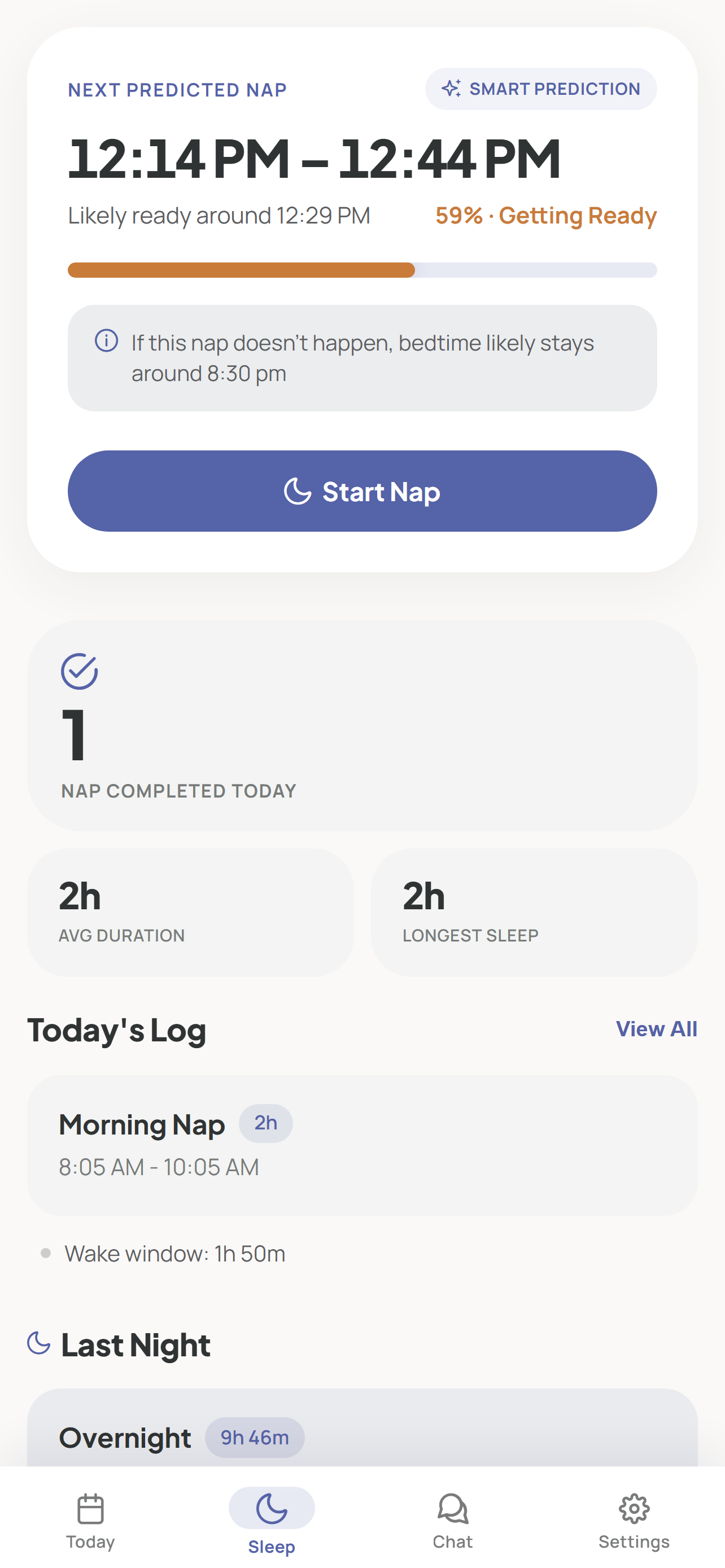
LunaLog learns your baby's actual rhythm from the naps you log and predicts the next nap window automatically — no mental math, and it updates itself as wake windows grow. Free to start, and both parents stay in sync in real time.
Try LunaLog free