By eight months most babies have landed on a genuine two-nap day: a morning nap and an early-afternoon nap, both real sleeps rather than catnaps, with wake windows of 2.5–3 hours. Which would make everything calm and predictable — except this is also prime 8–10 month regression territory.
What the 8–10 month regression looks like
Three forces hit at once: separation anxiety emerges (your baby now understands you still exist after leaving the room — and objects loudly), gross-motor explosion (crawling, pulling to stand — practiced at 2 AM), and a cognitive leap that makes the world too interesting to sleep on. The result: fresh night wakings and nap protest in a baby who "had it figured out."
What helps: extra connection and peekaboo-style separation games during the day, massive floor time for skill practice, a consistent calm response at night (comfort without rebuilding old habits), and — always — protecting wake windows so overtiredness doesn't pile on. It passes in a few weeks.
Standing in the crib
Once pulling-to-stand arrives, many babies stand up at nap time… and can't get back down. Practice the getting down part during play (guide hands to the rail, help bend the knees). Until it clicks, calmly lay them back down once or twice, then give space to work on it — turning it into a game guarantees encores.
Schedules are averages.
Your baby isn't.
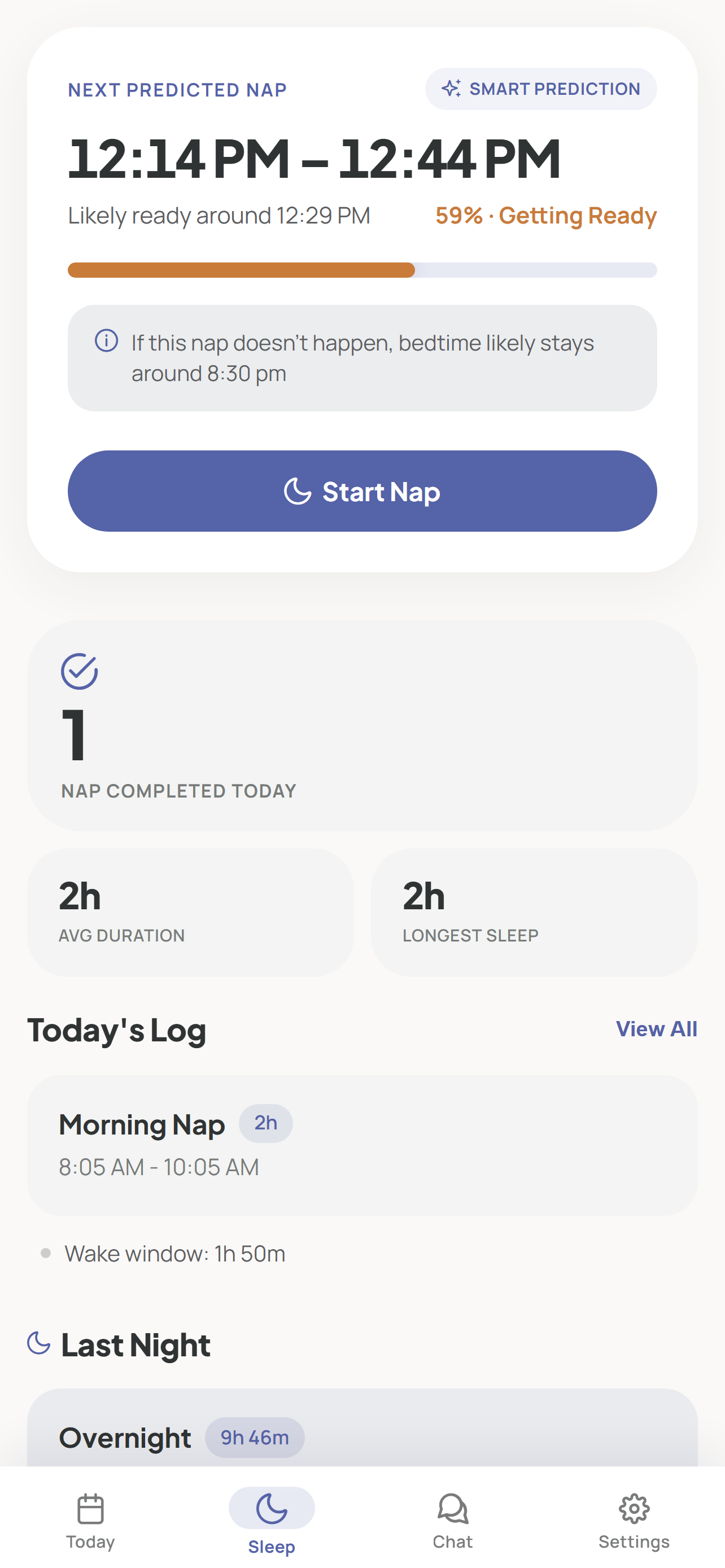
LunaLog learns your baby's actual rhythm from the naps you log and predicts the next nap window automatically — no mental math, and it updates itself as wake windows grow. Free to start, and both parents stay in sync in real time.
Try LunaLog free