In the first week, a wake window is the feed plus a diaper change plus a few minutes of eye contact — about 45 minutes, sometimes less. Then your baby is asleep again, often before the burp. Naps have no pattern yet: one is 20 minutes, the next is three hours, and the long one may well be at 2 PM. That is not a problem to solve. Circadian rhythm does not exist yet, and it will not for another 6–8 weeks.
What to focus on: feeding on cue and at least every 2–3 hours (wake a sleepy newborn for feeds until your pediatrician confirms weight is back on track), and putting every sleep on their back, on a firm flat surface, with nothing else in it.
Safe sleep from night one
- Back to sleep, every sleep — naps included, even the ones that start on your chest (move them once you are drowsy yourself).
- Firm, flat, bare — a crib or bassinet with a fitted sheet. No pillows, bumpers, loungers, or blankets; use a swaddle or sleep sack instead.
- Same room, own surface — the AAP recommends room-sharing without bed-sharing for at least the first six months.
- Car seats and swings are for travel and awake time, not overnight sleep — the angle can compromise a newborn's airway.
Why you should not "fix" sleep yet
Every schedule you will ever read starts at 3–4 months for a reason: a newborn's sleep is driven by a tiny stomach and an unfinished brain, not by habits. Nothing you do this week creates a "bad habit." Feed to sleep, rock to sleep, hold every nap if that is what works — and sleep when you can. The one gentle nudge that helps later is keeping daytime bright and social and nighttime dark and boring, so the body clock has something to organize around when it switches on.
Schedules are averages.
Your baby isn't.
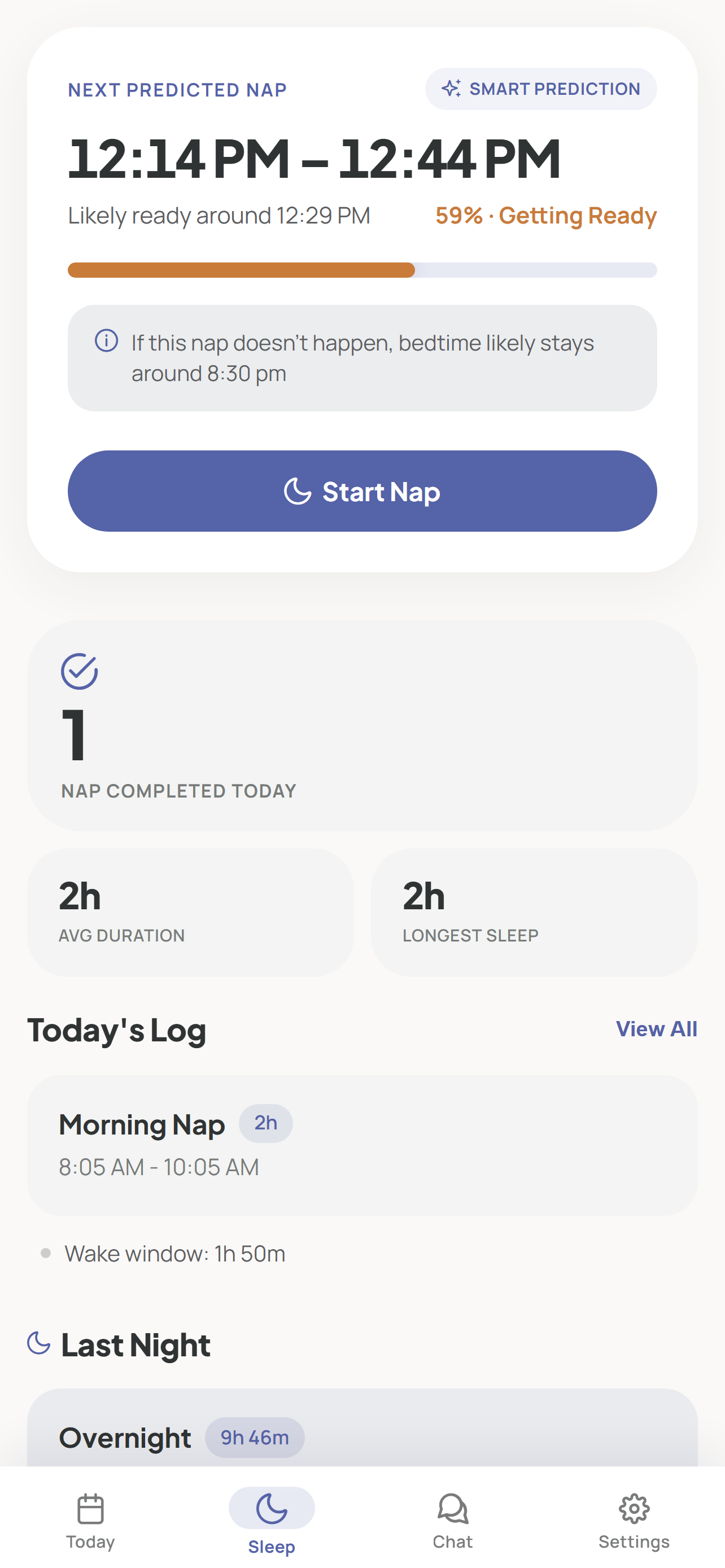
LunaLog learns your baby's actual rhythm from the naps you log and predicts the next nap window automatically — no mental math, and it updates itself as wake windows grow. Free to start, and both parents stay in sync in real time.
Try LunaLog free