Wake windows are still 45–60 minutes including the feed, and most two-week-olds take 5–7 naps of unpredictable length. The new wrinkle is the growth spurt: for a couple of days your baby wants to feed constantly, especially in the evening, and naps shrink to catnaps. Cluster feeding is supply-building for breastfeeding parents and comfort for everyone; it is not a sign of a sleep problem or of "not enough milk."
The reward on the other side is often a slightly longer sleep stretch — 3, occasionally 4 hours — which tends to arrive at the start of the night.
Cluster feeding without losing your evening
If the 6–10 PM stretch has become one long feed, plan for it instead of fighting it: dim the lights, get comfortable, queue up something to watch, and let it be the bedtime routine. If a partner is around, alternate — one feeds, the other takes the next diaper and settle. A baby who feeds hard in the evening frequently pays it back with the night's longest stretch, so the investment is real.
Reading the first sleepy cues
At two weeks the cues are subtle and the window is short. Watch for the first one — a red-tinged eyebrow, a stare into the middle distance, a jerky arm movement, a small yawn — and start settling right then. Waiting for crying means the window has already closed, and an overtired newborn takes far longer to fall asleep than a drowsy one. Swaddling, a dark-ish room and steady white noise all shorten the runway.
Schedules are averages.
Your baby isn't.
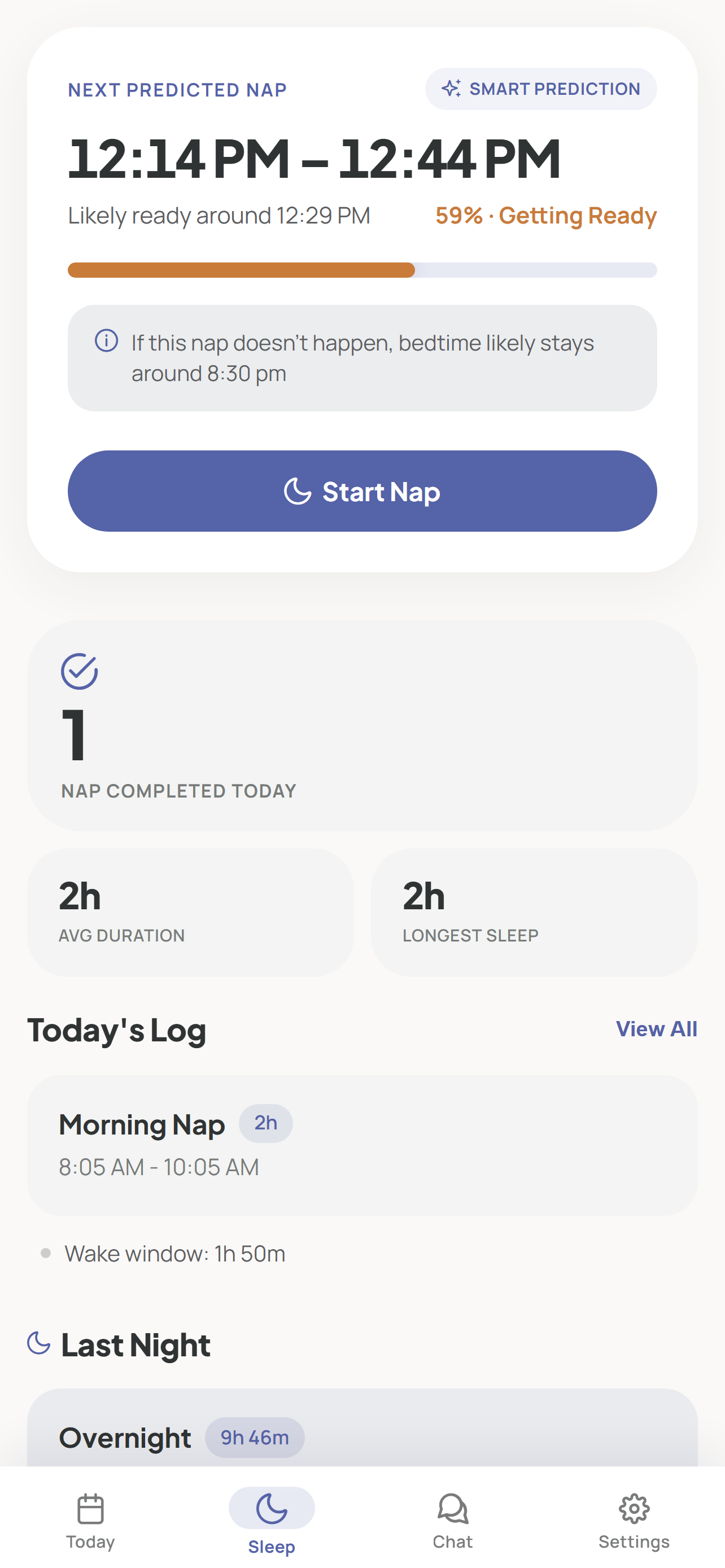
LunaLog learns your baby's actual rhythm from the naps you log and predicts the next nap window automatically — no mental math, and it updates itself as wake windows grow. Free to start, and both parents stay in sync in real time.
Try LunaLog free