Free guide · Sample schedule inside

3-Week-Old Sleep Schedule

Fussiness is climbing toward its peak. Here are the tools that buy you calmer evenings.

Wake windows1 hr–1h 15m
Naps6
Day sleep~6 hrs
Bedtime8:15 PM
7:00 AMWake up for the day
Awake — 1 hr of play, feeds & fresh air
8:00 AM – 9:00 AMNap 11 hr
Awake — 1 hr of play, feeds & fresh air
10:00 AM – 11:00 AMNap 21 hr
Awake — 1 hr of play, feeds & fresh air
12:00 PM – 1:00 PMNap 31 hr
Awake — 1 hr of play, feeds & fresh air
2:00 PM – 3:00 PMNap 41 hr
Awake — 1 hr of play, feeds & fresh air
4:00 PM – 5:00 PMNap 51 hr
Awake — 1 hr of play, feeds & fresh air
6:00 PM – 7:00 PMNap 61 hr
Wind down — 1h 15m until bedtime
8:15 PMBedtimeOvernight sleep until morning

Real newborn naps run anywhere from 20 minutes to 3 hours and feeds drive the day. Treat this as the rhythm to aim for, not a timetable.

Wake windows stay at 45–60 minutes and naps at 5–6 a day, but a three-week-old is noticeably more awake when awake — eyes tracking, startling at sounds, harder to settle if the window slips. This is the week most parents discover that the calm, sleepy newborn from the hospital has opinions, and that evenings between 5 and 10 PM are the hardest part of the day.

None of it is fixable with a schedule yet. It is manageable with settling tools and a shorter runway to sleep.

The settling toolkit

  • Swaddle — arms snug, hips loose. It dampens the startle reflex that wakes newborns between cycles. Stop swaddling at the first sign of rolling.
  • White noise — steady, at about the volume of a shower, positioned across the room rather than beside the head.
  • Motion and holding — rocking, a carrier, a walk. Contact naps are not a habit at three weeks; they are just Tuesday.
  • Sucking — a pacifier once feeding is established is safe for sleep and associated with a lower SIDS risk.

Overtired vs. hungry

At three weeks the two look identical from the outside: rooting, fussing, refusing to settle. A rough rule — if it has been under 90 minutes since a full feed and your baby just fed well, try sleep first (swaddle, white noise, rock). If it has been two hours or more, feed first. Getting this wrong is not dangerous; it just costs you 20 minutes. Logging feeds and naps for a few days makes the pattern obvious faster than memory does.

Schedules are averages.
Your baby isn't.

LunaLog learns your baby's actual rhythm from the naps you log and predicts the next nap window automatically — no mental math, and it updates itself as wake windows grow. Free to start, and both parents stay in sync in real time.

Try LunaLog free
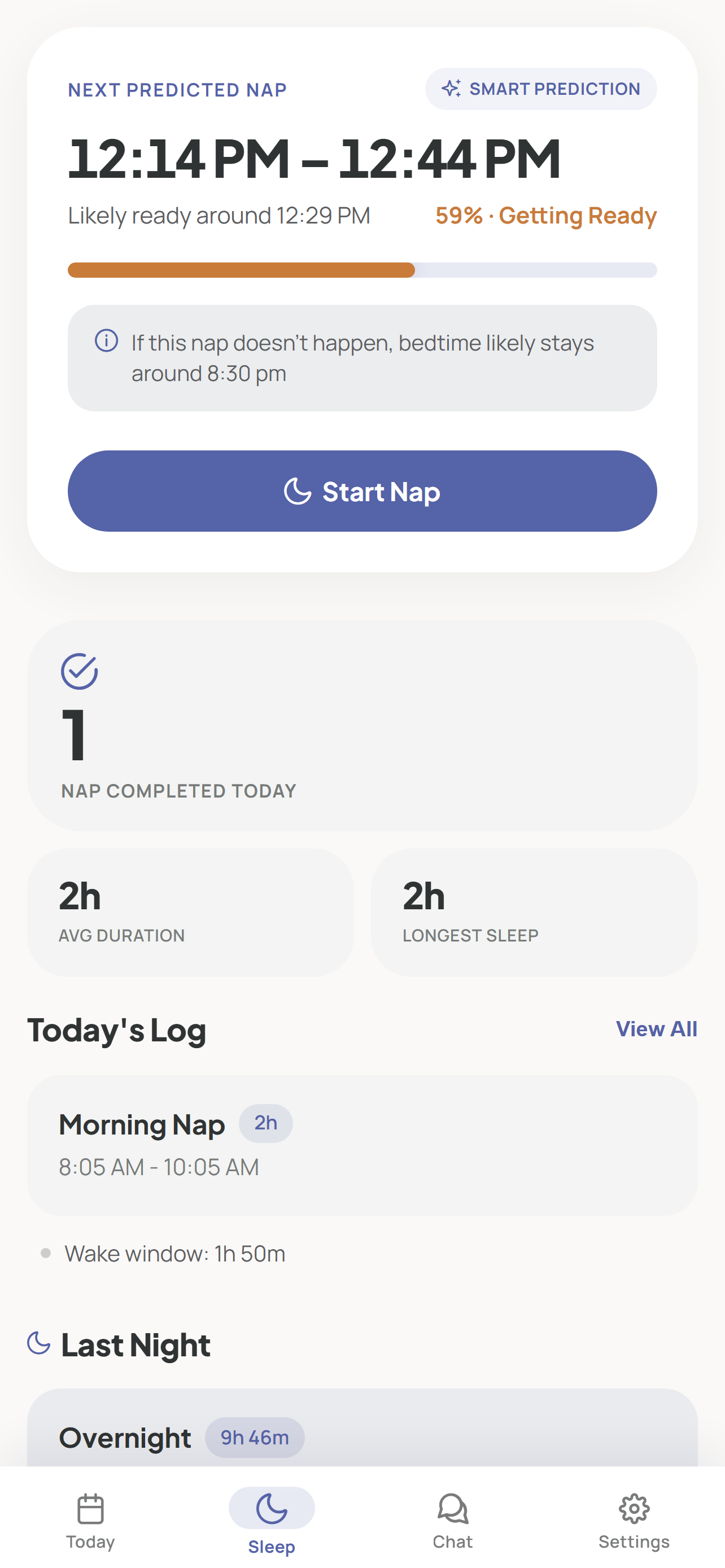
LunaLog app predicting a baby's next nap window

3-week-old sleep questions

Why is my 3-week-old so fussy in the evening?

Evening fussiness rises from about 2–3 weeks and peaks near 6–8 weeks in most babies. It reflects an immature nervous system at the end of a stimulating day. Earlier, dimmer evenings and cluster feeding help; it also passes on its own.

How many naps should a 3-week-old take?

Usually 5–6, and the count still varies day to day. Aim for wake windows under an hour and let the number of naps fall where it falls.

Is a 3-week-old sleeping 4 hours at night okay?

For a baby who is back to birth weight and gaining well, one 4-hour stretch is fine and welcome. Check with your pediatrician if you are unsure about weight gain or if the longer stretches happen during the day instead.

Stop counting minutes.
Start predicting naps.

LunaLog tracks the day for you and tells you when the next nap is coming — free to start.

Also on the web at app.lunalog.io · No credit card required