At thirteen months the schedule itself is settled: two naps — a longer morning nap around 9:50 and a shorter afternoon nap around 2:30 — separated by wake windows that stretch from about 3 hours after waking to 3.5 hours before bed. That adds up to roughly 3 hours of day sleep and a 7:15–7:30 PM bedtime, with 11–14 hours of total sleep across the day. If last month's nap refusals are fading, that's the false nap strike ending on schedule; the real 2→1 transition still sits a few months out for most children.
What makes this month feel unsettled isn't the timetable — it's the body using it. A toddler who just started walking will stand up in the crib, cruise the rails, and practise lying down and popping up like a drill. It looks like nap refusal. It's motor rehearsal, and it burns out within a couple of weeks if the offer stays the same.
Walking wrecks naps — briefly
New gross-motor skills disrupt sleep in a predictable way: the skill is so compelling that the brain keeps running it at the exact moment the body should be winding down. For walking, expect a stretch of 7–14 days where naps take longer to start, end sooner, or get skipped outright, and where you'll find a toddler standing and grinning at the monitor at 2 AM.
What helps: give walking practice lots of daylight hours so it's less novel at nap time; keep the nap offer at the same clock time even on skipped days (you're protecting the rhythm, not the individual nap); and lay them back down once, calmly, then leave it — repeated lie-downs become a game. Don't shorten wake windows or add a third nap to compensate; a skipped afternoon nap simply buys an earlier bedtime, 6:30 PM if needed.
First molars and the two-nap day
The first molars are bigger and slower than the front teeth, and they often surface in this window. Teething discomfort is real but short: it tends to spike for two or three days as a tooth breaks through, not for weeks. If a nap goes wrong for a few days around visible gum swelling, drooling, and chewing on everything, that's the tooth — not a signal to change the schedule. Ask your pediatrician about comfort options rather than guessing.
Keep the rest of the day boring and predictable. The morning nap still carries the heavier load (about 95 minutes), the afternoon nap is shorter (about 85), and the afternoon nap should be wrapping up around 4:00 PM so bedtime lands at 7:15–7:30. If a stretched morning nap keeps pushing the afternoon nap late, cap the morning nap at 90 minutes rather than letting the afternoon nap slide into the evening.
Schedules are averages.
Your baby isn't.
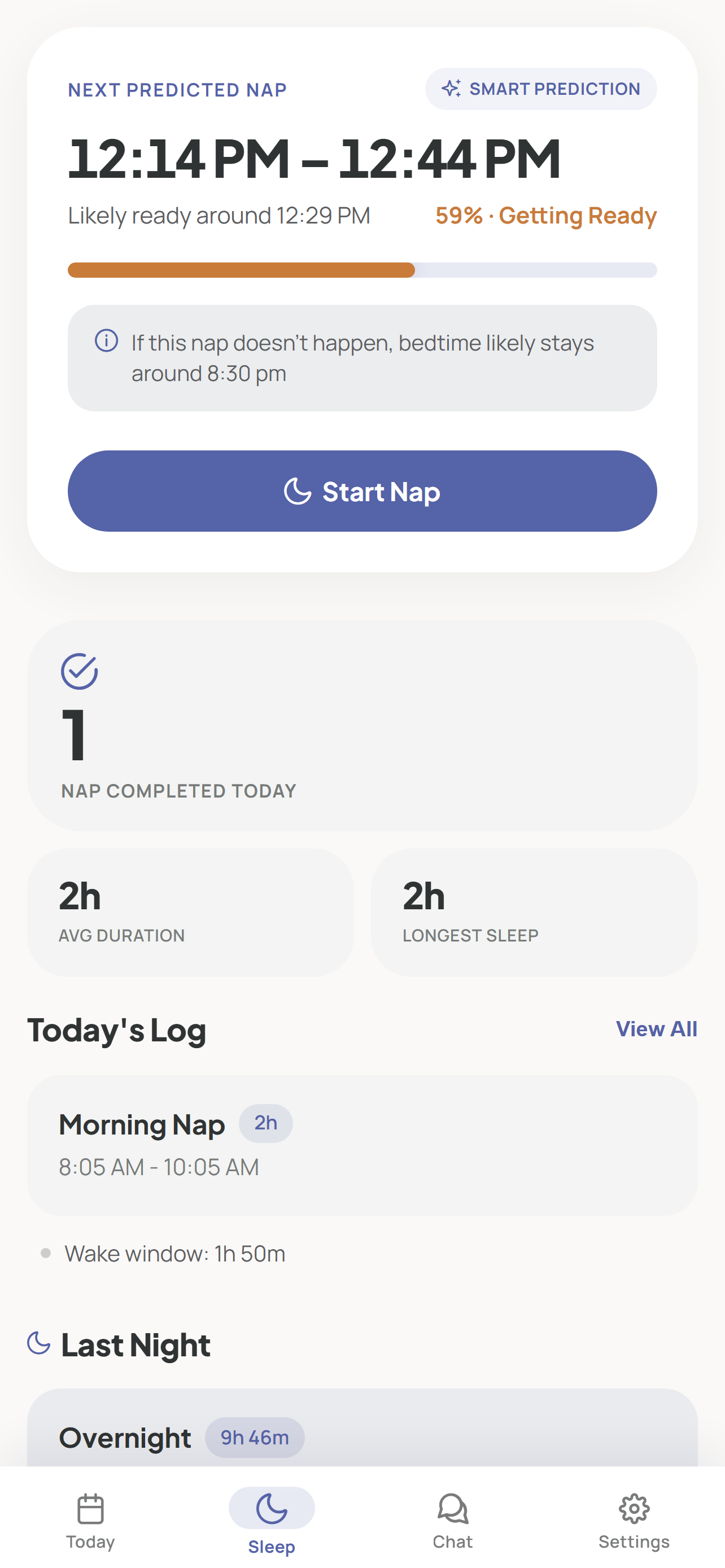
LunaLog learns your baby's actual rhythm from the naps you log and predicts the next nap window automatically — no mental math, and it updates itself as wake windows grow. Free to start, and both parents stay in sync in real time.
Try LunaLog free