Sixteen months means one nap for most toddlers: about 2 hours starting around 12:00 from a 7:00 AM wake, with a wake window of about 5 hours before it and 5.5–6 hours after, and bedtime settling in around 7:30–8:00 PM. Total sleep runs 11–14 hours across the day. The real nap ranges from about 1 to 2.5 hours, and bedtime anywhere from 7:00 to 8:00 PM is normal depending on how the day went.
If your toddler is newly on one nap, the most common problem this month isn't refusal — it's timing. A nap that starts at 10:30 is the old morning nap wearing a one-nap costume. It ends around 12:00, and a toddler who then has to stay awake until a 7:00 PM bedtime faces a 7-hour afternoon: meltdowns from 4:00, a car-seat doze at 5:15, and a bedtime that's either a fight or a second-wind disaster.
The too-early nap trap
A 10:30 nap feels fine in the morning — your toddler is tired then, because that's when the morning nap used to happen. The bill arrives after lunch. Once you're on one nap, its job is to split the day roughly in half: about 5 hours awake before, 5.5–6 hours after. Anchored at 10:30, the split is 3.5 hours before and 7 after, and no 16-month-old can carry 7 hours.
The fix is gradual. Move the nap 15 minutes later every 2–3 days — 10:45, 11:00, 11:15 — until it starts around 12:00–12:30. Use a snack, a walk outside, or a bath to bridge the last stretch before the new time; boredom is the enemy, novelty is the friend. Expect the nap to lengthen as it moves later, because a midday nap has more sleep pressure behind it.
The early-bedtime safety net
While the nap is on its way toward midday, the afternoon is still too long, and the buffer that absorbs it is bedtime. On a day the nap ended at noon, or was short, or got skipped, put bedtime at 6:30 PM without a second thought. It won't cause a 5:00 AM wake — an overtired bedtime is far more likely to do that than an early one. Judge by the wake window after the nap: once it stretches past 5.5–6 hours, you're borrowing from the night.
Two more habits pay off this month: a proper pre-nap routine (a short version of bedtime — dark room, sleep sack, a song) so the nap has a cue that isn't the clock, and a consistent start time within about 30 minutes once it lands. One nap carrying all the day's restoration deserves the same protection as night sleep.
Schedules are averages.
Your baby isn't.
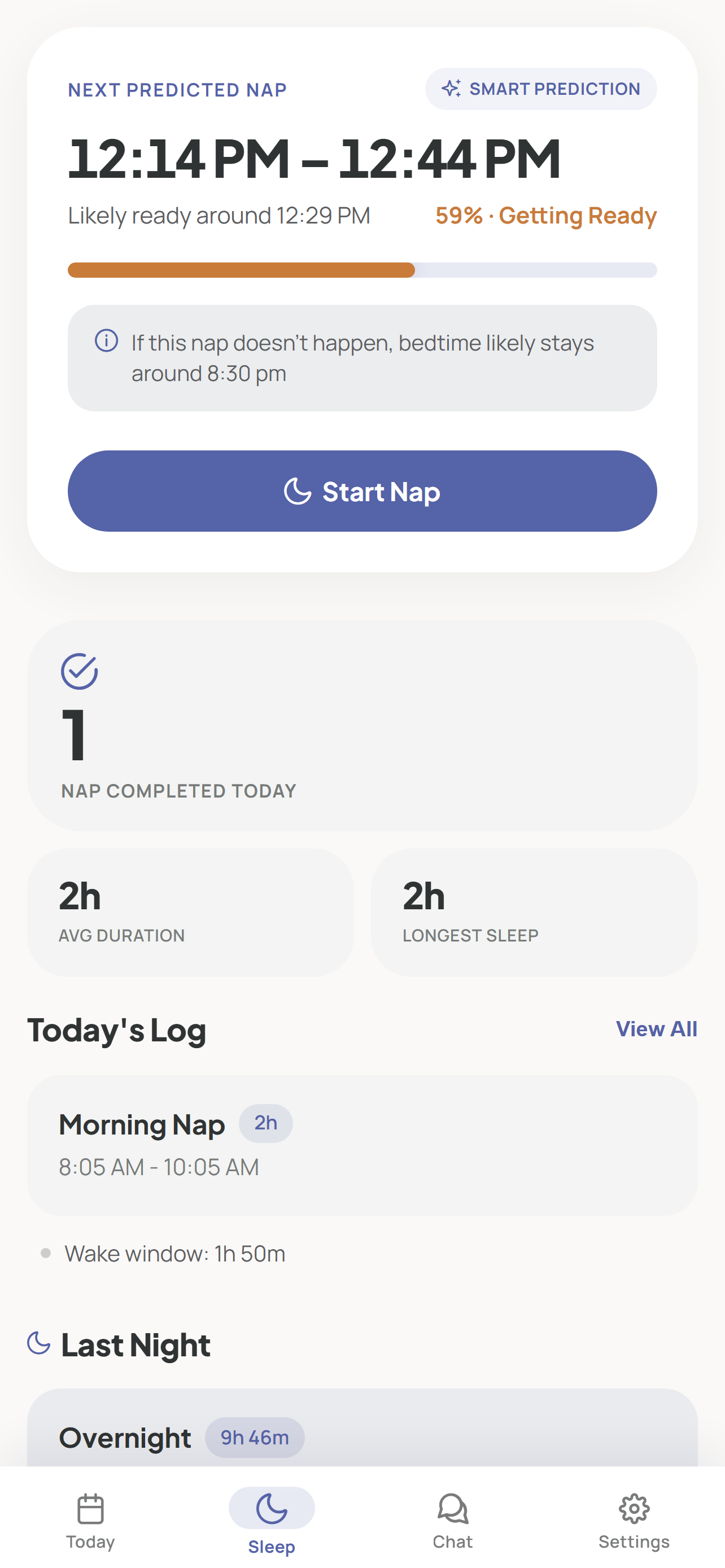
LunaLog learns your baby's actual rhythm from the naps you log and predicts the next nap window automatically — no mental math, and it updates itself as wake windows grow. Free to start, and both parents stay in sync in real time.
Try LunaLog free