The 17-month day runs on one nap of about 2 hours around 12:00–2:00 PM, with wake windows of roughly 5 hours before it and 5.5–6 hours after, and bedtime between 7:30 and 8:00 PM. Total sleep sits inside the 11–14 hour range for the age. Naps of anywhere from 1.5 to 2.5 hours are all normal, and the number to watch is no longer the nap's length but the wake window after it: as long as that stays under about 6 hours, the day is balanced.
The nap itself has plateaued. That's not a problem; it's the shape of the second year. The problem this month is that the toddler's day keeps getting bigger — more stamina, more words, more places to be — and the nap has to hold its position in the middle of it. The two sections below cover the two things most likely to knock it off: a late-morning outing, and a very chatty bedtime.
Crib talk and the language burst
Between 16 and 20 months many toddlers hit a naming explosion — new words daily, and a strong urge to use them. Some of that practice lands in the dark: singing, reciting names, babbling to a stuffed animal for 20–40 minutes after lights-out, or a cheerful monologue at 5:45 AM. This is normal and doesn't need intervening. A toddler talking calmly in the crib is self-settling; the words are how this age winds down.
The rule: happy talk gets left alone. Only go in for real distress, and then briefly and boringly. What you don't want is to teach that chatter summons a parent — that's how a 20-minute monologue becomes an hour of call-and-response. If the talk stretches well past 45 minutes most nights, check whether bedtime has drifted too early for the current wake window and push it 15 minutes later.
Protecting the nap from a late-morning outing
The 5-hour morning window is exactly the length of a real outing — playgroup at 10:00, errands, a grandparent visit — and the nap is the first casualty when it runs long. A toddler who dozes 10 minutes in the car at 11:40 has spent the nap's sleep pressure; the 12:30 nap will be short or refused, and bedtime pays.
- Book the outing early and aim to be home 20–30 minutes before nap time, so the pre-nap routine still happens.
- Feed lunch early if you're cutting it close — a hungry toddler doesn't nap.
- Keep car and stroller dozes under 10 minutes — if it's going to be longer, let it become the nap and plan on an early bedtime.
- A nap that starts by 1:00 PM is still fine; later than that, cap it at 3:30 PM so bedtime holds.
Schedules are averages.
Your baby isn't.
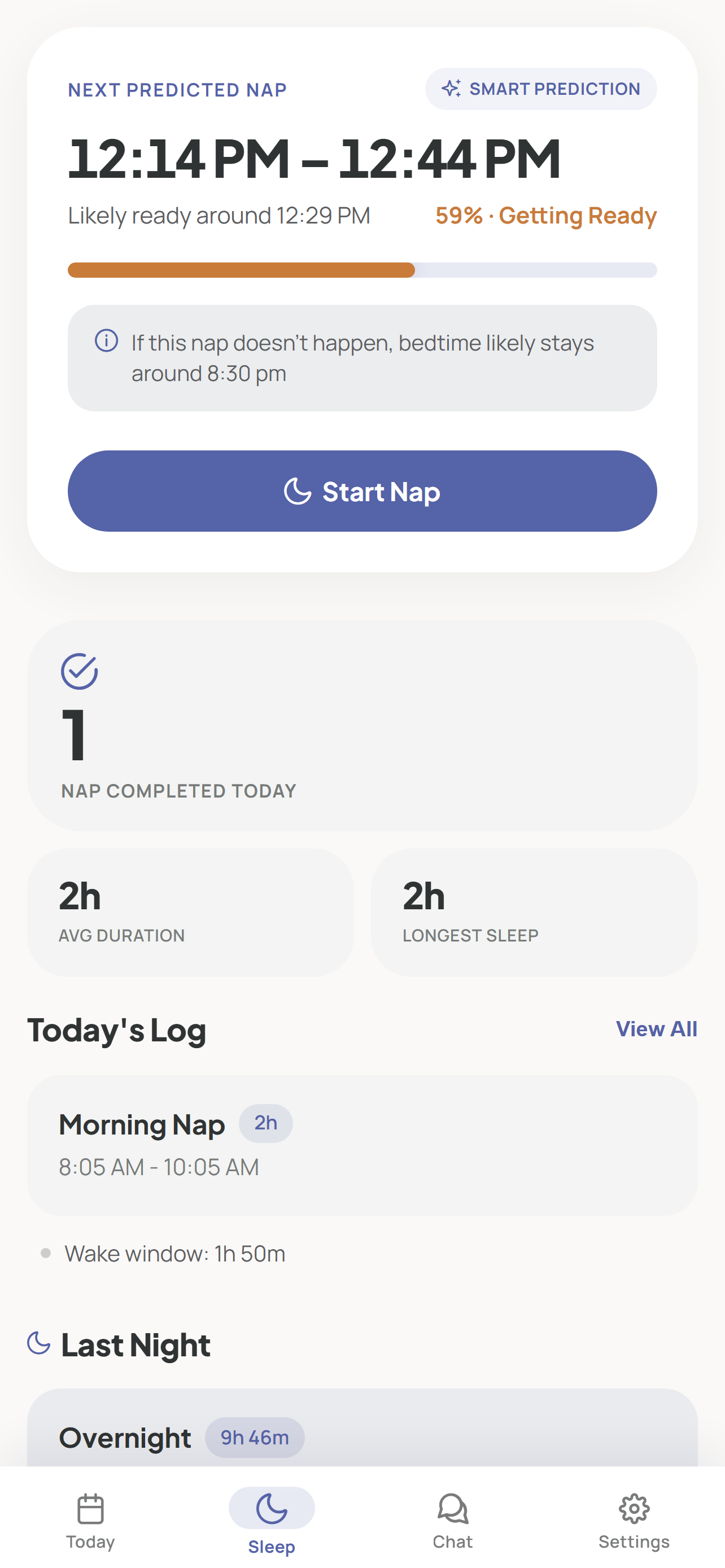
LunaLog learns your baby's actual rhythm from the naps you log and predicts the next nap window automatically — no mental math, and it updates itself as wake windows grow. Free to start, and both parents stay in sync in real time.
Try LunaLog free