The 19-month schedule is unchanged from a couple of months ago: one nap of about 2 hours around midday, wake windows of roughly 5 hours before and 5.5–6 hours after, bedtime between 7:30 and 8:00 PM. What's new is the reception the nap gets. A toddler who napped without complaint at 17 months may now announce "no nap," throw the sleep sack over the rail, and spend 30 minutes jumping and shouting before sleeping — or not.
It's tempting to read this as the nap being done. It almost never is. Children typically keep a daily nap until somewhere around age 3, and a 19-month-old who skips it is visibly worse by 4:00 PM, not better. The refusal wave is about autonomy, not sleep need, and it burns out in a few weeks if the nap offer stays boring and identical. This page covers how to hold the line without turning it into a battle.
Why this isn’t a 1→0 transition
The real 1→0 transition — dropping the nap for good — typically happens between 3 and 5 years, and its signature is a toddler who skips the nap and is fine: cheerful through the afternoon, falling asleep easily at a normal bedtime, sleeping through. A 19-month-old on strike shows the opposite: crashes in the car at 4:30, melts down at dinner, fights bedtime out of overtiredness, wakes early. That mismatch is the tell.
Other things that look like nap-dropping and aren't: the 18-month regression running late, teething (canines typically arrive between 16 and 23 months), a big language week, or a bedtime that's crept early enough that the nap now starts too soon after a long night. Check the wake window before the nap — if it's under 5 hours, push the nap 15 minutes later before assuming anything else.
The 20-minute quiet-time rule
Don't rescue a protesting toddler at the first shout. Give it 20 minutes of quiet time in the crib — dark room, white noise, no visits for cheerful noise — before deciding the nap isn't happening. A large share of "refused" naps at this age start 15 minutes in, once the novelty of standing up wears off. If there's real distress, go in once, lay them down, say the same short phrase, leave. Don't restart the routine.
If 20 minutes passes with no sleep, get them up calmly and neutrally — no lecture, no fuss, because fuss is interesting. Then move bedtime earlier by 30–60 minutes: a skipped nap means 6:30 PM; a 45-minute nap means about 7:00 PM. That's the whole plan. Keep offering the nap at the same time every day, treat each one as fresh, and expect the wave to pass in 2–4 weeks.
Schedules are averages.
Your baby isn't.
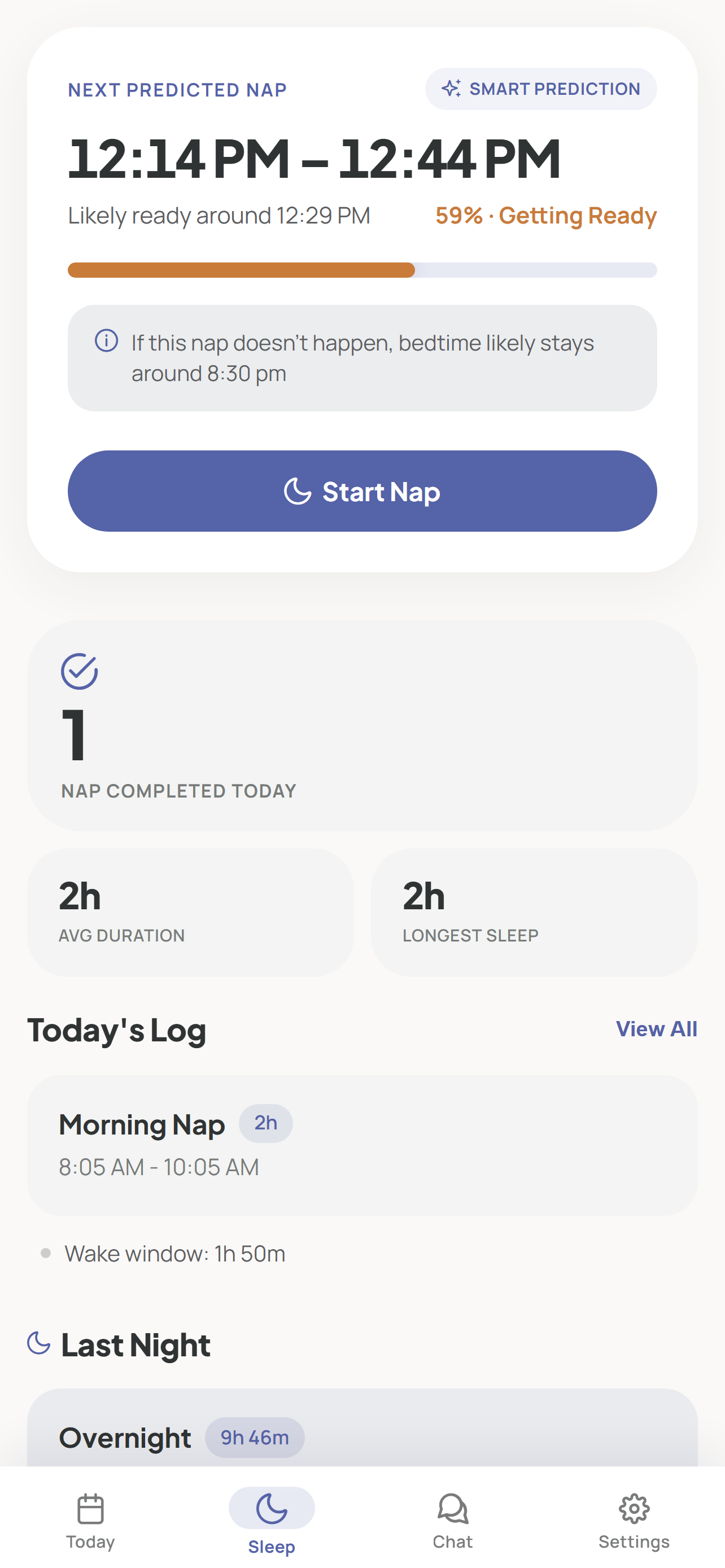
LunaLog learns your baby's actual rhythm from the naps you log and predicts the next nap window automatically — no mental math, and it updates itself as wake windows grow. Free to start, and both parents stay in sync in real time.
Try LunaLog free