The 20-month day is one nap, about 2 hours around 12:00–2:00 PM, a wake window of about 5 hours before it and an afternoon window of 5–6 hours after, and bedtime around 7:30–8:00 PM. Total sleep sits at 11–14 hours over the day. The afternoon window is the one that matters most now: 5–6 hours is a long stretch for a toddler, and how it's structured — snack, outdoor time, a calm hour before dinner — decides whether bedtime is easy or a fight.
Because the schedule itself isn't moving this month, it's a good time to add rather than fix. The two things worth adding are quiet-time scaffolding, so the concept exists before it's ever needed, and a plan for the transitions that tend to cluster around this age — weaning, daycare — so they don't take sleep down with them.
Starting quiet time now (so it exists later)
Quiet time — 45–60 minutes of solo, calm play in a dim room — is what eventually replaces the nap, usually well after age 3. Toddlers who meet it for the first time on the day naps end fight it. Toddlers who've had a version of it for a year treat it as furniture. So build it now, in miniature, without touching the nap:
- Attach it to the nap routine: before the sleep sack goes on, 5–10 minutes of quiet crib play with one or two soft toys or board books, lights low.
- Use the same cue every time — a phrase, a song, a specific basket of toys that only comes out then.
- On a refused-nap day, let the crib time run 20–30 minutes as quiet time rather than an argument, then get them up.
- Don't extend it yet. The nap still does the work; this is just the vocabulary.
Sleep and big transitions: weaning, daycare
Weaning from the breast or bedtime bottle rarely disrupts sleep for long if the rest of the routine stays identical. Replace the feed with something of the same length and closeness — a cup of milk at the start of the routine, then books and a song in the same chair — and change one feed at a time, bedtime last. Expect a few nights of protest, not weeks. Questions about timing or nutrition go to your pediatrician.
A daycare start usually means a shorter or later nap on a group schedule and a wiped-out toddler at 5:30 PM. For the first 2–3 weeks, move bedtime 30 minutes earlier on daycare days and keep home days on the normal schedule; the nap will settle once the room is familiar. Send the same sleep sack and comfort object, and share your nap time with the staff — most rooms can get close.
Schedules are averages.
Your baby isn't.
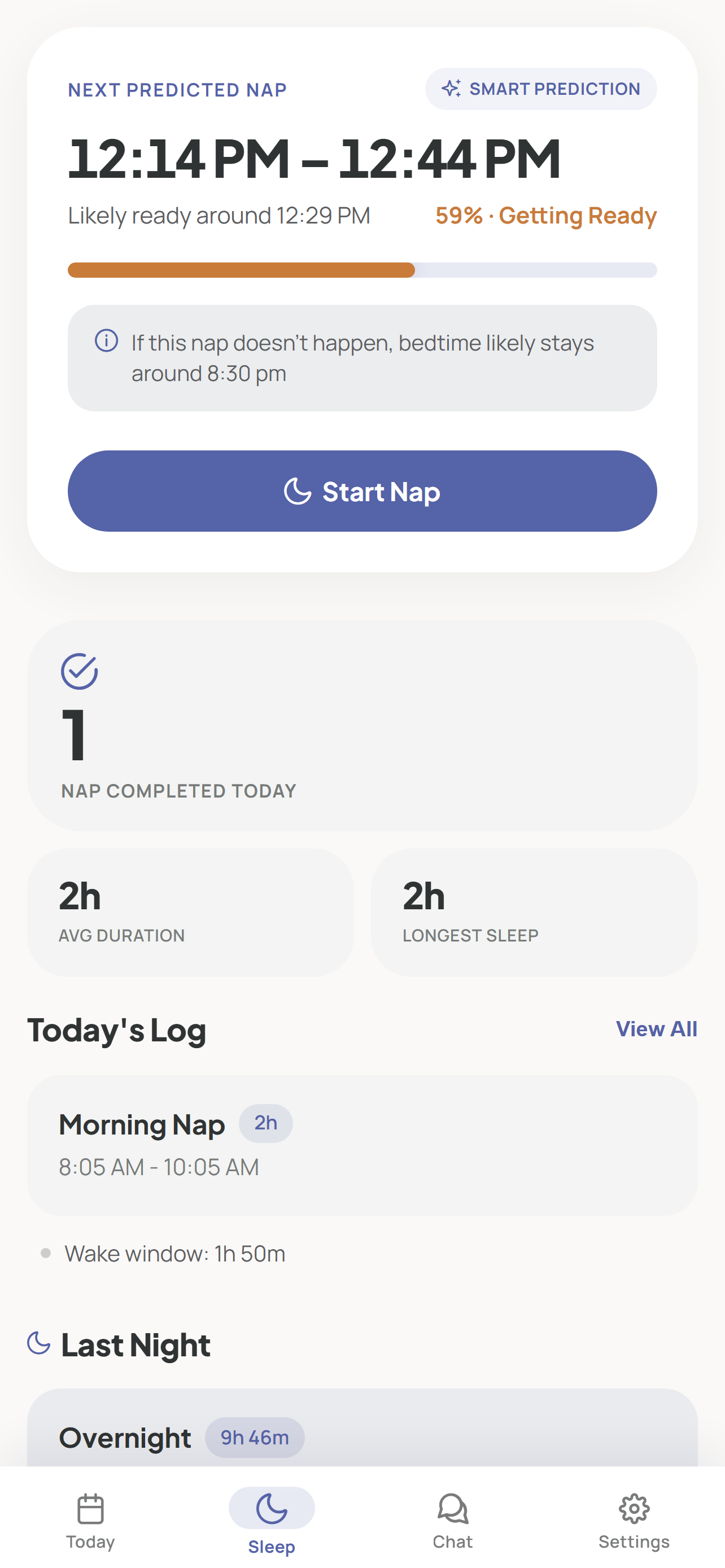
LunaLog learns your baby's actual rhythm from the naps you log and predicts the next nap window automatically — no mental math, and it updates itself as wake windows grow. Free to start, and both parents stay in sync in real time.
Try LunaLog free