The schedule is steady: one nap of about 2 hours around midday, wake windows of about 5 hours before it and 5.5–6 hours after, bedtime between 7:30 and 8:00 PM, and 11–14 hours of total sleep. Sleep ability is not the issue at 21 months. Willingness is — and so is the sudden need to check that you're still there.
The strategy for both is the same: make bedtime so predictable that there's nothing to negotiate, and give the toddler small, real decisions inside that structure so independence has somewhere to go. A routine that's the same 20 minutes in the same order every night becomes a thing that just happens, like the sun going down. Choices offered inside it — two options, both acceptable to you — take the fight out of the transitions. And for night wakings, the response is warm, brief, and identical, because what a clingy toddler needs at 2 AM is proof you're reliable, not a long visit.
Two bounded choices, not open questions
The trick that works at this age is offering two choices you're equally happy with at each step of the routine: "Blue pajamas or the star ones?" "Brush teeth first, or books first?" "Do you want to climb into the crib, or shall I lift you?" The toddler chooses, feels the power, and the routine moves on. What you don't offer is the open question — "Ready for bed?" — because the honest answer is always no.
A few rules keep it working: both options must actually end in bed; you announce the choice rather than asking permission; and when a third option is proposed ("no pajamas!"), you repeat the two on offer once and then choose for them, calmly. The number of books is stated up front and doesn't change. Stalling that works once will be tried nightly, so the boundary needs to hold on the nights you're tired too.
The 20-minute fixed sequence and the 2 AM visit
Write the routine down and do it in the same order every night, in about 20 minutes: bath or wash, pajamas, teeth, two books, a song, sleep sack, into the crib, one phrase, lights out. Same words at the end. Toddlers can't read a clock, but they can read a sequence, and a known sequence is soothing precisely because it isn't up for discussion. If separation anxiety is sharp, add a brief goodnight tour — "night-night lamp, night-night bear" — which gives the ending a shape.
For night wakings, keep the response brief, warm and identical: go in, a hand on the back, the same phrase from bedtime, leave. Don't start a new routine at 2 AM or bring them into your bed unless you want that to be the new arrangement. The peak passes within a few weeks; consistency is what makes it pass faster.
Schedules are averages.
Your baby isn't.
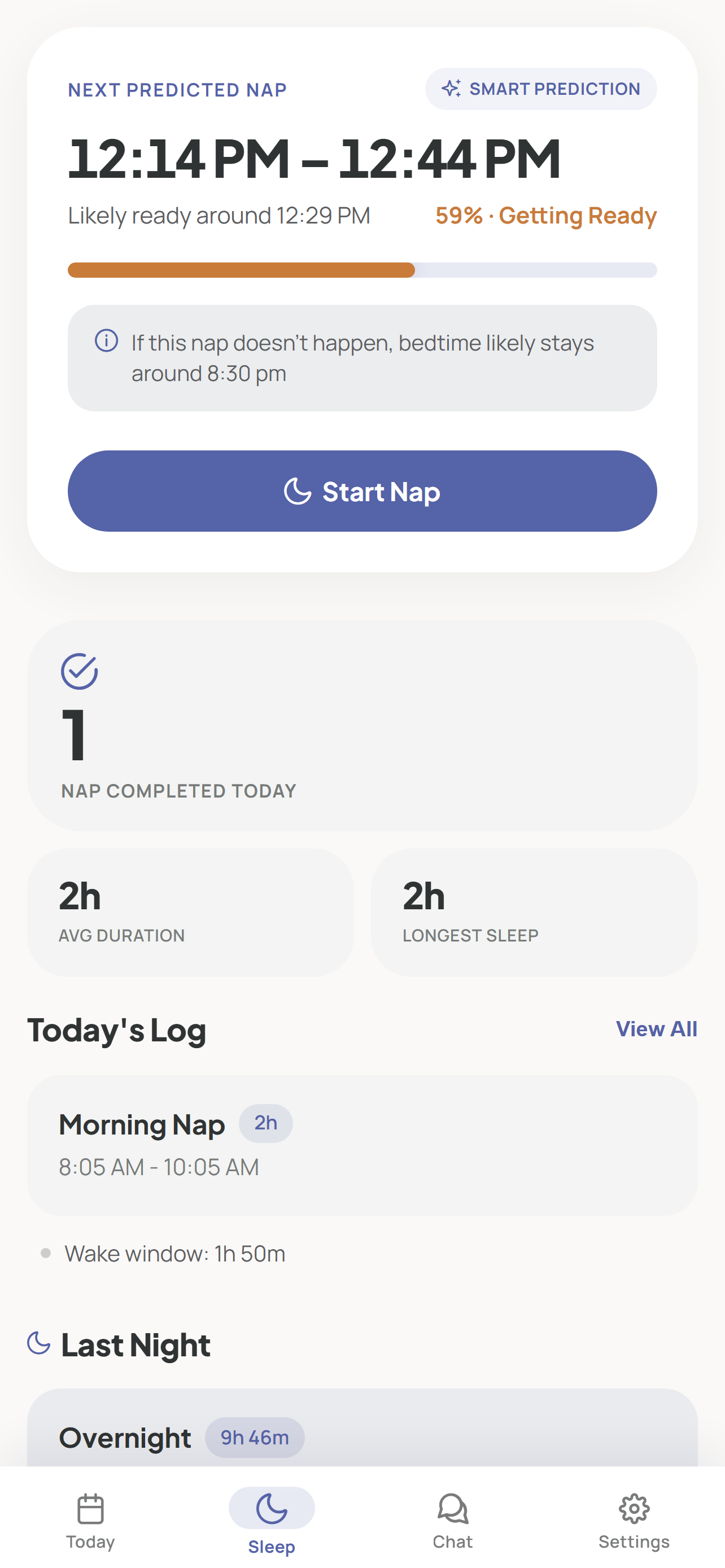
LunaLog learns your baby's actual rhythm from the naps you log and predicts the next nap window automatically — no mental math, and it updates itself as wake windows grow. Free to start, and both parents stay in sync in real time.
Try LunaLog free