The day still runs on one nap — about 2 hours around midday, wake windows of about 5 hours before and 5.5–6 hours after, bedtime between 7:30 and 8:00 PM — and total sleep in the 11–14 hour range. That's the schedule; the story this month is what pushes against it.
Three things show up in the same fortnight for many families. First, the early edge of the 2-year regression: bedtime protest, new night wakings, and 5:30 AM starts in a toddler who'd been sleeping through. Second, the crib-to-bed question, usually raised by a toddler who suddenly hates the crib — or by a second baby on the way. Third, if a sibling is coming, the whole cluster of room and routine changes that go with it. All three have a version of the same answer: change as little as possible right now, because the regression passes on its own and most of the moves you're tempted to make will outlast it.
Early signs of the 2-year regression
Watch for the trio: bedtime protest (crying at lights-out from a toddler who used to settle, new requests, new fears — "monster," "dark"), night wakings that need you rather than resettling alone, and early rising, often 5:00–5:30 AM with no obvious cause. Any one is a bad week; all three together for a couple of weeks is the regression arriving early. It typically runs 2–6 weeks.
The response is the same as at 18 months, with one addition. Keep the routine and the nap exactly where they are; respond to night wakings briefly and identically; and don't drop or shorten the nap because bedtime is hard — an overtired toddler protests more, not less. The addition: take new fears seriously without feeding them. A dim night-light, a quick "check" together at bedtime, and a calm "you're safe, it's sleep time" beat either dismissing the fear or a 20-minute monster hunt.
Crib to bed: wait — and time it around a sibling
Keep the crib until closer to 3 unless your toddler is climbing out. A crib is a boundary a 22-month-old can't argue with; a bed is a door to the hallway, and a toddler this age doesn't yet have the impulse control to stay in one. Nearly every early move produces weeks of wandering and a longer bedtime. If climbing is happening, it's a safety issue: lower the mattress, use a sleep sack, and if that fails, move — but that's the only reason to.
If a new baby is coming and you need the crib, make the move at least 2 months before the birth, or 2 months after — not at it. A toddler who loses the crib the week the baby arrives connects the two, and you'll be handling a regression, a new sibling, and a bed transition at once. A second crib or a bassinet for the newborn buys the time.
Schedules are averages.
Your baby isn't.
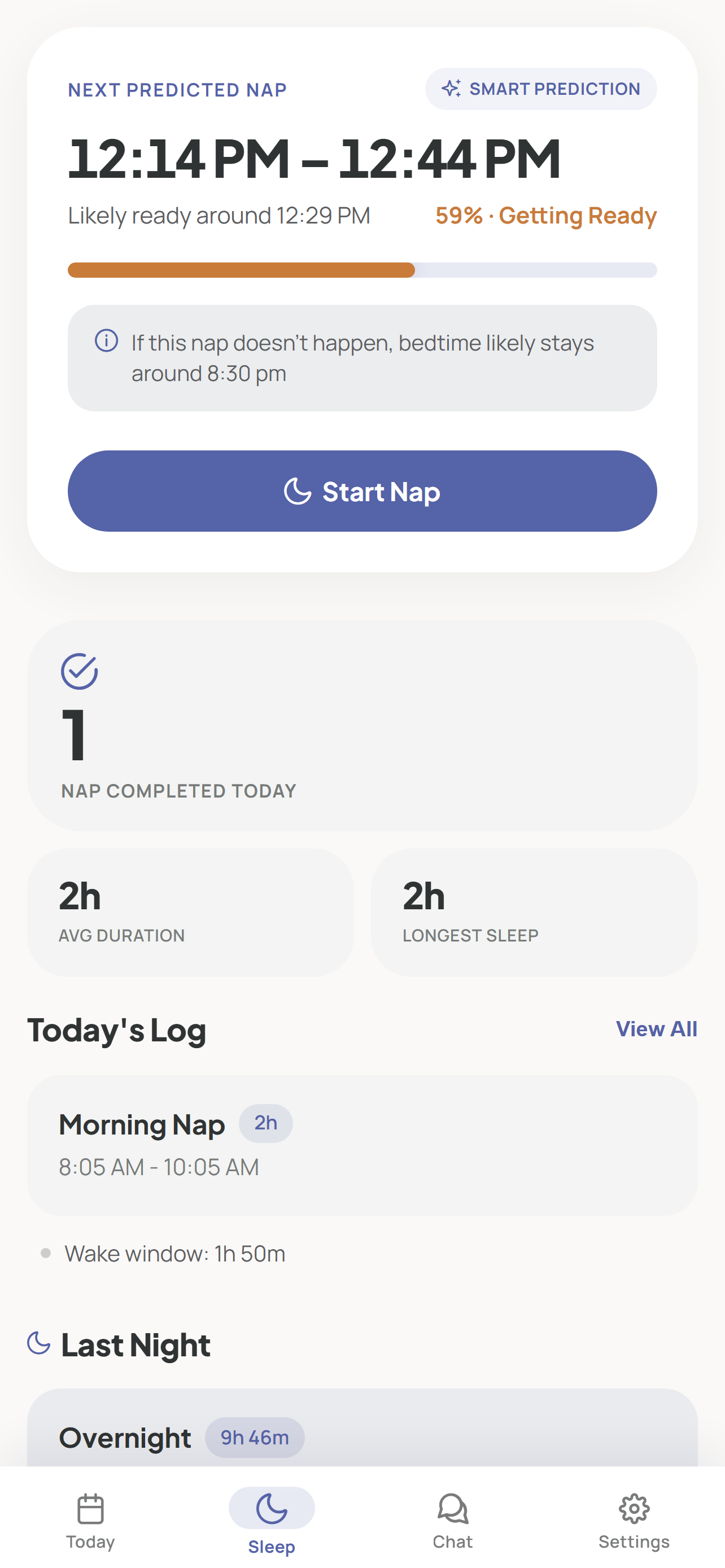
LunaLog learns your baby's actual rhythm from the naps you log and predicts the next nap window automatically — no mental math, and it updates itself as wake windows grow. Free to start, and both parents stay in sync in real time.
Try LunaLog free