At 23 months the framework holds: one nap starting around 12:00–12:30, wake windows of about 5 hours before it and 5.5–6 hours after, bedtime between 7:30 and 8:00 PM, and 11–14 hours of total sleep including the nap. Most toddlers this age land around 12–13 hours: an 11-hour night plus a 1–2 hour nap.
The nap is where the variation is. Plenty of 23-month-olds still sleep 2 hours at midday; a growing share have shortened to 60–90 minutes and wake cheerful. If yours has, don't fight the nap — the fix is arithmetic. Every 30 minutes lost at midday is 15 minutes to take off bedtime, so a nap that's shrunk from 2 hours to 1 gets a 7:15 PM bedtime instead of 7:45. This page also covers the two other timing jobs that tend to land right around now: a daylight-saving clock change, and the end of the bedtime bottle.
When the nap shrinks: move bedtime, not the nap
A nap that suddenly runs 60–90 minutes in an otherwise happy, healthy toddler is usually just the new size. Resist the urge to extend it by starting earlier (that creates a longer afternoon and more overtiredness) or by resettling at the 60-minute mark (it rarely works past 18 months). Instead, move bedtime 15 minutes earlier for each half-hour the nap has lost, and watch the afternoon window: with a nap ending at 1:15 PM, bedtime should be no later than about 7:00.
Keep the nap start where it is — 12:00–12:30 — and keep the pre-nap routine. If short naps come with an unhappy afternoon, check the usual suspects first: illness, second molars, a bedtime that has drifted late enough to cut the night short. If short naps come with a cheerful afternoon and a good night, that's your toddler's nap now.
Daylight saving and the bedtime bottle
Clock changes: shift the whole schedule — wake, nap, meals, bedtime — in 15-minute steps over 4 days, starting 4 days before the change. For "spring forward," move everything 15 minutes earlier each day; for "fall back," 15 minutes later. Blackout curtains handle the light; a fixed morning wake time (don't let them sleep in past 7:30) handles the rest. Expect about a week of slightly off evenings.
The bedtime bottle: by two, milk at bedtime is a comfort habit rather than a nutritional need, and a bottle in the crib is a dental problem. Move the milk to the start of the routine, in a cup, before teeth-brushing; keep every other step the same. Then, over a week or two, shrink the amount. Expect a few nights of protest, not more. If there are any questions about weight or intake, ask your pediatrician before cutting.
Schedules are averages.
Your baby isn't.
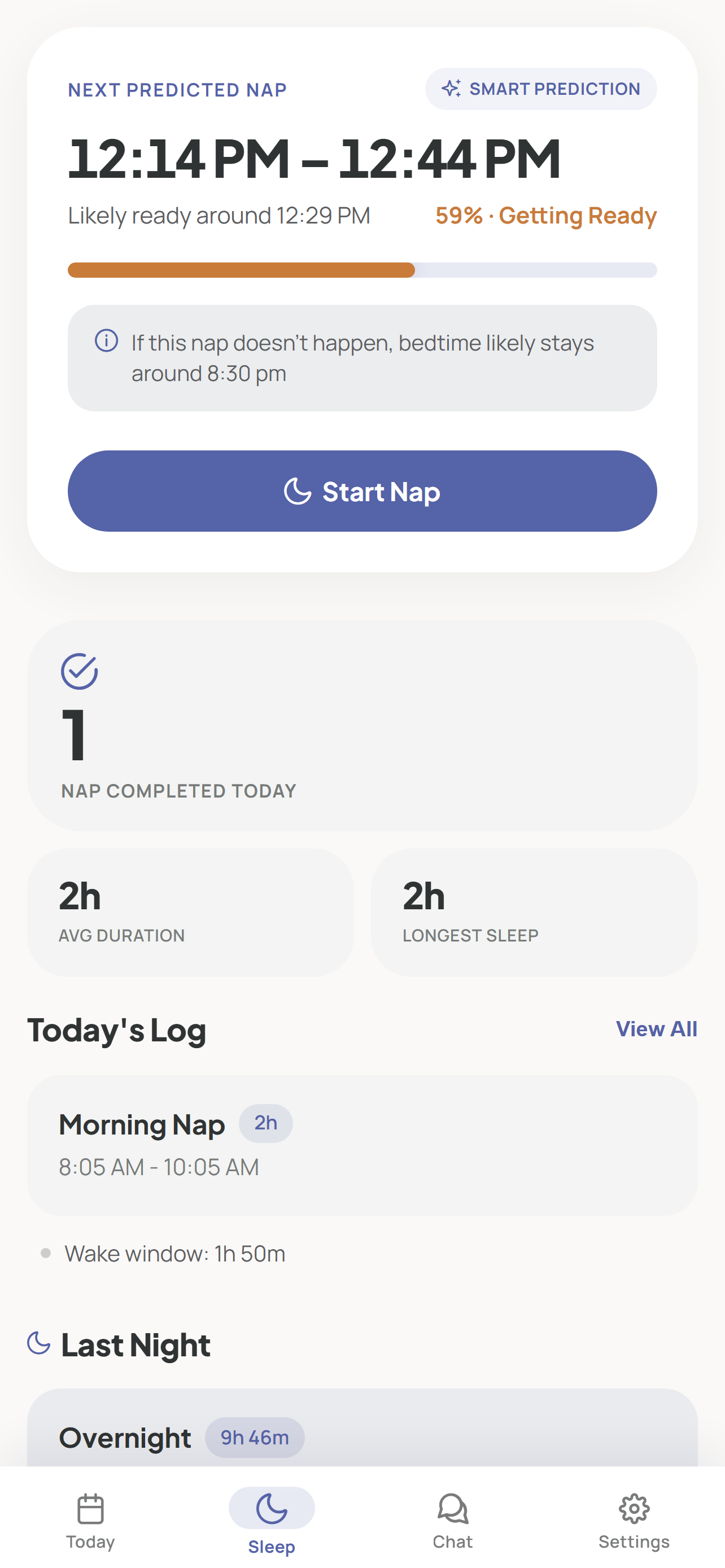
LunaLog learns your baby's actual rhythm from the naps you log and predicts the next nap window automatically — no mental math, and it updates itself as wake windows grow. Free to start, and both parents stay in sync in real time.
Try LunaLog free