At two months your baby is more alert and social — which burns energy faster than it looks. Wake windows sit around 45–75 minutes, and most babies still take 4–6 naps of wildly varying length. The exciting development: many babies now produce one longer night stretch of 4–6 hours, and it usually comes at the start of the night.
The witching hour
Late-afternoon and evening fussiness peaks around 6–8 weeks. It's not something you're doing wrong — it's an immature nervous system at the end of a stimulating day. What helps: an earlier, calmer evening (dim lights after 6 PM), cluster feeding if your baby asks, motion (carrier, rocking), and tag-teaming with your partner so nobody absorbs the whole shift.
Start anchoring bedtime
You can't schedule the whole day yet, but you can make bedtime consistent: same room, same dim light, same short routine (feed, swaddle, song) at roughly the same time each night. That consistent cue is what the maturing circadian rhythm organizes itself around — it's the highest-leverage habit of the next month.
Schedules are averages.
Your baby isn't.
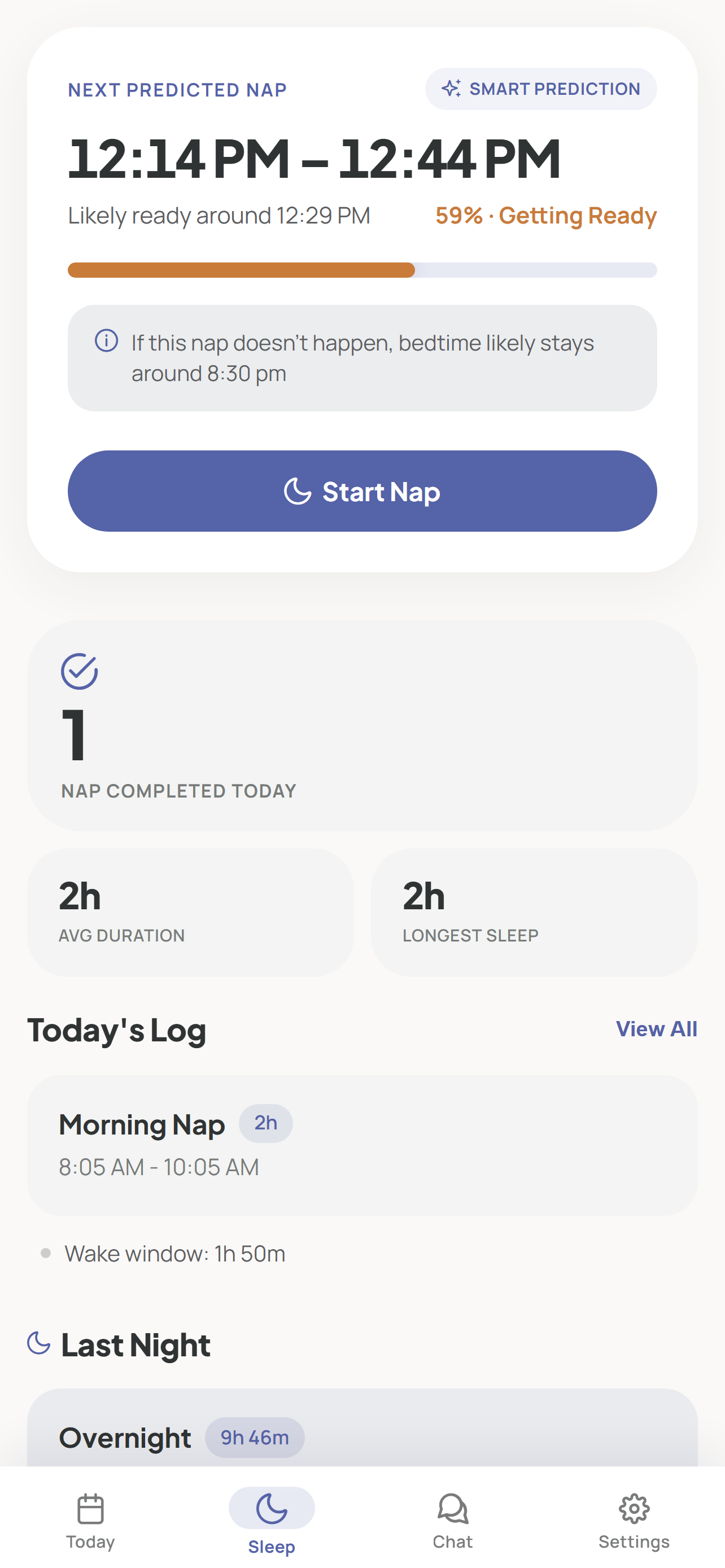
LunaLog learns your baby's actual rhythm from the naps you log and predicts the next nap window automatically — no mental math, and it updates itself as wake windows grow. Free to start, and both parents stay in sync in real time.
Try LunaLog free