What are wake windows?
A wake window is the stretch of time your baby can comfortably stay awake between sleeps. While your baby is awake, sleep pressure builds — a biological drive to sleep that accumulates minute by minute. Offer a nap when the pressure is high but not overwhelming, and your baby settles quickly and sleeps well. Miss the window, and stress hormones kick in to fight the fatigue — which is why an overtired baby paradoxically fights sleep hardest.
Wake windows grow fast in the first two years: a newborn manages about an hour awake, a 6-month-old around two and a quarter hours, and an 18-month-old five hours or more. Because they change so quickly, the schedule that worked last month can quietly stop working — most "sudden" nap battles are really a wake window that grew.
How to use wake windows
- Count from wake-up to falling asleep — wind-down time (feed, story, rocking) is awake time, so start your routine 10–15 minutes before the window closes.
- Start from the chart, then adjust to your baby. If naps take 20+ minutes of fussing to start, try a longer window. If your baby melts down before naptime, shorten it.
- Expect the first window to be shortest and the last one before bedtime to be the longest of the day.
- Watch cues over the clock. The window tells you when to start watching; your baby tells you when it's time.
Sleepy cues that mean "offer sleep now"
- Rubbing eyes or ears, or pulling at hair
- Yawning and slower, "glazed" movements
- Losing interest in toys and people, staring into space
- Getting clingy, whiny, or burying the face in your shoulder
Signs the window is too short (undertired)
- Plays or chats in the crib for 20+ minutes before sleeping
- Takes a short "power nap" and wakes up happy
- Fights the nap without seeming tired
- Early bedtime leads to a false-start evening waking
Signs the window is too long (overtired)
- Meltdown or "second wind" hyperactivity before sleep
- Falls asleep in under 5 minutes, then wakes after 30–45
- More night wakings than usual
- Waking earlier and earlier in the morning
When wake windows change: nap transitions
Every few months, a growing wake window stops fitting the current nap count — and your baby drops a nap. The rough timeline: 4 naps → 3 around 4–5 months, 3 → 2 around 7–9 months, 2 → 1 around 13–18 months, and the last nap fades around age 3.
Transition signs: suddenly fighting the last nap of the day, taking 30+ minutes to fall asleep at bedtime, or a new streak of early-morning wakings. Transitions take two to three weeks — on the days the dropped nap is sorely missed, protect your baby with an earlier bedtime rather than forcing the old schedule.
Charts are averages.
Your baby isn't.
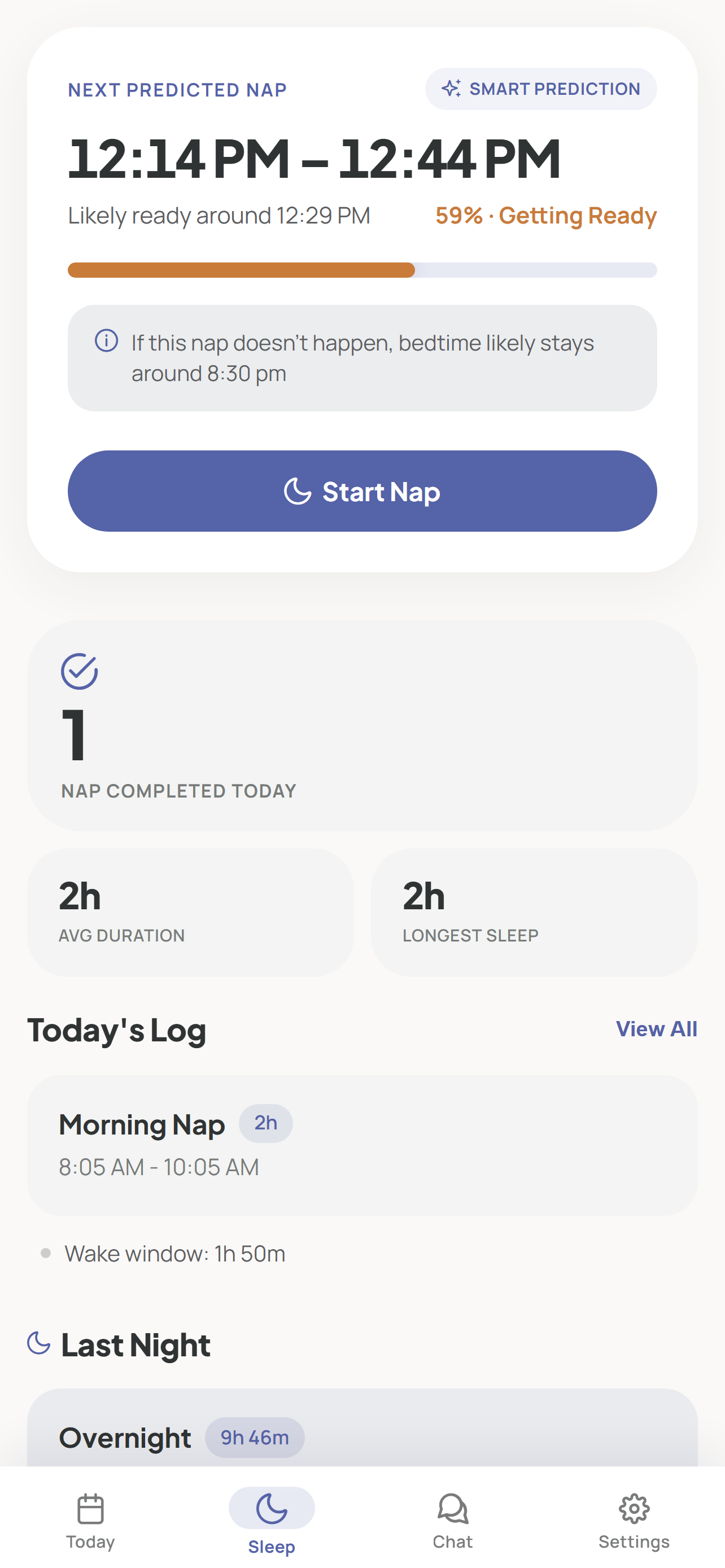
LunaLog learns your baby's actual rhythm from the naps you log and predicts the next nap window automatically — no mental math, and it updates itself as wake windows grow. Free to start, and both parents stay in sync in real time.
Try LunaLog free