A 25-month-old typically runs on one nap of 60–120 minutes starting around 12:00–1:00 PM, wake windows of 5–6 hours on either side, and a 10–12 hour night starting between 7:00 and 8:00 PM — roughly 11–14 hours per 24 hours in total. If the last month was rough, read the sample day above as the shape you're returning to, not a standard you're failing.
"Back to normal" after the 2-year regression looks like this: the nap is taken most days without a fight, falling asleep takes 10–20 minutes instead of an hour, and night wakings — if any — are brief and settle with a quick check. Not perfect; just boring. If you're not there yet, the two levers that still matter most are a bedtime that hasn't slid past 8:00 PM and a nap that isn't ending after 3:00 PM. Give the schedule two consistent weeks before you conclude something is wrong.
Unwinding the regression habits
Regressions leave souvenirs. To survive the bad weeks you may have added something — lying down until asleep, a second cup of milk, an open door, a bedtime that drifted to 8:45 PM. None of that was a mistake; it was triage. But now that sleep ability is back, each souvenir has become the thing standing between you and the schedule above.
- Change one thing at a time. Pick the habit costing you the most sleep, change it, and hold for 4–5 nights before judging.
- Walk bedtime back 15 minutes every 2–3 nights until it lands between 7:00 and 8:00 PM.
- Cap the nap's end at 3:00 PM — a late nap end is still the quiet bedtime-wrecker.
- Expect one protest night per change. Warm, brief, identical responses; it passes fast when the underlying regression is over.
Nightmares vs night terrors
- Nightmares happen in the second half of the night. Your toddler wakes fully, is scared, wants you, and may remember the dream in the morning. Go in, comfort briefly, stay calm and matter-of-fact ("that was a dream, you're safe, I'm here"), and settle them back in their own bed.
- Night terrors happen in the first third of the night, usually 1–3 hours after falling asleep. Eyes may be open, they may scream, thrash, or look straight through you — but they are not awake, and they won't remember it. Don't try to wake them; keep them safe from falling or hitting anything, speak softly, and wait it out — typically 5–15 minutes. Don't bring it up in the morning.
Night terrors cluster when a toddler is overtired, sick, or off schedule, so an earlier bedtime for a week is the best prevention. If they're frequent, very long, or you have any concern about breathing, talk to your pediatrician.
Schedules are averages.
Your baby isn't.
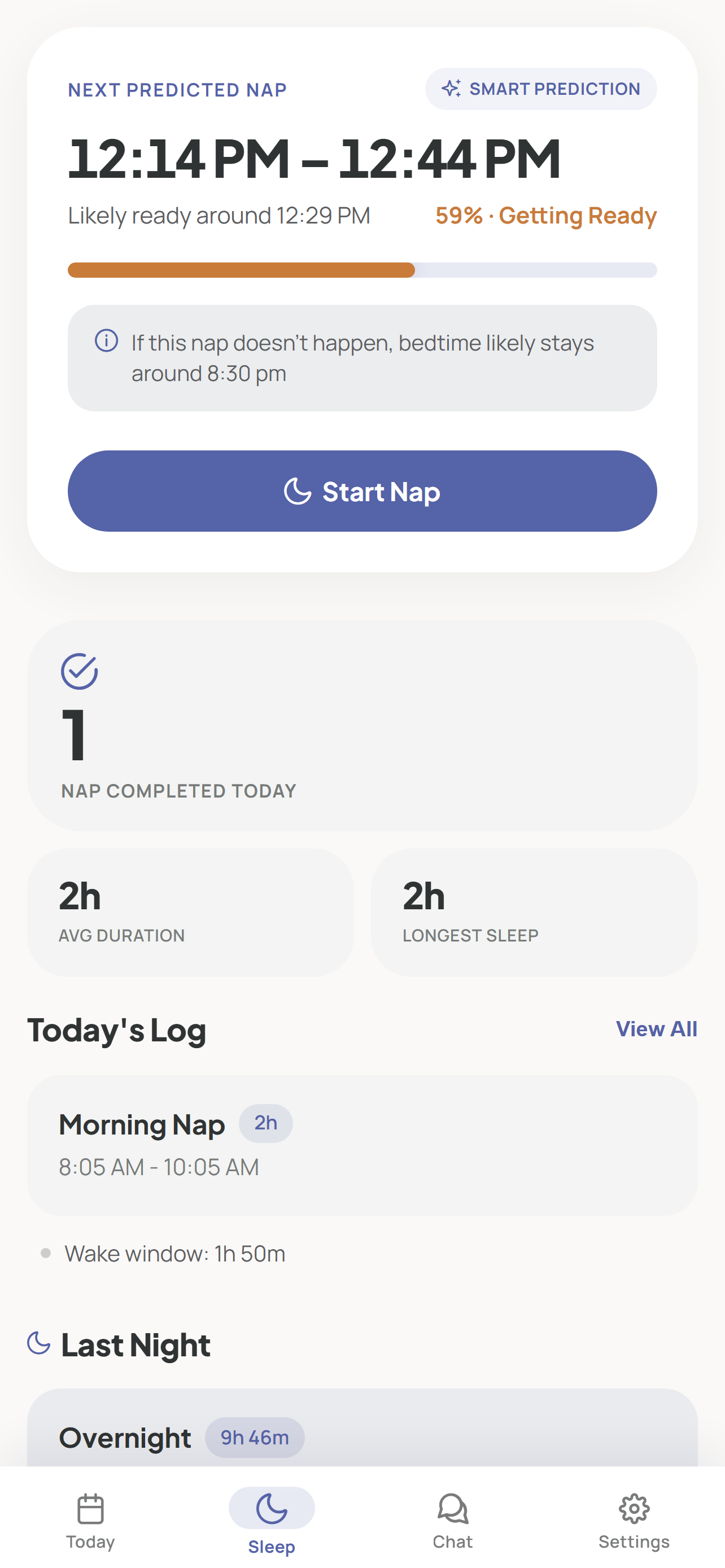
LunaLog learns your baby's actual rhythm from the naps you log and predicts the next nap window automatically — no mental math, and it updates itself as wake windows grow. Free to start, and both parents stay in sync in real time.
Try LunaLog free