At 26 months most toddlers still need one nap of 60–120 minutes starting around 12:00–1:00 PM, with wake windows of 5–6 hours before and after and bedtime between 7:00 and 8:00 PM — around 11–14 hours of sleep per day in total. The schedule above is the target on a normal day; the reason you're here is probably that normal days have become rare.
Nap fights at this age are almost always about control, not about sleep. A 26-month-old is building an identity out of preferences, and "I don't nap" is a wonderfully large preference to hold. The job isn't to win the fight; it's to remove it. Below: a frame that takes the argument off the table, and a checklist for the question every parent asks around now — is the nap being skipped, or is it actually done? At 26 months, it's the first one almost every time.
Nap or quiet time — your choice
The nap is offered every day, at the same time, in the same dark room, after the same short pre-nap ritual. What happens after the door closes is the toddler's business: sleep, or quiet time. Quiet time means staying in the crib or room with a couple of board books and a soft toy for 45–60 minutes. There's nothing to argue about because you're not asking for sleep — only for the room and the hour.
- Say it out loud, calmly: "It's rest time. You can sleep or look at books. I'll come get you when rest time is over."
- Don't retrieve them early because they're chatting or singing. Chatting is fine; it's often the runway to sleep.
- Do get them at the end, cheerfully, regardless of what happened.
- Hold it for 2–3 weeks before judging. Once the fight loses its audience, sleep usually comes back within a week or two.
Skipped nap or dropped nap?
A skipped nap shows up later in the day: a 5:00 PM meltdown, falling asleep in the car seat on the way home from anything, a bedtime that dissolves into tears, or an early wake the next morning. If any of those are happening on nap-free days, your toddler still needs the nap — the refusal is a preference, not a signal.
A dropped nap looks like the opposite: skipping the nap and staying genuinely pleasant until a 7:00–7:30 PM bedtime, for two weeks or more — and on the days they do nap, bedtime pushing past 9:00 PM with an hour of lying awake. At 26 months, that pattern is rare.
On any skipped-nap day, the response is the same: bedtime moves to 6:30–7:00 PM, no exceptions. An early bedtime is what stops one lost nap from becoming a lost week.
Schedules are averages.
Your baby isn't.
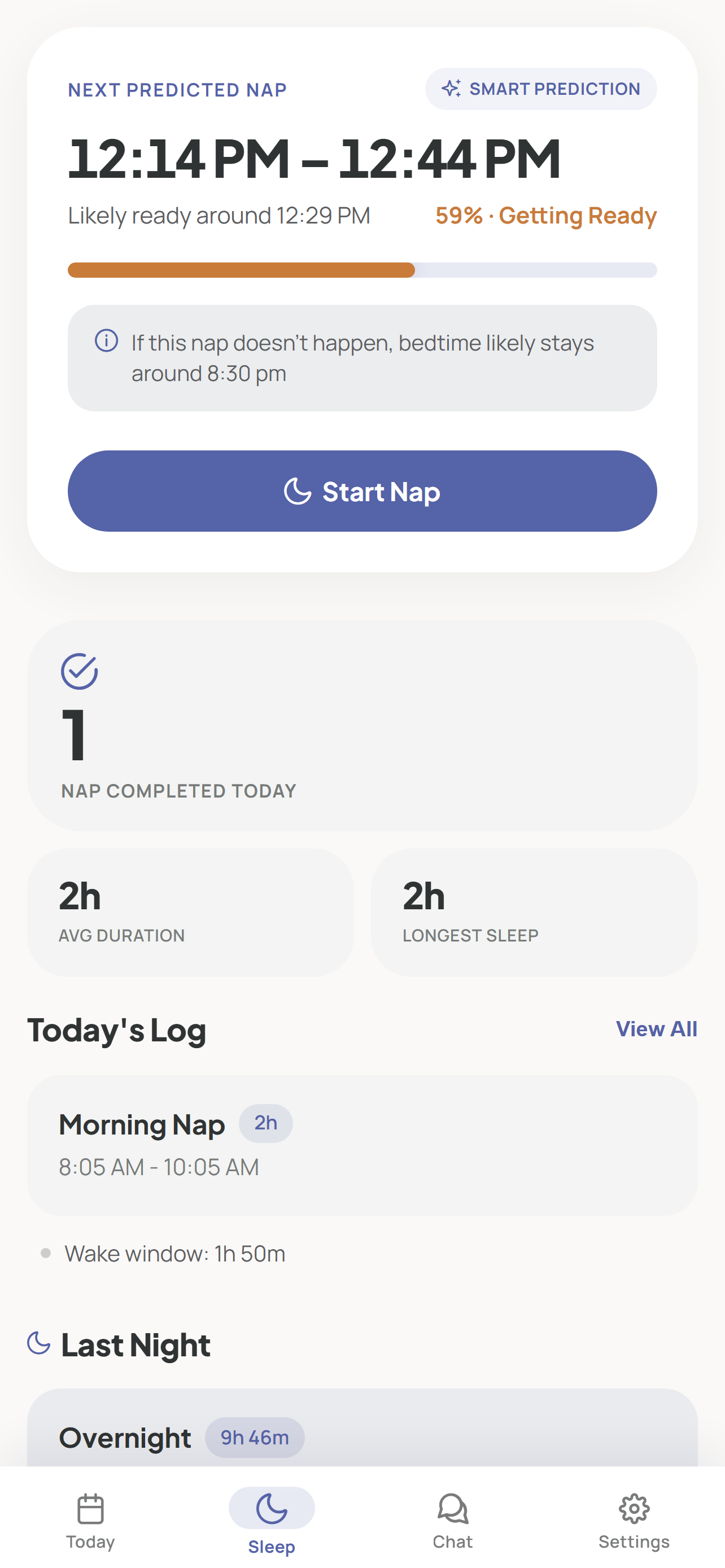
LunaLog learns your baby's actual rhythm from the naps you log and predicts the next nap window automatically — no mental math, and it updates itself as wake windows grow. Free to start, and both parents stay in sync in real time.
Try LunaLog free