At 27 months the shape of the day is stable: one nap of 60–120 minutes around 12:00–1:00 PM, wake windows of 5–6 hours, and an 11–12 hour night beginning between 7:00 and 8:00 PM. Sleep ability is rarely the problem now. The problem is the 40 minutes between "goodnight" and actual sleep, filled with curtain calls — each small, each plausible, each buying another two minutes of you.
Curtain calls run on a simple economy: whatever worked last night gets ordered again tonight. The fix isn't to be sterner; it's to change the economy so that stalling stops paying. Three tools do most of the work — a bedtime pass that gives the toddler one legitimate callback, a visual routine chart that makes the sequence the boss instead of you, and a routine that stays under 30 minutes and ends inside the room, not in the hallway. None of them require a single raised voice.
The bedtime pass
A bedtime pass is a physical token — an index card, a laminated star, a wooden coin — handed over at lights-out. It's good for one callback or trip out of the room for anything at all: water, a kiss, a question about dinosaurs. When it's used, the toddler hands it back and it's spent. Any further calls get the boring return: walk back, tuck in, no conversation.
- Introduce it in daylight. Explain the rule, practise "using" it with a stuffed animal, get excited about it.
- Honour it instantly and warmly when it's spent — the point is that the one request is fully legitimate.
- Optional sweetener: an unused pass in the morning earns a small choice (which cereal, which song in the car).
Around 2½ to 3 most toddlers grasp it fully; some 27-month-olds do and some don't. If it doesn't land after a week, shelve it and retry in two months.
Twenty to thirty minutes, ending in the room
Stalling thrives in long routines, so keep the whole thing to 20–30 minutes: bath (or a wipe-down), pajamas, teeth, two books, one song, lights. A visual chart — photos or simple drawings of each step, in order — turns you from decision-maker into narrator. The toddler points to what's next; the chart says two books, not you.
Pre-empt the classics before the door closes: water bottle in reach, potty or fresh diaper done, the book count announced at the start. Then finish the routine in the room. The last step — song, "goodnight, I love you, see you in the morning" — happens with you beside the crib or bed, and then you leave. If the goodbye happens in the hallway, the room becomes the place they were left, and every callback is an attempt to get back to where the goodbye was. Same words, same order, every night.
Schedules are averages.
Your baby isn't.
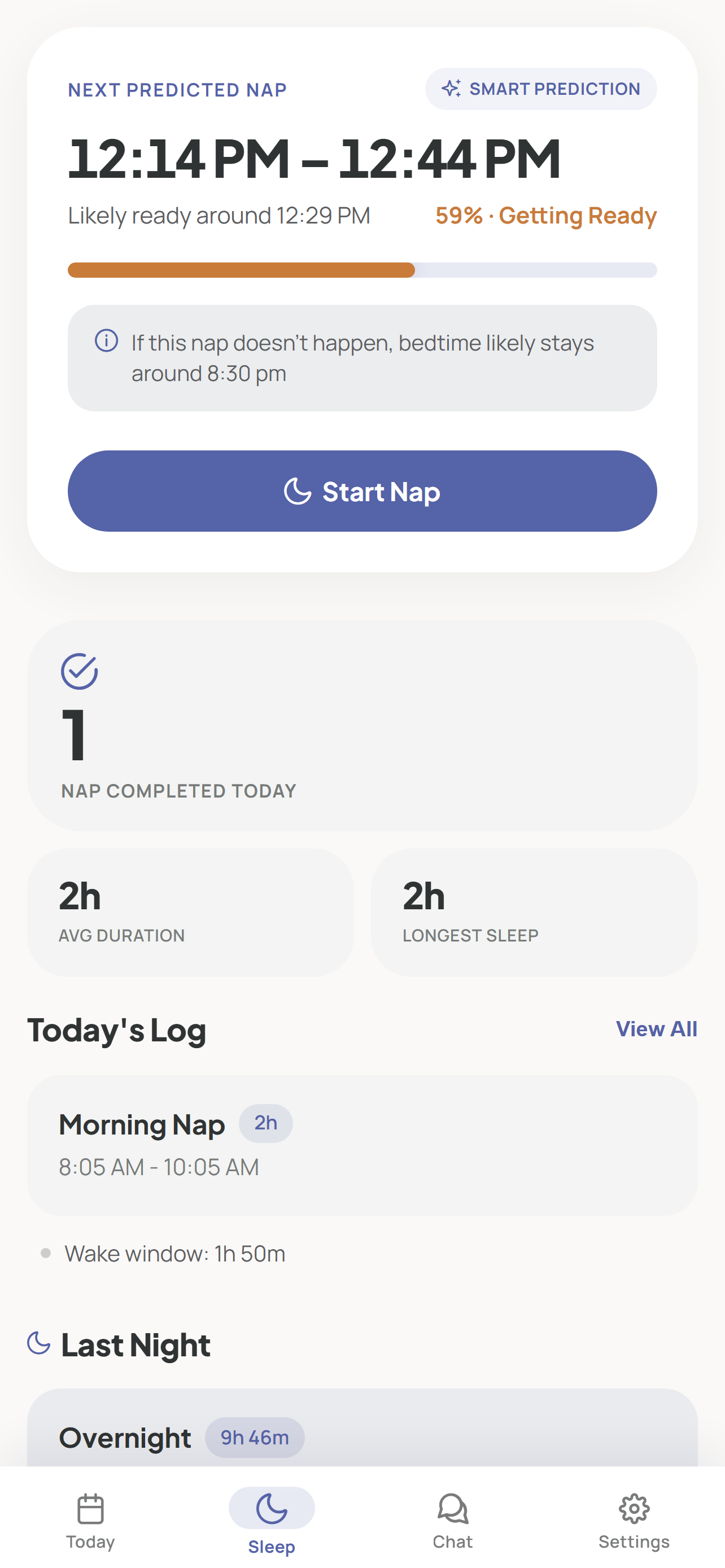
LunaLog learns your baby's actual rhythm from the naps you log and predicts the next nap window automatically — no mental math, and it updates itself as wake windows grow. Free to start, and both parents stay in sync in real time.
Try LunaLog free