A 28-month-old still does best on one nap of 60–120 minutes around 12:00–1:00 PM, wake windows of 5–6 hours, and an 11–12 hour night starting between 7:00 and 8:00 PM. That schedule is largely held together by one piece of furniture. A crib is a physical boundary; a bed is a suggestion — and a toddler who can leave the room has, in their own view, been handed the keys to the house.
The nap is the first casualty of an early move. A 28-month-old who can walk out of the room at 12:30 PM generally will, and a lost nap at this age costs an early bedtime, a rough evening, and often an early wake. Then bedtime itself becomes an hour of returns. So the default is to wait — usually until close to 3 — unless safety forces the issue. Below: why waiting works, the one real exception, and how to do it well if the exception applies to you.
Why waiting until ~3 usually goes better
Around 3, three things arrive that make a bed workable: enough impulse control to stay put when they'd rather not, enough language to hold a rule in mind after you've left, and enough understanding for tools like a bedtime pass to work. At 28 months those are all half-built. Moving now typically costs 30–60 minute bedtimes, wandering at 2 AM, and a nap that vanishes for weeks.
The climbing-out exception: if your toddler climbs out confidently and repeatedly with the mattress on its lowest setting and a sleep sack hasn't stopped it, safety wins — a fall from a crib rail is the worse outcome, and you move now.
The sibling exception is usually not one: a newborn spends months in a bassinet, and a second-hand crib costs far less than a lost nap. Give the toddler the crib and buy the baby time.
If you must: how to do it
- Same layout. Put the bed where the crib was; keep the same wall, same nightlight, same sound machine. Change one thing, not the room.
- The room becomes the crib. Anchor furniture, secure cords and blinds, and use a gate at the door so a toddler who wanders finds a safe room, not the stairs.
- Same routine, same words. Nothing else about bedtime changes that week.
- Rehearse in daylight: "This is your bed. At bedtime you stay in it until morning." Practise lying down, practise staying.
- Boring returns. When they get up, walk them back silently — no talking, no eye contact, no negotiation — every single time. Night one might be twenty returns; night four is usually two.
- The nap happens in the bed too. Same rules, same returns.
- Don't stack it with potty training or a new baby in the same month. Expect 1–2 weeks to settle.
Schedules are averages.
Your baby isn't.
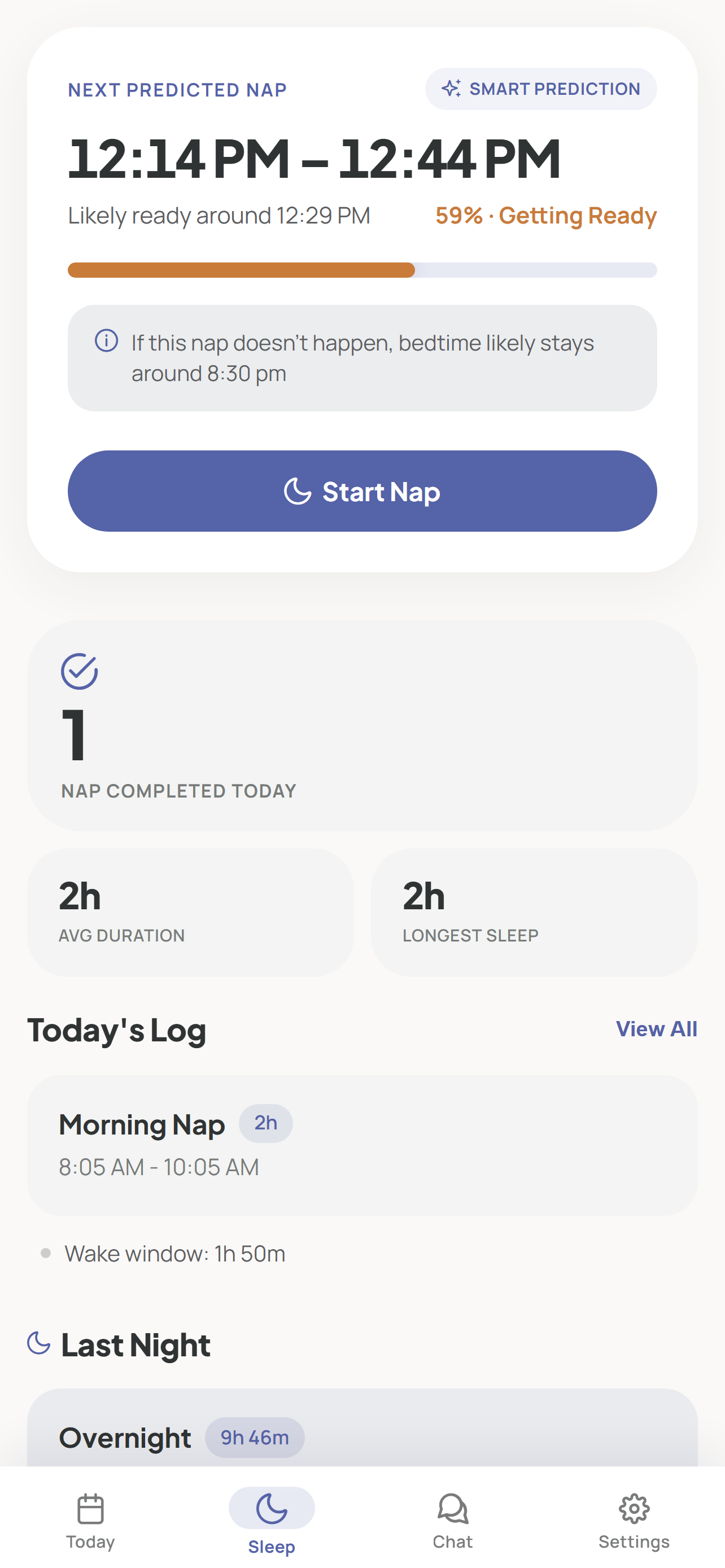
LunaLog learns your baby's actual rhythm from the naps you log and predicts the next nap window automatically — no mental math, and it updates itself as wake windows grow. Free to start, and both parents stay in sync in real time.
Try LunaLog free