A 29-month-old typically needs one nap of 60–120 minutes around 12:00–1:00 PM, wake windows of 5–6 hours, and 10–12 hours at night starting between 7:00 and 8:00 PM — 11–14 hours per day in all. Early waking is what happens when the night ends before the sleep need does — or when the sleep need is genuinely met by 5:15 AM because the rest of the schedule is too generous. Telling those apart is the first job.
A toddler who wakes at 5 AM cheerful, stays cheerful all day, and naps normally has probably had enough sleep — the fix is to shift the schedule, not to chase more sleep. A toddler who wakes at 5 AM cranky, melts down mid-morning, and takes a long nap is short on sleep, usually because bedtime is too late or the last hour of the night is being cut off by light, noise, or the promise of something good. Four levers cover nearly every case.
The four levers
- Bedtime: not too late, not too early. Overtiredness is the most common cause — cortisol makes the early morning lighter and easier to wake from — so a bedtime past 8:00 PM often causes 5 AM. But a 6:30 PM bedtime plus a two-hour nap can simply finish the sleep need by 5. Aim for 7:00–8:00 PM and adjust 15 minutes at a time, holding each change for 4–5 days.
- Block the light. Dawn is the body's alarm clock. Blackout blinds plus tape over the edges; if you can read in the room at 5:30 AM, it's not dark enough.
- Give them a signal. An OK-to-wake light (or a lamp on a timer) makes "morning" a thing they can see rather than a thing you announce.
- Don't pay for it. Screens, breakfast, or getting into your bed at 5:10 AM are all excellent reasons to wake at 5:10 AM tomorrow.
Making the clock actually work
Set the light to turn on 15 minutes after the current wake time — 5:15 AM if they're waking at 5. That sounds pointless; it isn't. The first goal is for the toddler to experience the light coming on and get an enthusiastic "the light's on, it's morning!" Once they connect the two (usually 3–5 days), push the light later by 10–15 minutes every few days until it lands where you want it, typically 6:00–6:30 AM.
Before the light, you're boring: "the light's not on, it's still sleeping time," and back down. No lifting out, no chat, no hallway. Use the same light at nap time so it gets twice the practice. Most families see the shift in 2–3 weeks. If it hasn't moved at all by then, the problem is usually lever one — the bedtime — or a nap that's running too long or too late.
Schedules are averages.
Your baby isn't.
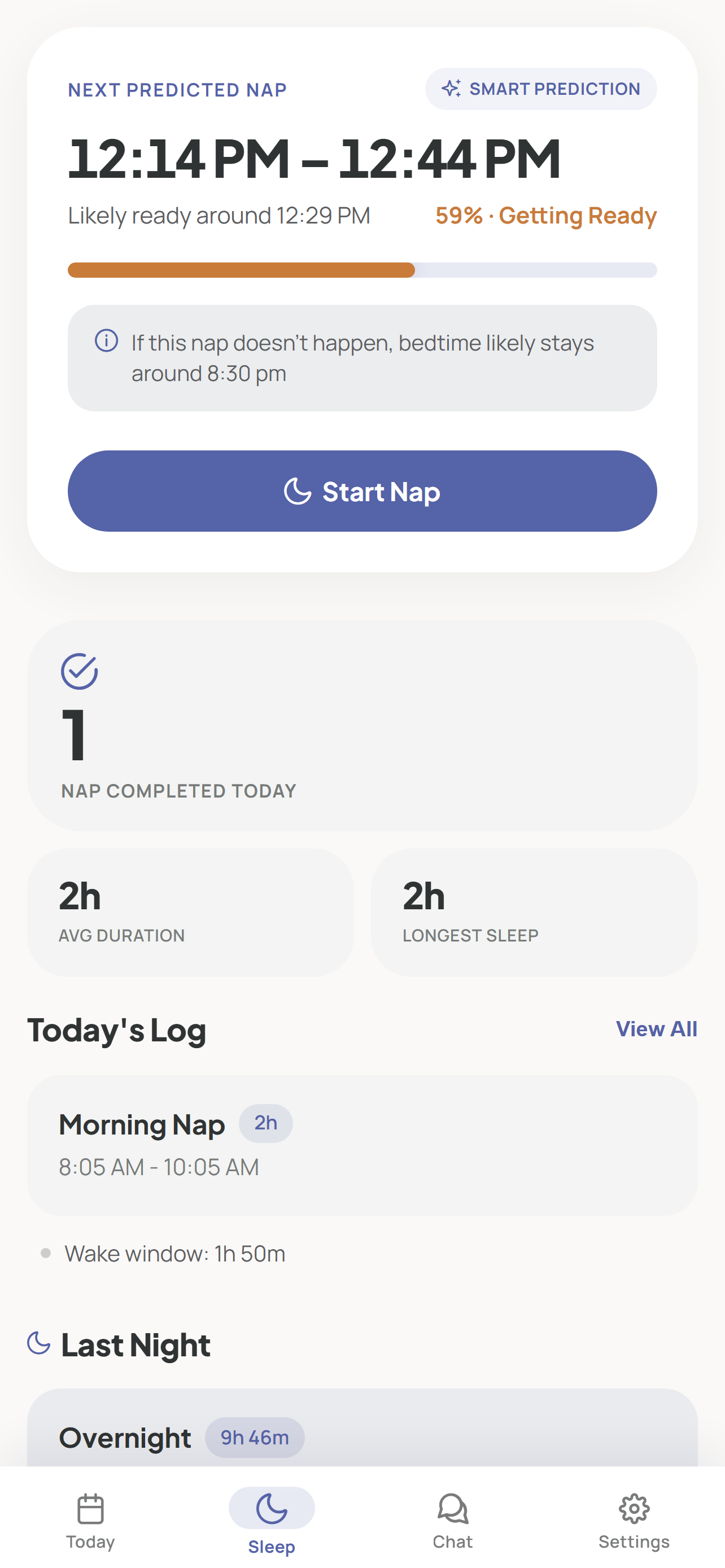
LunaLog learns your baby's actual rhythm from the naps you log and predicts the next nap window automatically — no mental math, and it updates itself as wake windows grow. Free to start, and both parents stay in sync in real time.
Try LunaLog free