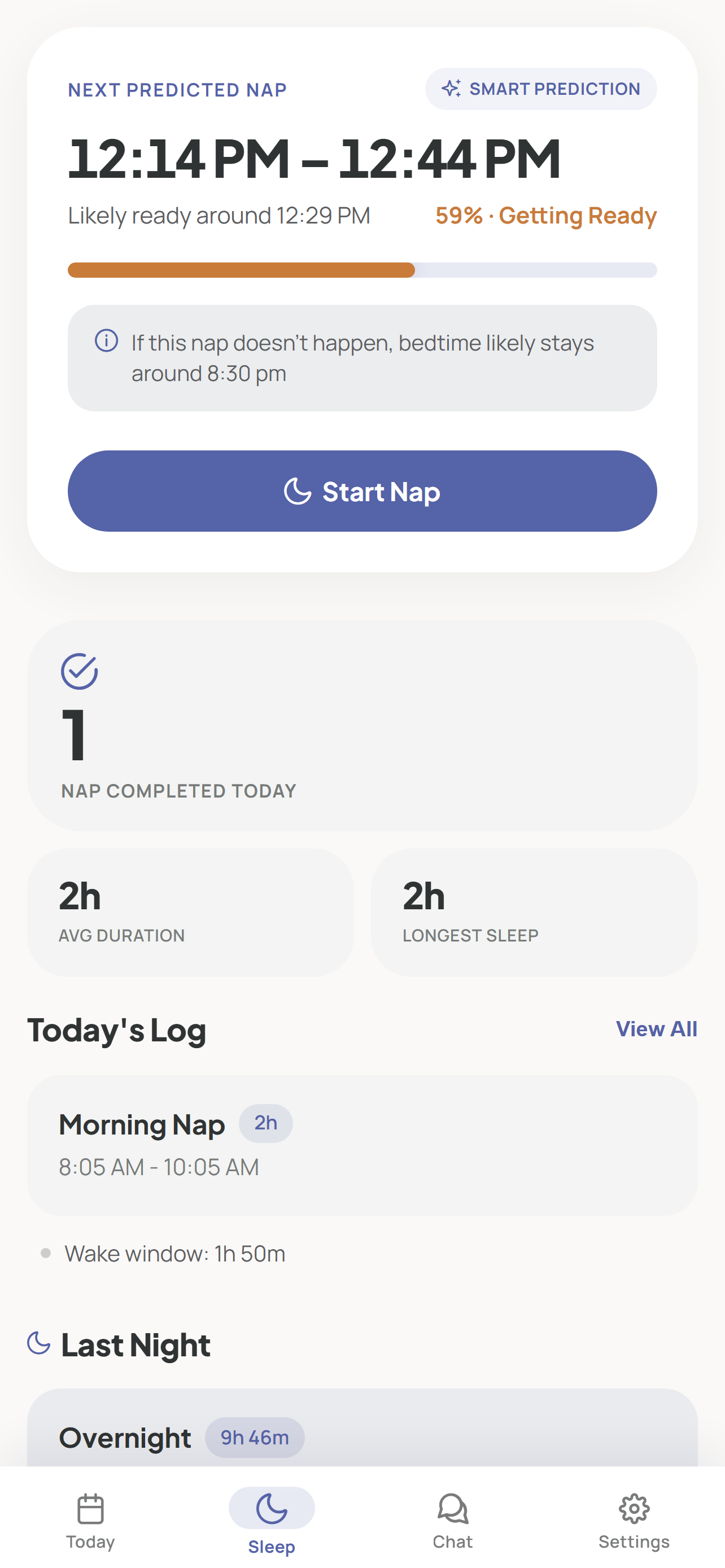
At 30 months the day still holds one nap — commonly 60–90 minutes now, sometimes still two hours — around 12:00–1:00 PM, wake windows of 5–6 hours, and a 10–12 hour night starting between 7:00 and 8:00 PM, for 11–13 hours per day. None of that has to change for potty training. The training happens in the waking hours; sleep keeps its diaper for as long as it needs one.
That's the central fact parents aren't always told: daytime dryness is a skill you teach, while nighttime dryness is hormonal and arrives on its own schedule — often between 3 and 5, sometimes later, and it's still considered normal well past that. A child who is fully day-trained and wet every morning isn't failing; their body simply hasn't started making enough overnight antidiuretic hormone yet. Pull-ups at night, no commentary, and a schedule that doesn't get sacrificed to a bathroom project.
Daytime first; nights arrive on their own
- Train the day, protect the night. A pull-up or diaper for naps and nights, presented as normal ("sleep underwear"), with zero disappointment attached. A wet morning is information, not a setback.
- Watch for the real readiness sign: a dry pull-up most mornings for 2–3 weeks straight. That's the body telling you, and it's the only reliable signal.
- Don't restrict drinks aggressively. A last cup with dinner and a potty trip as the final routine step is plenty. Thirsty toddlers wake up too.
- Skip the 11 PM "dream pee." Lifting a sleeping child onto the potty doesn't teach the bladder anything and fragments your night as well as theirs.
- Naps: pull-up on for the nap while training; remove it once naps are dry for a couple of weeks — that usually comes long before nights.
Don't stack transitions
Potty training and a crib-to-bed move are each a 1–2 week sleep disruption on their own. Done in the same month they compound: a toddler who can leave the bed and has a legitimate reason to ("potty!") will do so nightly. If the crib is still in service, keep it and put a pull-up on — a crib does not stop potty training. If the bed is new, let it settle for 4–6 weeks before starting.
Expect a short wobble during active training anyway: excitement, accidents, and the new bedtime stall. Handle "I need the potty" once and generously — potty is the last step of the routine, then one trip after lights-out is honoured without conversation, and after that the answer is "you already went; it's sleeping time." Some families make it the official use of a bedtime pass. Keep the nap offer and bedtime exactly where they were; the schedule is the one thing not being trained.
Schedules are averages.
Your baby isn't.
LunaLog learns your baby's actual rhythm from the naps you log and predicts the next nap window automatically — no mental math, and it updates itself as wake windows grow. Free to start, and both parents stay in sync in real time.
Try LunaLog free