The schedule at 31 months is unchanged: one nap of 60–120 minutes around 12:00–1:00 PM, wake windows of 5–6 hours, and a 10–12 hour night starting between 7:00 and 8:00 PM. What's changed is what happens in the two minutes after you close the door — the room that was fine last month now has shadows with intentions, and a toddler who used to roll over is calling out with a new word: scared.
Two responses fail. Dismissing the fear ("there's nothing there, go to sleep") teaches them you don't understand. Fully joining it — long searches, sprays, a nightly ritual of banishing — teaches them the monsters are real enough to need banishing. What works is in the middle: acknowledge the feeling, adjust the room so it's less frightening, give them something to hold, and keep the evening's inputs calm enough that there's less raw material for the imagination to work with after dark.
Validate the feeling, don't confirm the monster
- The monster check: if they ask, look together — once, briefly, calmly. "I checked. No monsters. You're safe, and I'm right down the hall." Skip the monster spray; spraying implies something needs spraying.
- A dim, warm nightlight. Red or amber, low to the floor, dim enough that you couldn't read by it. Bright or blue-white light suppresses melatonin and lights up the shadows.
- A comfort object with a job. Introduce a specific lovey in daylight — give it a name and a role ("Bear stays awake so you don't have to"). It works better than a general pile of toys.
- Talk about fears in daylight, not at 8 PM. Draw the monster, make it silly, decide together that it's afraid of socks. At bedtime, the conversation is already had.
- Door position and hallway light are legitimate comforts. Choose a setup and keep it identical every night.
Screens off, and a script for the callbacks
Content from earlier in the day is what shows up under the bed. Even gentle cartoons contain a villain, a storm, a dog that gets lost — and a 31-month-old carries it to bed. Keep the last hour screen-free and choose calm, familiar books for the routine; save the dramatic ones for lunchtime.
When fear calls you back after lights-out, go — but keep it short and predictable. A brief check, the same sentence, and out. If they need more, scheduled check-ins work: "I'll come back in five minutes," and then actually come back, every time. A kept promise builds more security than an hour on the floor beside the bed. Moving them into your bed to fix fear works instantly and lasts months — only do it if you mean it. Fear that's intense every night, spilling into daytime, or not easing after a few weeks is worth raising with your pediatrician.
Schedules are averages.
Your baby isn't.
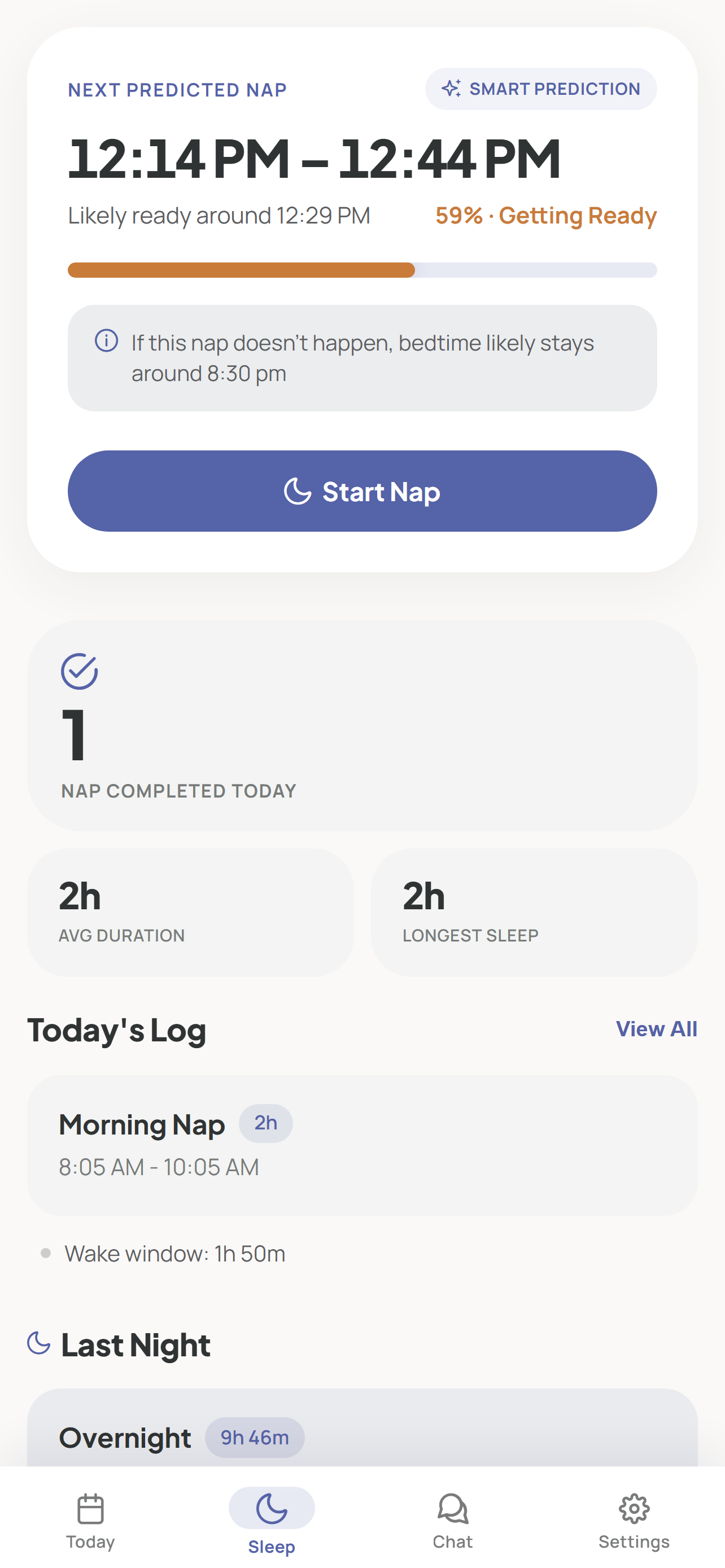
LunaLog learns your baby's actual rhythm from the naps you log and predicts the next nap window automatically — no mental math, and it updates itself as wake windows grow. Free to start, and both parents stay in sync in real time.
Try LunaLog free