A 32-month-old typically runs on one nap — now often 60–90 minutes, sometimes still two hours — starting around 12:00–1:00 PM, with wake windows of 5–6 hours and a 10–12 hour night beginning between 7:00 and 8:00 PM, for 11–13 hours per day. The nap is smaller than it was, which makes each of its conditions matter more. A nap that's routinely 50 minutes isn't a toddler who's done napping; it's usually a nap that's starting at the wrong time or in a room that's too bright.
The goal this month is two-fold: give the nap the best possible chance to be a real one, and stop it from stealing from the night. Those pull in opposite directions — a long nap protects the afternoon and threatens bedtime — which is why the answer is a consistent start, a firm cap, and an early-bedtime rule for the days it doesn't work out.
Protect the nap
- A consistent start. Pick 12:30–1:00 PM (12:00 works from an early wake) and hold it daily. A nap that floats between 11:30 and 2:00 depending on the day never builds enough pressure to be long.
- Dark room, white noise, same ritual. A five-minute mini-routine — potty, curtains, one book, sound machine — tells a busy 2½-year-old brain what's about to happen. Light is the most common short-nap culprit at this age.
- Cap it at 2 hours and wake by 3:00 PM. A 2½-hour nap ending at 3:30 feels like a gift and costs an hour of bedtime.
- Don't chase a short nap. If they wake after 45 minutes, offer 10–15 minutes of quiet in the room, then get up. Trying to force a second sleep cycle rarely works and sours the nap.
Short-nap days
The day is going to happen in one of two ways, so decide in advance. If the nap ran under an hour, move bedtime 15–30 minutes earlier — 7:00–7:15 PM instead of 7:45 — and hold the routine exactly the same. Don't compensate with a second nap or a car catnap after 4:00 PM; both push bedtime later and steal from the night, which is worth more than any afternoon.
If the nap ran long and late, keep bedtime where it is and expect 20 minutes of chatting; don't push bedtime past 8:15 to "wait for tiredness" — that's how 8:15 becomes the new normal. Watch the pattern over two weeks rather than reacting day by day: a nap that's short three days out of seven is normal at 32 months; a nap that's short every day usually has a fixable cause in the list above.
Schedules are averages.
Your baby isn't.
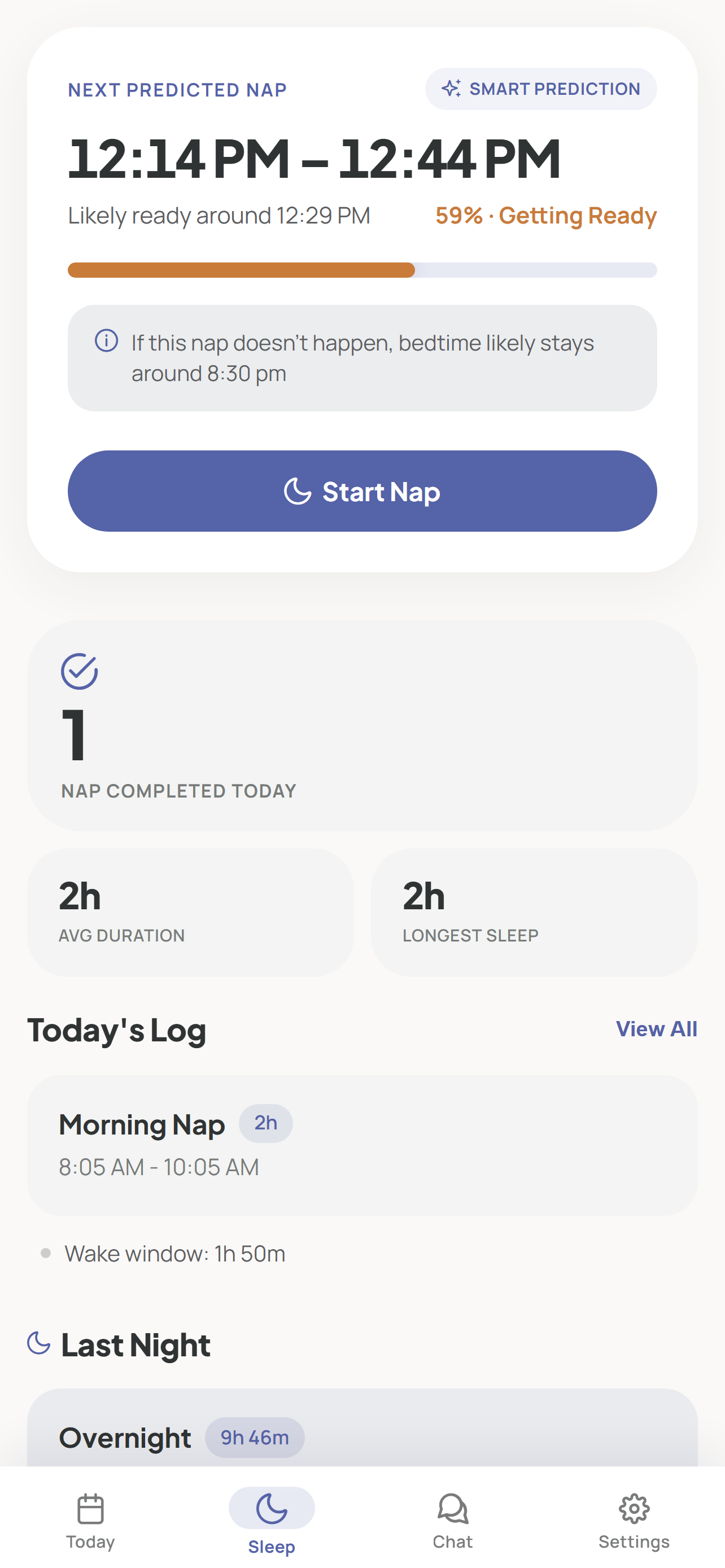
LunaLog learns your baby's actual rhythm from the naps you log and predicts the next nap window automatically — no mental math, and it updates itself as wake windows grow. Free to start, and both parents stay in sync in real time.
Try LunaLog free