At 33 months the schedule is the same one you've been running: one nap of 60–120 minutes around 12:00–1:00 PM, wake windows of 5–6 hours, and a 10–12 hour night from 7:00–8:00 PM. When a baby arrives, that schedule becomes the toddler's anchor. Everything else — who's holding whom, what the house sounds like, how long a hug lasts — is up for grabs; the nap time, the bedtime, and the routine steps should not be.
Expect a 2–3 week wobble regardless: earlier waking, nap resistance, a few 2 AM visits to see what the baby's doing. That's normal and it's temporary — as long as no new habits get built during it. The three tools that carry a family through are an unchanged routine, white noise in the toddler's room, and staggered bedtimes so the toddler is asleep before the baby's evening even starts. Below: how to set them up before the birth, and how a shared room works when it's time.
Keep the routine identical through the change
- Same steps, same order, same words, starting at the same time — even on the night you come home from the hospital. Especially that night.
- Swap the bedtime parent early. If one of you will be feeding a newborn at 7:30 PM, the other should be doing the toddler's bedtime solo for 3–4 weeks before the birth, so the handoff isn't one more change.
- Don't take the crib for the baby. A newborn lives in a bassinet for months; a toddler moved out of the crib "because the baby needs it" often loses the nap and blames the baby. Keep the crib until closer to 3.
- White noise in the toddler's room, from tonight if it isn't already there. It masks the 2 AM feeds and gives you a margin for the baby's crying.
- Book some undivided time in the routine — ten minutes that is only theirs, every night, no baby in arms.
Room sharing and staggered bedtimes
In most families the baby sleeps in the parents' room for the first several months, which means the toddler keeps their room and their schedule — the best case. When the baby does move in with the toddler, stagger bedtimes: toddler down at their usual time, baby settled 30–45 minutes later once the toddler is asleep. White noise for both, and the baby's crib as far from the toddler's bed as the room allows.
The toddler is more resilient than you fear. Most sleep through a newborn's night waking within a week or two of the move, especially with the sound machine running. If they don't, keep the baby in your room a while longer rather than restarting bedtime for both. Whatever wobble arrives — earlier waking, a nap strike, a visit down the hall — respond exactly as you did before the baby: brief, warm, boring. Give it three weeks before you change anything on purpose.
Schedules are averages.
Your baby isn't.
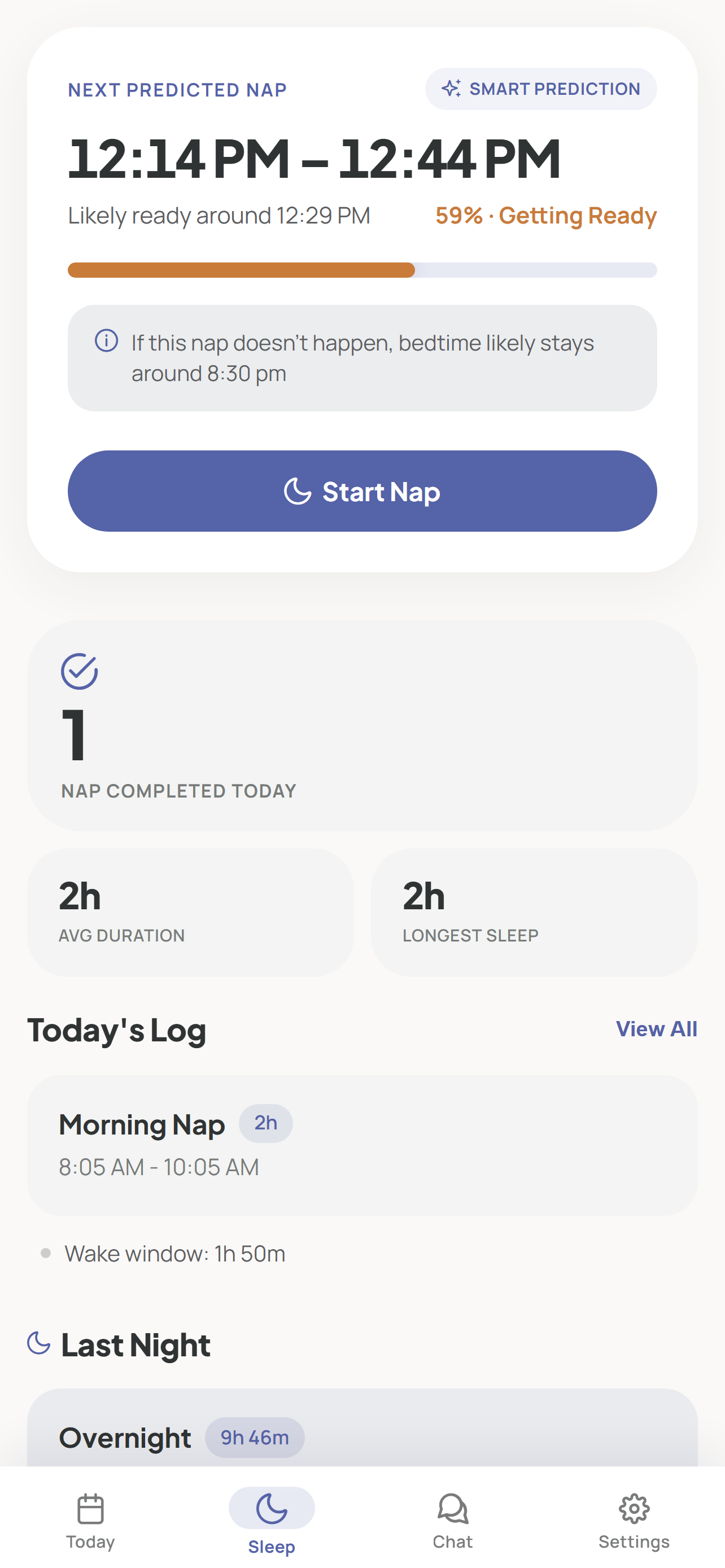
LunaLog learns your baby's actual rhythm from the naps you log and predicts the next nap window automatically — no mental math, and it updates itself as wake windows grow. Free to start, and both parents stay in sync in real time.
Try LunaLog free