A 34-month-old still does best on one nap of 60–120 minutes around 12:00–1:00 PM, wake windows of 5–6 hours, and a 10–12 hour night beginning between 7:00 and 8:00 PM. Preschool bends that schedule in two places — the morning gets earlier and the nap becomes whatever the school does — and the way to keep the total honest is to bend it back at bedtime.
The first 2–4 weeks are exhausting for almost every child. A room of fifteen peers, a new adult's rules, and a morning that starts at 6:30 AM add up to a toddler who is done by 5:00 PM. That's not a regression; it's a workload. Bedtime on school days moves 15–30 minutes earlier than it was, and the home routine stays exactly the same so at least one part of the day is predictable. Then you find out what the school's nap actually looks like — and plan the evening around it.
The school nap vs the home nap
Ask the teachers specifics: when rest time starts, how long it runs, whether they wake children, and what your child actually does on the mat. Then plan for one of three patterns.
- Naps well at school (e.g. 12:30–2:30). Best case. Bedtime stays 7:00–7:45 PM; ask them to wake by 3:00 if it runs long.
- Naps at school, refuses at home. Common — the mat has an audience, the crib doesn't. Keep offering at home as "sleep or quiet time" at the same hour; on weekends, an early bedtime covers the gap.
- Doesn't nap at school. Common in the first month; it doesn't mean the nap is over. Ask whether they at least rest quietly, then put them to bed at 6:30–7:00 PM on those days. Most settle into the school nap within a few weeks once the room becomes familiar.
A toddler who falls asleep in the car on the way home is telling you which pattern you're in.
Weekends and the early wake-up
School days often start at 6:00–6:30 AM, and the body adapts to whatever it does most. Keep weekend wake times within 30–45 minutes of school days — a 9:00 AM Saturday feels like a gift and produces a Monday morning that feels like jet lag. Same for the nap: offer it at the school's hour on weekends so the internal clock isn't reset twice a week.
Bedtime on school days lands at 7:00–7:30 PM, earlier if the school nap was short or skipped. Build a short decompression into pickup — a snack, twenty minutes of nothing — and eat dinner early, because the evening window has shrunk. Expect the "I don't want to go" phase and the nap resistance to fade together over 3–4 weeks. If a 34-month-old is still visibly wrecked by late afternoon after a month, revisit the school's rest time with the teachers before assuming they've outgrown the nap.
Schedules are averages.
Your baby isn't.
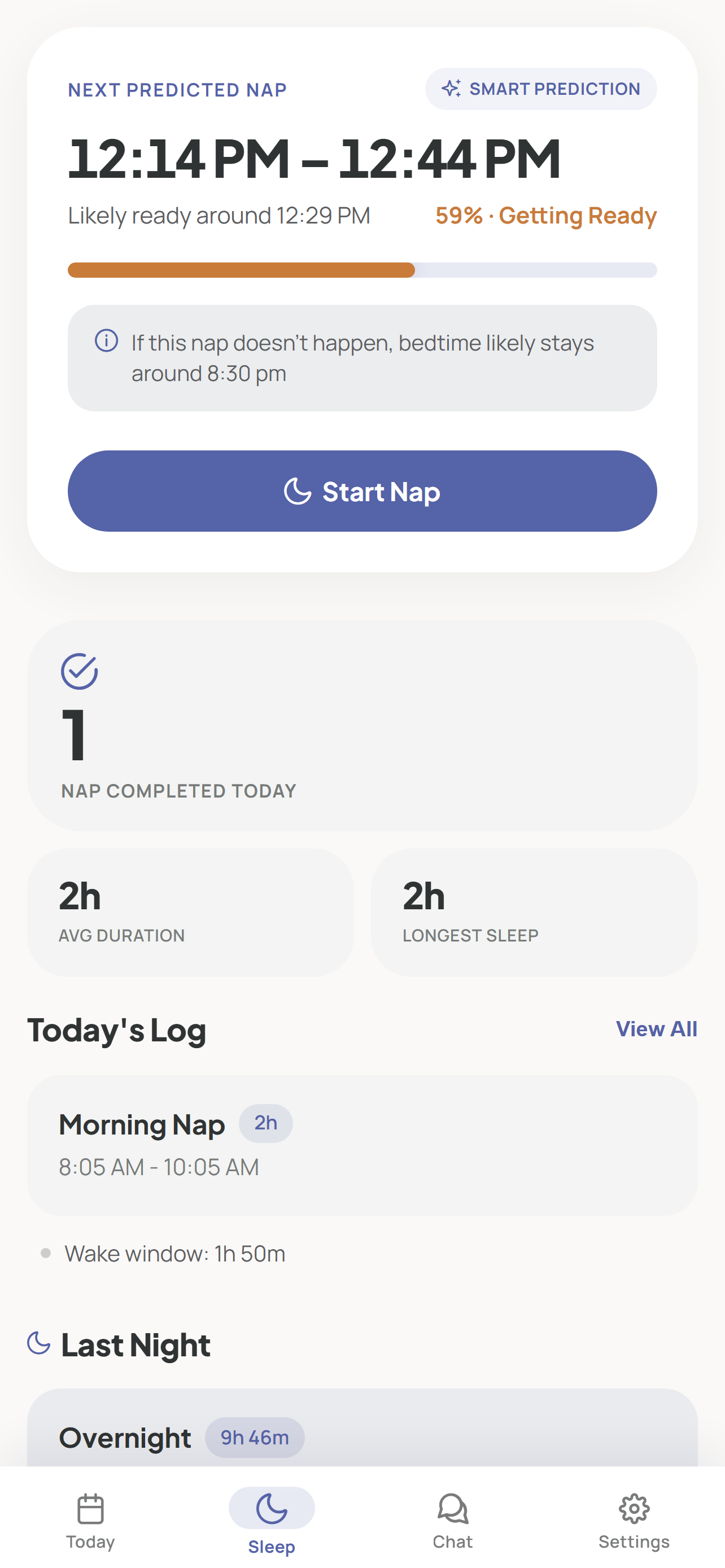
LunaLog learns your baby's actual rhythm from the naps you log and predicts the next nap window automatically — no mental math, and it updates itself as wake windows grow. Free to start, and both parents stay in sync in real time.
Try LunaLog free