At 35 months the default is still one nap of 60–120 minutes around 12:00–1:00 PM, wake windows of 5–6 hours, and a 10–12 hour night from 7:00–8:00 PM, roughly 11–13 hours per day. The 1→0 transition usually lands somewhere between 3 and 5, and the toddlers who drop it earliest tend to be the ones with long, solid nights — a child sleeping 7:00 PM to 6:30 AM has already banked most of their need before lunch.
The mistake to avoid in both directions: dropping a nap that's being refused (control, illness, a new sibling, preschool) and forcing a nap that's genuinely done (which costs you the night). Below is the checklist that separates them, and the quiet-time system that should be in place before the nap goes anywhere — same time, same place, books, 45–60 minutes. Quiet time isn't a consolation prize; it's what keeps the afternoon and the bedtime intact when the sleep itself stops coming.
Signs the nap is ending — and signs it isn't
Genuinely ending (you should see most of these, together, for at least two weeks):
- Takes 30–45 minutes to fall asleep at nap time on most days, without distress — just awake.
- Refuses or doesn't fall asleep 3+ days a week for 2+ weeks.
- On nap days, bedtime pushes past 8:30 PM with an hour of lying awake.
- On skipped days, stays pleasant through to a 7:00–7:30 PM bedtime and sleeps the night through.
Still needs it (any one of these overrides the list above):
- Skipped-nap days end in a 5:00 PM meltdown, car-seat sleep, or an early morning.
- The refusal started with something — illness, a new baby, a new bed, a preschool start.
- Falls asleep quickly when the nap does happen and sleeps 90 minutes or more.
If it's genuinely ending, don't stop cold. The 3-year-old page covers the alternate-days transition; start with quiet time in the nap's slot.
The quiet-time system
Quiet time replaces the nap's function — a mid-day reset for the toddler, a break for you — without requiring sleep. It works because it's a fixed routine, not a suggestion.
- Same time: the old nap slot, 12:30–1:00 PM, every day including weekends.
- Same place: their room, door closed or gated, curtains half-drawn.
- Same materials: a basket of books and 2–3 quiet toys that only come out for quiet time.
- 45–60 minutes, marked by a timer or an OK-to-wake light so the end is visible, not negotiable.
- If they fall asleep, let them — but wake by 2:30–3:00 PM. Sleep during quiet time is the nap telling you it isn't finished.
Introduce it while the nap is still happening on some days, so it's familiar before it's needed. A toddler who's had quiet time for a month treats it as normal; one who meets it the day the nap dies treats it as punishment.
Schedules are averages.
Your baby isn't.
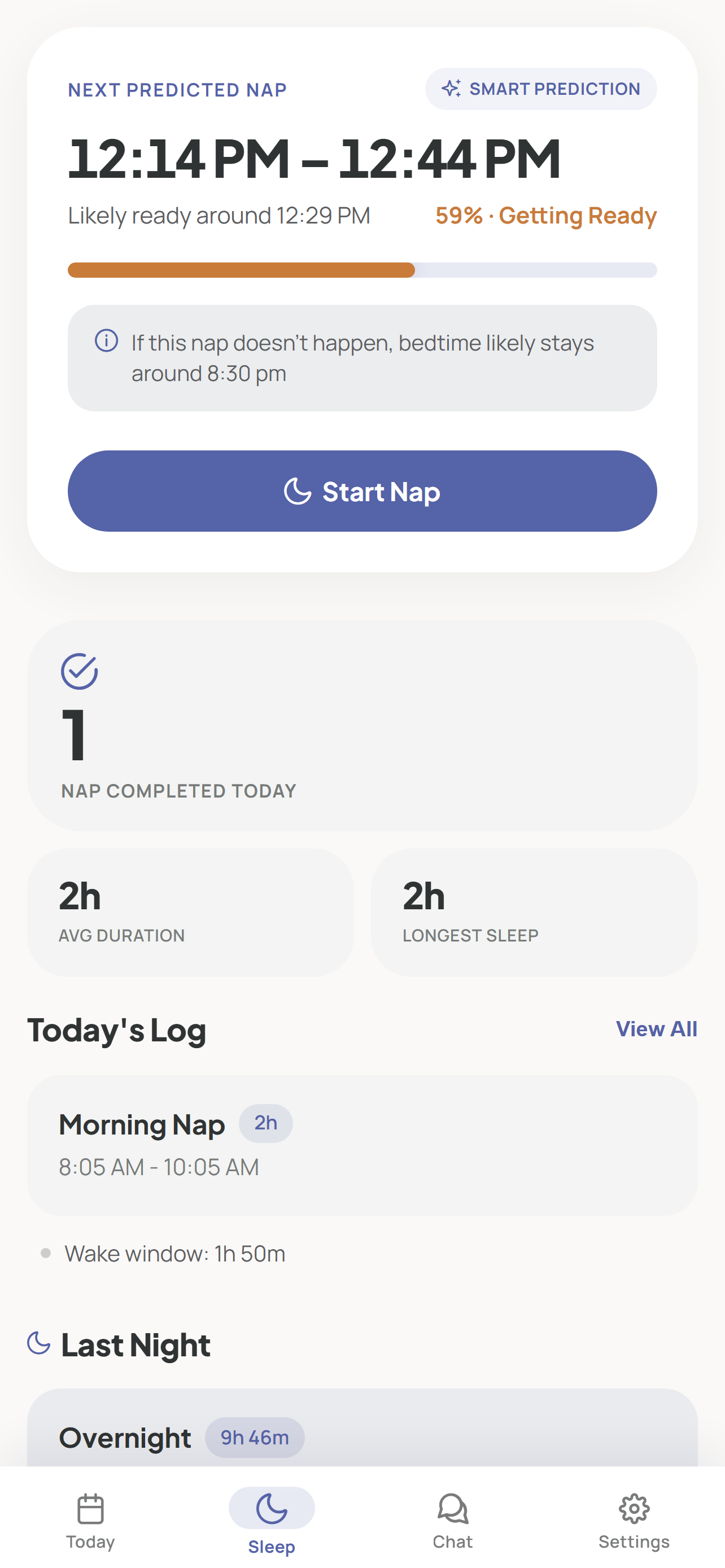
LunaLog learns your baby's actual rhythm from the naps you log and predicts the next nap window automatically — no mental math, and it updates itself as wake windows grow. Free to start, and both parents stay in sync in real time.
Try LunaLog free