A 3-year-old who still naps typically takes one nap of 60–120 minutes around 12:00–1:00 PM, with wake windows of 5–6 hours and a 10–12 hour night from 7:00–8:00 PM. A 3-year-old who has stopped runs on an 11–12 hour night with bedtime as early as 6:30 PM, plus quiet time where the nap was. Most spend a few months somewhere in between, and that in-between is exactly what the transition is supposed to look like.
The 1→0 change is the last nap transition and the least predictable. It doesn't happen on the birthday; it happens between 3 and 5, and at 3 the best evidence is this week's pattern, not the age. A child who falls asleep in eight minutes at 12:30 and sleeps 90 minutes needs the nap; one who lies awake for 45 minutes and then can't sleep until 9:00 PM doesn't — today. The method below handles both children, sometimes in the same week.
The 1→0 transition, over about three months
- Read the morning. A rough wake-up, a cranky 10:00 AM, a car-seat doze: nap day. Bright, even-keeled, energetic through lunch: try a no-nap day with quiet time in the slot.
- No-nap days get an early bedtime. As early as 6:30 PM, and rarely later than 7:00. An 11–12 hour night is what makes a nap-free day sustainable; without it you get the 5:00 PM meltdown and the 5:00 AM wake-up.
- Nap days get a capped nap. Wake by 2:30 PM, 60–90 minutes at most, bedtime 7:30–8:00 PM.
- Quiet time every day regardless, 45–60 minutes in the room at 12:30–1:00 PM, so the slot survives even when the sleep doesn't.
- Let the ratio drift. Two no-nap days a week becomes four becomes six over 2–4 months. Don't push it faster than the mornings tell you.
Preschool days often decide for you — if the school naps, that's a nap day; if it doesn't, bedtime is 6:30.
Many 3-year-olds still nap — don't drop it by the calendar
No age ends the nap on its own. Plenty of children still nap daily at 3 and a good number at 4. The costs of dropping a nap that's still needed land on the evening — a wrecked 5:00 PM, a bedtime of tears, more night waking, an earlier morning — and get misread as a regression when the fix is putting the nap back.
The right question isn't "is she three?" but "does she fall asleep easily at nap time and sleep well afterward?" If yes, keep it and cap it at 2:30 PM. If nap days are routinely followed by 9:00 PM bedtimes, the nap is stealing from the night and it's time to trade it for quiet time. Total sleep of 10–13 hours is the check: 7:00 PM–6:30 AM with no nap and a good mood has it covered; 8:30 PM–6:00 AM plus a two-hour nap has the pieces in the wrong places.
Schedules are averages.
Your baby isn't.
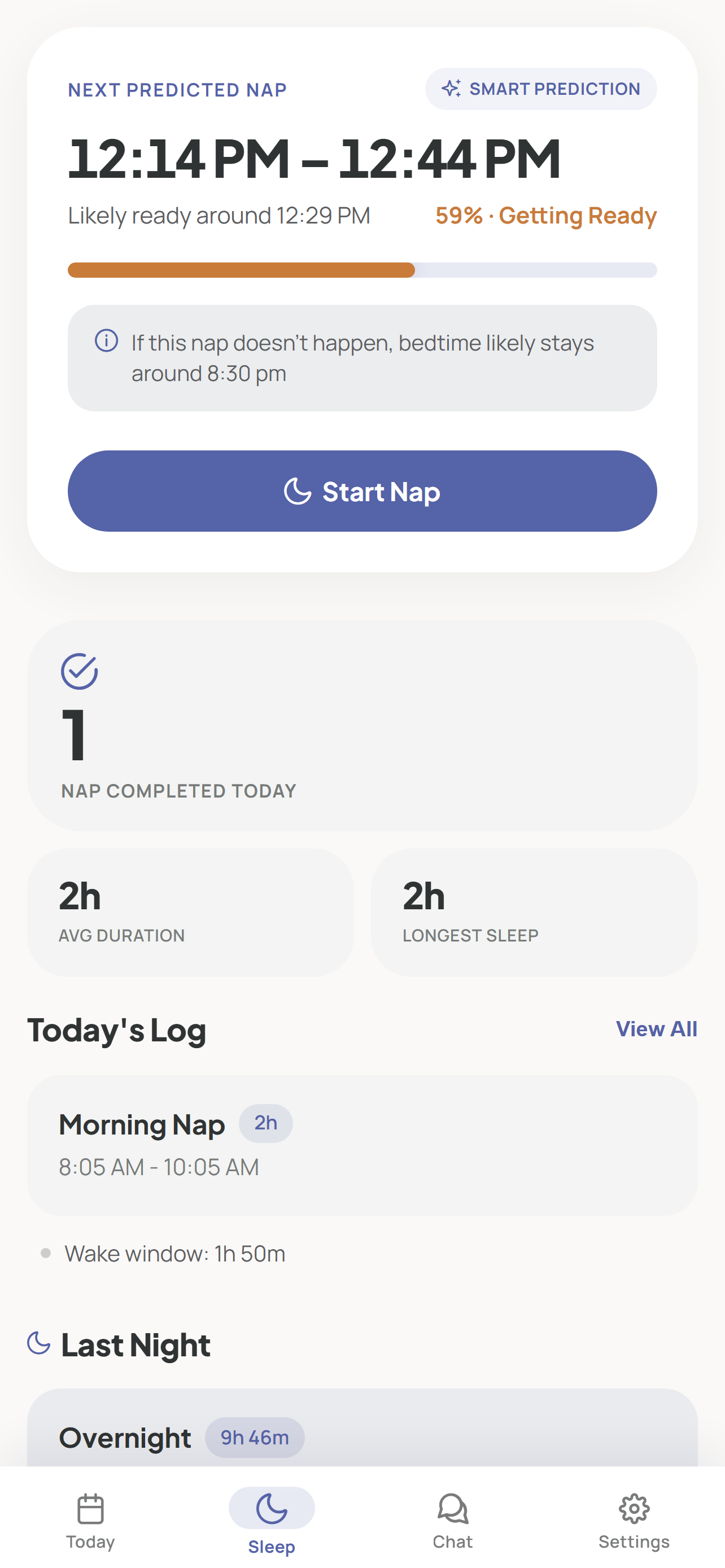
LunaLog learns your baby's actual rhythm from the naps you log and predicts the next nap window automatically — no mental math, and it updates itself as wake windows grow. Free to start, and both parents stay in sync in real time.
Try LunaLog free