Between about 3½ and 4½ months a baby's sleep architecture reorganizes from newborn sleep into the adult pattern: distinct cycles of light and deep sleep, roughly 45 minutes long, with a brief arousal between them. Adults surface between cycles too — we roll over and go back down without noticing. A 4-month-old surfaces, notices the breast, bottle or arms that were there at sleep onset are gone, and calls for them. That is the whole regression.
It is called a regression because sleep gets worse. It is actually a maturation, and it is permanent — which is the important part. Waiting for "the old sleep" to come back does not work, because the old sleep is gone. What comes back, over 2–6 weeks, is a baby who has learned to resettle between cycles.
What actually helps
- Protect wake windows (about 1.5–2 hours at four months). Overtiredness makes cycle-linking harder.
- Dark room and white noise for every sleep, naps included, so the environment at the cycle boundary matches the one at sleep onset.
- Practice falling asleep in the crib. Drowsy-but-awake at the first nap and at bedtime, with you there to help. Familiarity with the crib as the place sleep starts is the skill that ends the regression.
- Full feeds in the day, boring feeds at night. Some 4-month-olds still need one or two night feeds; keep them dim and quick.
- Add a catnap and an early bedtime on fragmented days rather than pushing through.
- Stop swaddling if you have not already — rolling is imminent and the sleep sack is the safe replacement.
What does not help
Keeping your baby up later to "tire them out" — it produces an overtired baby who wakes more. Starting solids early to "fill them up" — no evidence, and not recommended before around six months. Rotating through new sleep aids every night — the baby needs consistency more than novelty right now. And blaming yourself: the timing is set by neurology, and it arrives for babies who were fed to sleep and babies who were not. The difference is only in how quickly each resettles afterwards.
Is it time to sleep train?
Formal sleep training is generally considered appropriate from around 4–6 months, and many families choose to start once the regression makes the case. It is a decision to make with your pediatrician and with your own values — the approaches range from staying in the room and helping, to graduated check-ins, and the evidence suggests the gentler ones work too, just more slowly. What every approach has in common is the thing above: the baby falls asleep in the crib, so that the crib is where they fall back asleep at 2 AM.
A sample day
A typical day at 3½–4½ months
Sample days assume a 7:00 AM wake-up. Customize for your baby's wake time →
Transitions are messy.
Your tracker shouldn't be.
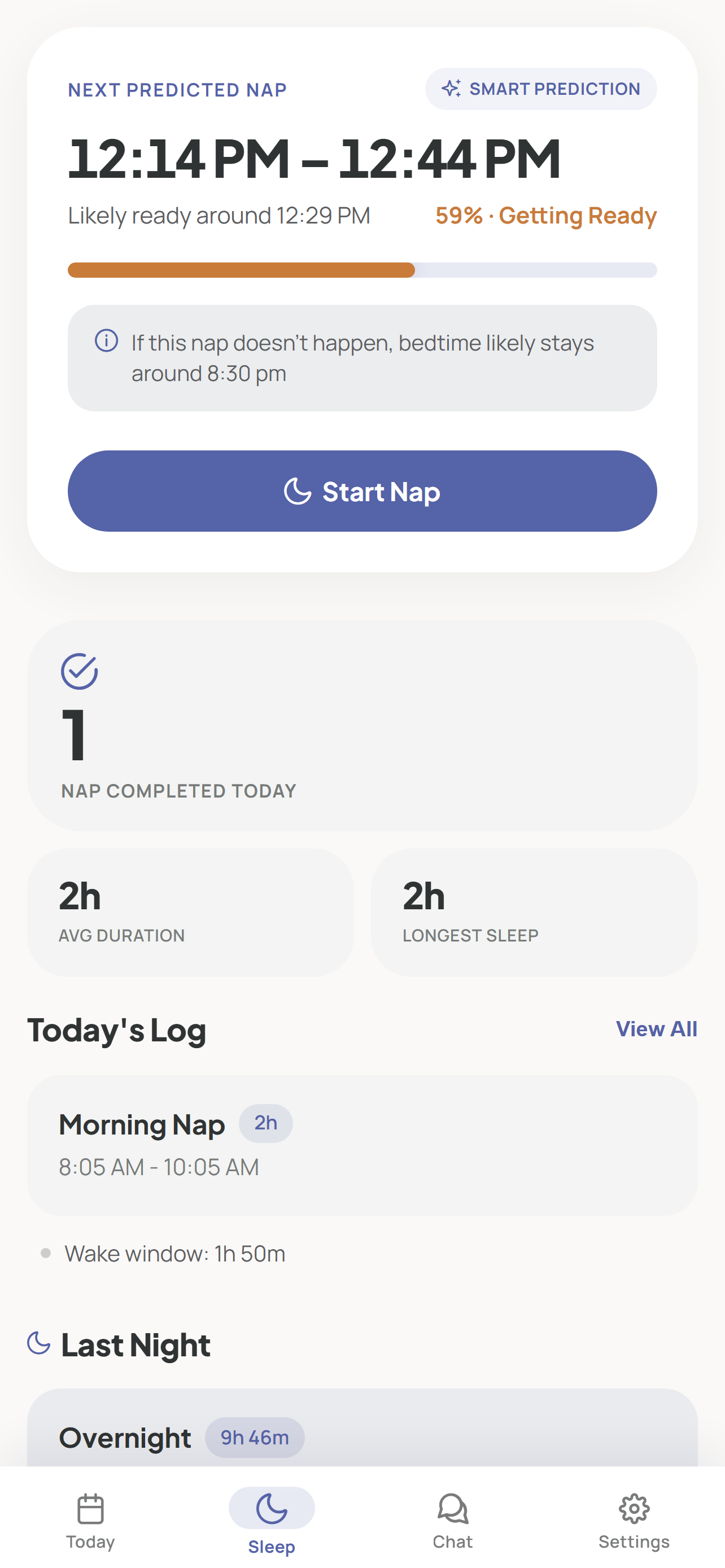
LunaLog notices when the naps you log stop matching the schedule — and adjusts the next nap prediction and bedtime to the day you're actually having, not the one on the chart. Free to start, and both parents see the same plan.
Try LunaLog free