At four months wake windows run about 1.5–2 hours across a four-nap day, with bedtime near 8 PM and one or two night feeds. The regression is the headline because it is the one change at this age that is not a phase: your baby's sleep architecture has permanently reorganized, and the brief wake-ups between cycles are here to stay. Babies who can fall asleep in the crib resettle through them. Babies who fall asleep being fed or rocked wake and ask for the same help — at 11 PM, 1 AM, 3 AM…
From here the month-by-month schedule takes over; the 4-month-old page has the full picture and the regression guide goes deeper on the way through.
Surviving the regression
- Protect wake windows fiercely. An overtired 4-month-old links cycles worse, not better.
- Dark room, white noise, every sleep. The environment your baby falls asleep in should be the one they wake into 45 minutes later.
- Practice crib sleep at the first nap and bedtime. Drowsy, calm, eyes open, with you there to help — the goal is familiarity, not independence overnight.
- Feed fully in the day and keep night feeds boring and dim; some babies genuinely need one or two still.
The disrupted phase typically lasts 2–6 weeks. The new architecture is forever, and it is the same one that eventually lets your baby sleep 11 hours straight.
Naps this month
Four naps is still typical, moving to three sometime between four and five months. The tell that a nap is ready to go is the last nap of the day getting fought or pushing bedtime past 8:30. Until then, treat the catnap as bedtime protection: keep it under 45 minutes, and if it is refused, bring bedtime forward instead. Nap length is the number most affected by the regression — expect 30–45 minute naps for a few weeks, then watch them lengthen as cycle-linking clicks, usually by five to six months.
Schedules are averages.
Your baby isn't.
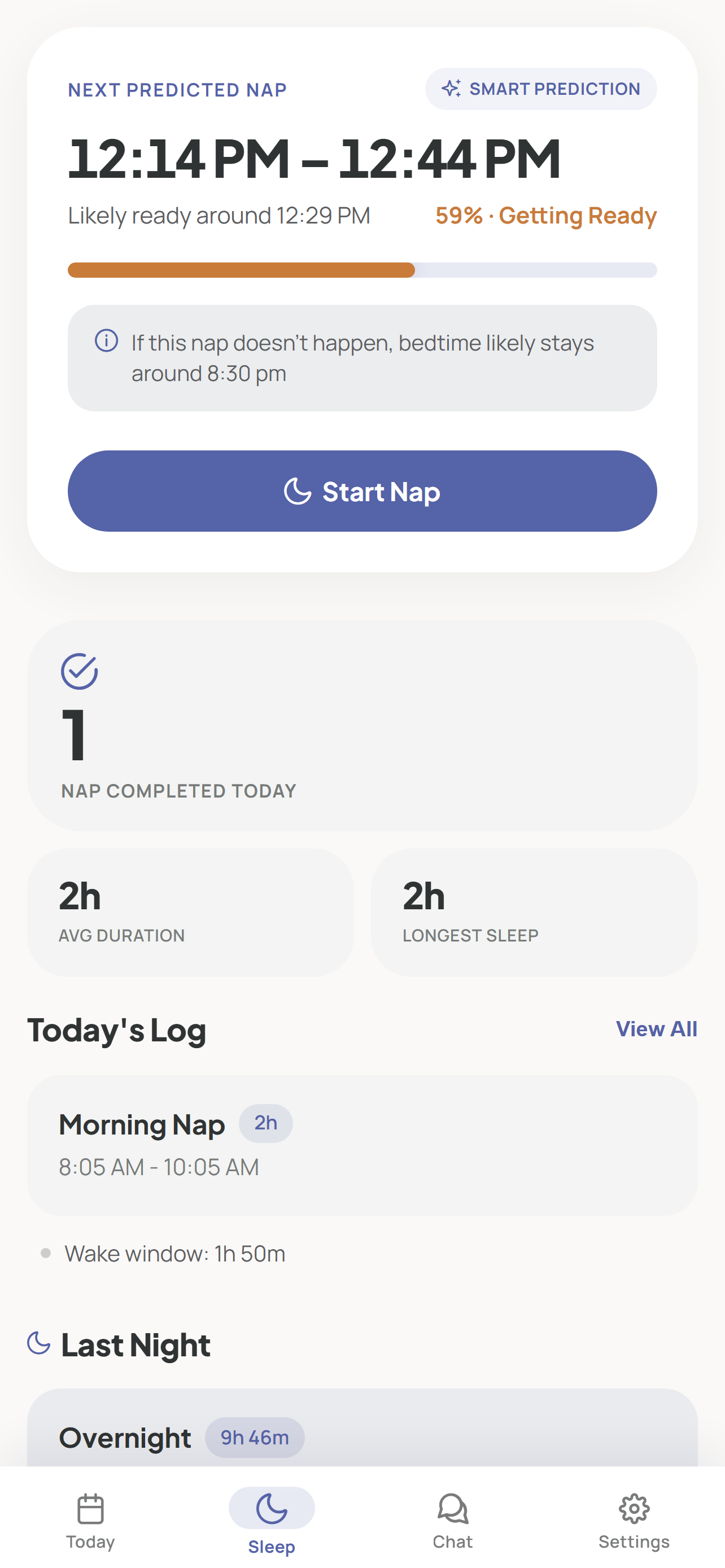
LunaLog learns your baby's actual rhythm from the naps you log and predicts the next nap window automatically — no mental math, and it updates itself as wake windows grow. Free to start, and both parents stay in sync in real time.
Try LunaLog free