On paper, fifteen weeks looks like fourteen: four naps, 90–120 minute wake windows, bedtime near 8 PM. In practice, this is when many families notice the floor shift. The baby who did two-hour naps wakes at 45 minutes, wide awake. The baby who did a six-hour stretch is up at 11, 1 and 3. Feeding, rocking or holding still works, but it has to be repeated at every cycle boundary.
Nothing has gone wrong. Your baby has started waking briefly between sleep cycles — as adults do — and does not yet know how to go back down without the conditions they fell asleep in.
What to hold steady
- Wake windows. Do not stretch them to "make" a longer nap; overtiredness makes cycle-linking harder, not easier.
- The bedtime routine. Same steps, same order, same room. Predictability is the one thing you fully control.
- The sleep environment. Dark for every sleep now, including naps — the daylight-nap rule has served its purpose. White noise on.
- Feeds. Full feeds in the day so night waking is less about hunger.
Add a fifth nap if the day fragments into catnaps, and bring bedtime forward 30 minutes on rough days.
What you can start changing
The regression is the moment independent sleep starts to matter. Keep going with drowsy-but-awake practice at the first nap and, if it is working, add bedtime. You do not have to leave the room and you do not have to let your baby cry; you just want them to experience the last moment before sleep in the crib rather than in your arms, so that when they surface between cycles, "crib, dark, white noise" is a familiar place to fall back asleep. Formal sleep training, if you choose it, is a conversation for four to six months and your pediatrician.
Schedules are averages.
Your baby isn't.
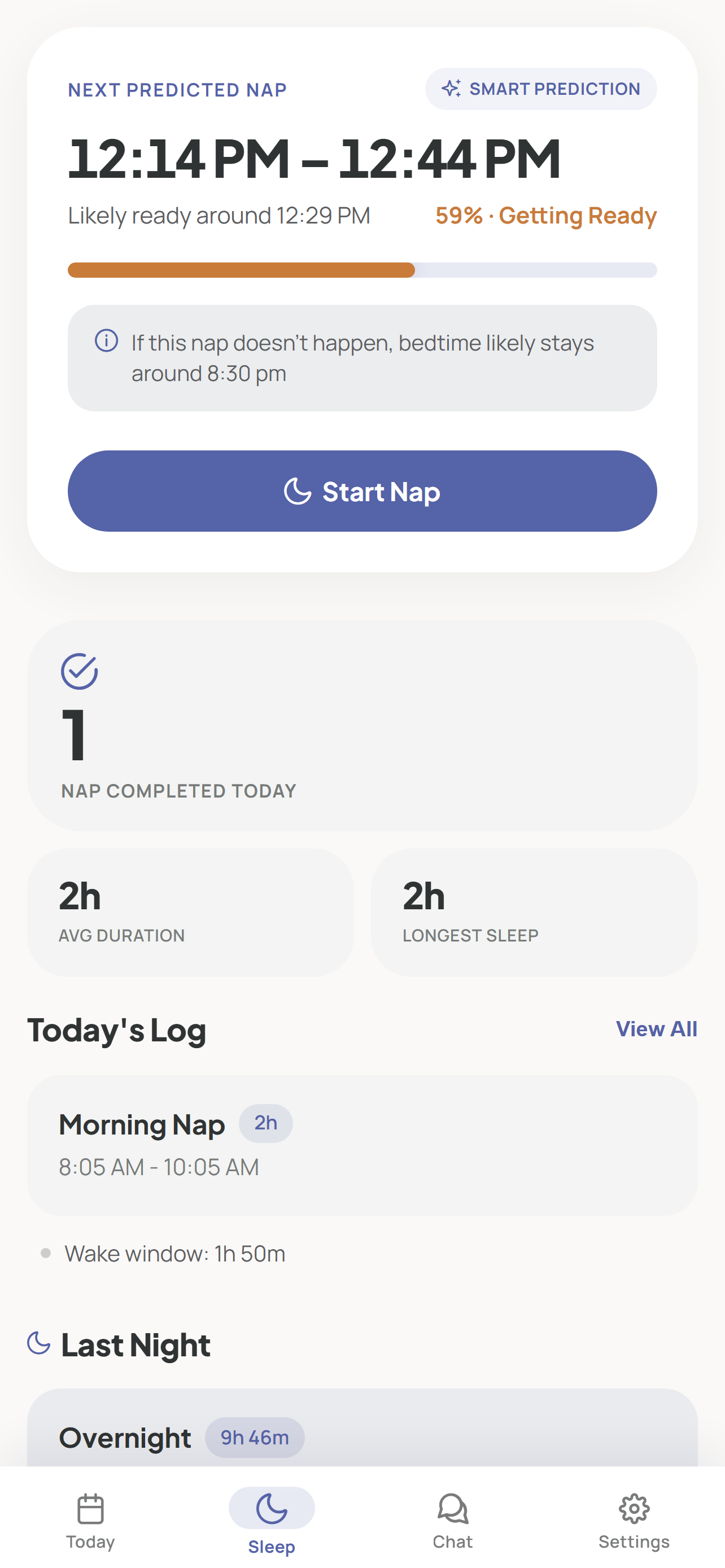
LunaLog learns your baby's actual rhythm from the naps you log and predicts the next nap window automatically — no mental math, and it updates itself as wake windows grow. Free to start, and both parents stay in sync in real time.
Try LunaLog free