Free guide · Sample schedule inside

14-Week-Old Sleep Schedule

A quiet week, usually. Use it to practice the one skill that makes next month easier.

Wake windows1h 35m–1h 55m
Naps4
Day sleep~4h 30m
Bedtime8:15 PM
7:00 AMWake up for the day
Awake — 1h 35m of play, feeds & fresh air
8:35 AM – 9:45 AMNap 11h 10m
Awake — 1h 40m of play, feeds & fresh air
11:25 AM – 12:35 PMNap 21h 10m
Awake — 1h 45m of play, feeds & fresh air
2:20 PM – 3:30 PMNap 31h 10m
Awake — 1h 50m of play, feeds & fresh air
5:20 PM – 6:20 PMNap 41 hr
Wind down — 1h 55m until bedtime
8:15 PMBedtimeOvernight sleep until morning

Four naps across 90–120 minute wake windows is the typical shape at 14 weeks; the last nap is the first to shorten or disappear on busy days.

At fourteen weeks the day usually runs four naps across 90–120 minute wake windows — a bit shorter before the morning nap, a bit longer before bed — with bedtime near 8 PM and one or two night feeds. If it feels steady, it is; enjoy it.

Behind the scenes, the brain is a few weeks from reorganizing sleep into distinct cycles with brief wake-ups between them. Babies who already know how to fall asleep in the crib tend to ride that change more smoothly, which is why this week's project is practice, not training.

Drowsy-but-awake, done kindly

  • Pick the first nap of the day. Highest sleep pressure, best mood, least at stake.
  • Do the full routine — dark room, white noise, sleep sack, a song — then put your baby down calm and sleepy with eyes open.
  • Stay and help. A hand on the chest, shushing, a pacifier. You are teaching "sleep happens here," not "you are on your own."
  • Set a limit. If it is not working in ten minutes, pick up, settle fully, and put down asleep. Try again tomorrow. There is no losing.

Anchoring the first nap

By now the morning wake time is probably consistent within about half an hour, and the first nap follows roughly 90 minutes later. Make that nap the fixed point of the day: same time, same room, same routine. When the 4-month changes hit and afternoon naps fragment, a solid morning nap keeps the day from collapsing entirely, and it gives you a reliable slot to practice crib sleep in. Log the wake and first-nap times for a week and you will see the anchor clearly.

Schedules are averages.
Your baby isn't.

LunaLog learns your baby's actual rhythm from the naps you log and predicts the next nap window automatically — no mental math, and it updates itself as wake windows grow. Free to start, and both parents stay in sync in real time.

Try LunaLog free
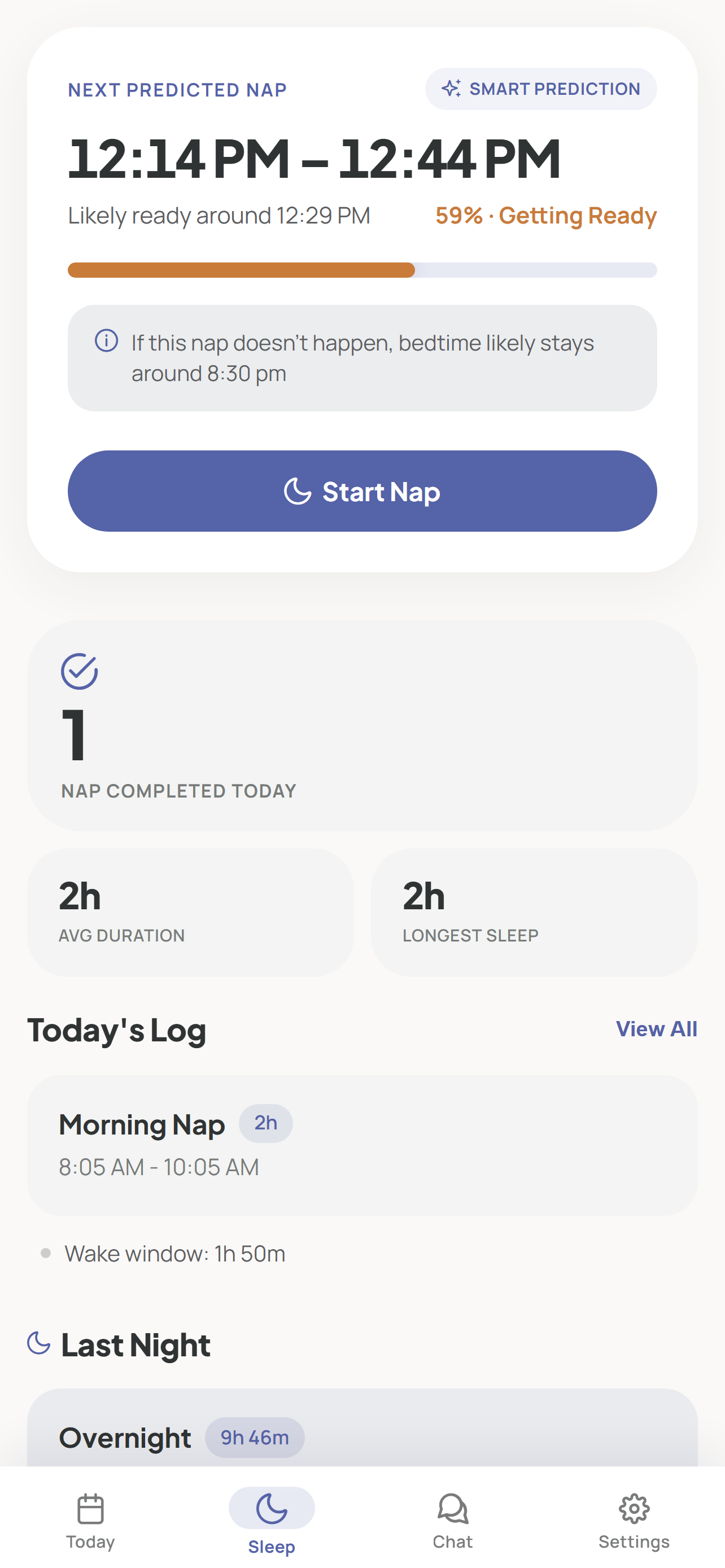
LunaLog app predicting a baby's next nap window

14-week-old sleep questions

How long should a 14-week-old be awake between naps?

About 90–120 minutes. Many babies handle 90 before the first nap and closer to two hours before bedtime. Fighting sleep usually means the window ran long; protesting in the crib within minutes can mean it was too short.

Is it time to sleep train at 14 weeks?

Most pediatricians and sleep researchers suggest waiting until at least 4–6 months for formal sleep training. Gentle practice — putting your baby down drowsy and staying to help — is appropriate now and is not the same thing.

Why does my 14-week-old skip the last nap?

The fourth nap is a catnap and the first to go when wake windows lengthen or the day gets busy. On a skipped-catnap day, move bedtime 30–45 minutes earlier rather than pushing through.

Stop counting minutes.
Start predicting naps.

LunaLog tracks the day for you and tells you when the next nap is coming — free to start.

Also on the web at app.lunalog.io · No credit card required