Free guide · Sample schedule inside

13-Week-Old Sleep Schedule

Rolling is coming. That means the swaddle has to go — here is how to do it gracefully.

Wake windows1 hr–1h 15m
Naps6
Day sleep~6 hrs
Bedtime8:15 PM
7:00 AMWake up for the day
Awake — 1 hr of play, feeds & fresh air
8:00 AM – 9:00 AMNap 11 hr
Awake — 1 hr of play, feeds & fresh air
10:00 AM – 11:00 AMNap 21 hr
Awake — 1 hr of play, feeds & fresh air
12:00 PM – 1:00 PMNap 31 hr
Awake — 1 hr of play, feeds & fresh air
2:00 PM – 3:00 PMNap 41 hr
Awake — 1 hr of play, feeds & fresh air
4:00 PM – 5:00 PMNap 51 hr
Awake — 1 hr of play, feeds & fresh air
6:00 PM – 7:00 PMNap 61 hr
Wind down — 1h 15m until bedtime
8:15 PMBedtimeOvernight sleep until morning

Four naps with a short final catnap is the shape most 13-week-olds settle into; a fifth nap on a rough day is fine.

Sleep itself is mostly stable this week — four naps, wake windows of 90–105 minutes, bedtime near 8 PM, one or two night feeds — which makes it the right week to handle the swaddle transition before rolling forces the issue. A swaddled baby who rolls onto their stomach cannot push up or roll back, which is why the cutoff is the first sign of rolling rather than the first roll.

Expect a few rougher nights while the startle reflex is unbuffered. It fades on its own by four to five months.

Transitioning out of the swaddle

  • One arm out for 2–3 nights, then both. Many babies skip the middle step fine; use it if the first night is rough.
  • Swap to a sleep sack the same night — the warmth and the "contained" feeling carry over.
  • Do it at bedtime, not naps, when sleep pressure is highest and the routine is strongest. Naps follow within a few days.
  • Keep white noise and darkness constant — you are removing one cue, so hold every other one steady.

If the transition wrecks sleep

A few nights of more frequent waking is expected — the Moro reflex is still active and arms are suddenly free. What helps: a firm, snug sleep sack, a hand on the chest for a minute at bedtime, and patience. What does not help: going back to the swaddle once rolling signs have appeared. If sleep is still much worse after a week, check the room (too warm? too bright?) and the wake windows before assuming it is the swaddle; 13 weeks also sits at the doorstep of the 4-month sleep changes.

Schedules are averages.
Your baby isn't.

LunaLog learns your baby's actual rhythm from the naps you log and predicts the next nap window automatically — no mental math, and it updates itself as wake windows grow. Free to start, and both parents stay in sync in real time.

Try LunaLog free
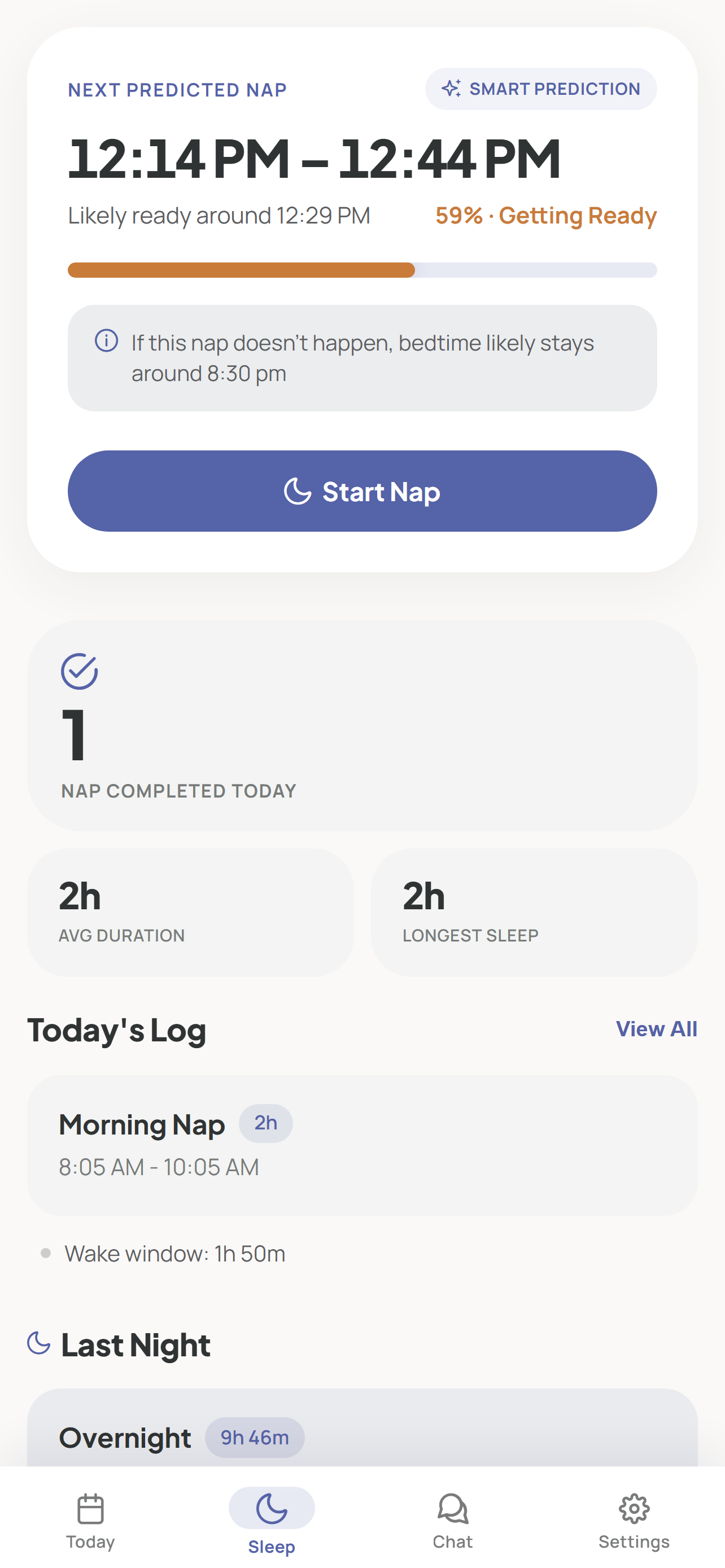
LunaLog app predicting a baby's next nap window

13-week-old sleep questions

When should I stop swaddling my baby?

At the first sign of rolling — often between 2 and 4 months — or by around 8 weeks per some pediatric guidance. Do not wait for a full roll; a swaddled baby who rolls to the stomach is at risk.

How long should a 13-week-old be awake?

About 90–105 minutes, shortest before the first nap and longest before bedtime. If your baby is fighting the first nap, the window is likely too long; if the last nap is refused, it may be too short.

Can my 13-week-old sleep on their stomach if they roll there?

Always place your baby on their back to sleep. Once a baby can roll both ways consistently on their own, most pediatricians say you do not need to keep flipping them back — but the crib must be completely bare. Ask your pediatrician about your baby specifically.

Stop counting minutes.
Start predicting naps.

LunaLog tracks the day for you and tells you when the next nap is coming — free to start.

Also on the web at app.lunalog.io · No credit card required