Three months is the bridge out of the newborn fog. Most days now hold four naps across 75–105 minute wake windows, the first one landing about 90 minutes after the morning wake, the last a short catnap that protects bedtime. Night sleep is 9–10 hours with one or two feeds. The day finally repeats.
It is still a rhythm rather than a schedule — the clock is an assistant, cues are the boss — and short afternoon naps remain normal until sleep cycles mature at 4–5 months.
Moving naps to the crib
If naps have been happening in arms, carriers and strollers — as they should have been — twelve weeks is a good time to start moving the first nap into the crib, in a darkened room with white noise. That nap is the easiest to transfer because sleep pressure is highest and your baby is best rested. Give it a week of attempts; do not convert the whole day at once. Safe-sleep rules still apply to every nap: on the back, firm flat surface, nothing else in the crib. Stop swaddling at the first sign of rolling, which can come any week now.
What next month brings
Between 3.5 and 4.5 months sleep architecture reorganizes into adult-like cycles: light sleep, deep sleep, and a brief arousal between cycles. Babies who can fall asleep in the crib resettle through those arousals; babies who fall asleep being fed or rocked wake and ask for the same help — that is the "4-month regression." The best preparation is not training; it is practice: one crib nap a day, a consistent routine, and full daytime feeds so night waking is less about hunger.
Schedules are averages.
Your baby isn't.
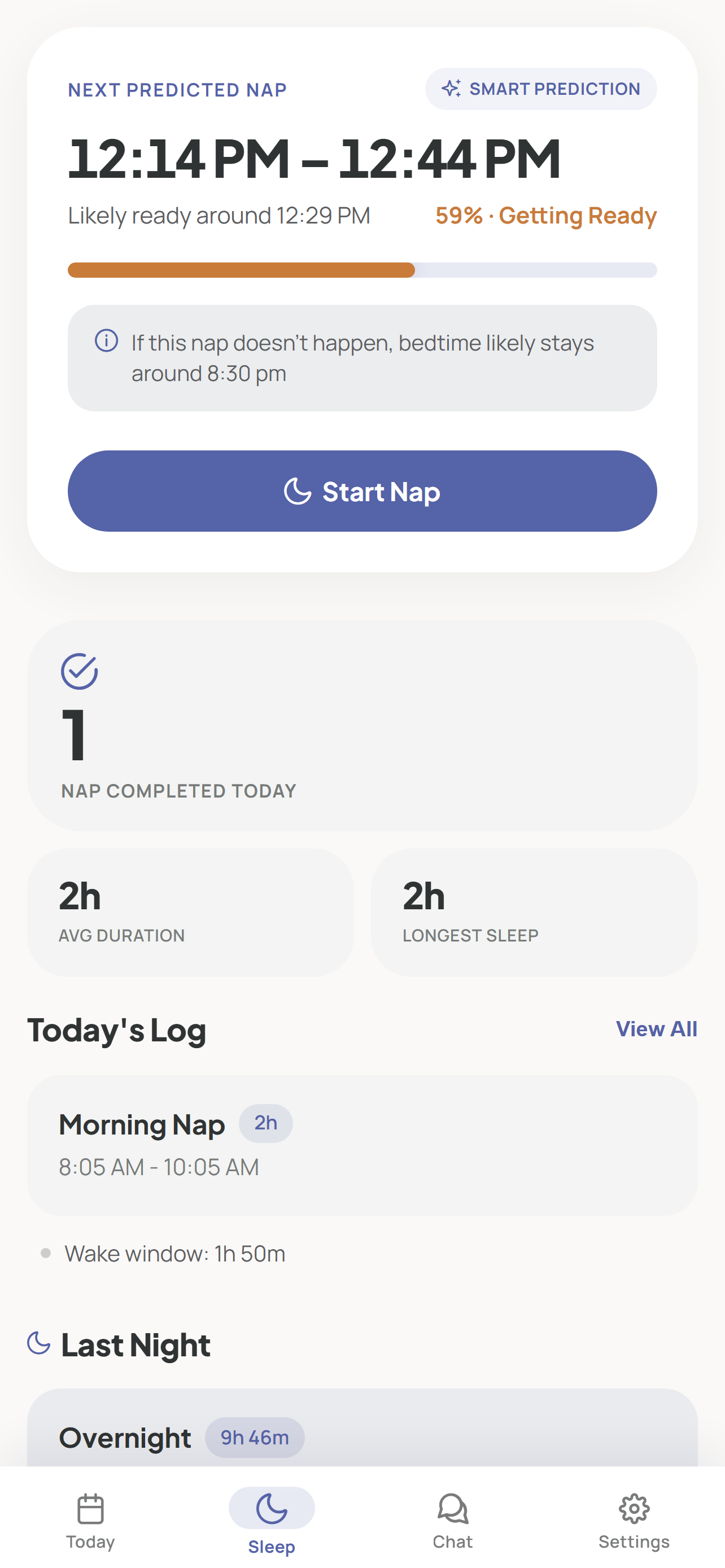
LunaLog learns your baby's actual rhythm from the naps you log and predicts the next nap window automatically — no mental math, and it updates itself as wake windows grow. Free to start, and both parents stay in sync in real time.
Try LunaLog free