Eleven weeks is mostly a continuation — 75–100 minute wake windows, 4–5 naps, a morning nap you can set a watch by — with one real shift: the night is moving forward. As the long first stretch grows, the wind-down that used to start at 10 PM wants to start at 8:30, and babies who are kept up until the old bedtime get overtired and paradoxically wake more.
Moving bedtime is easy at this age if you do it in small steps and let the morning wake time stay where it is.
Moving bedtime earlier, step by step
- Move in 15-minute steps, holding each for 2–3 nights before the next.
- Keep the morning wake fixed. An earlier bedtime should mean more night sleep, not an earlier morning. If the morning starts creeping earlier too, pause.
- Cap the last nap. Wake your baby by about 5:30–6 PM so the final window is long enough to be genuinely sleepy at the new bedtime.
- Use the routine as the signal — same steps, same order, now 15 minutes earlier. The routine, not the clock, is what your baby recognizes.
Night feeds are still normal
An earlier bedtime and a 5–6 hour first stretch do not mean the end of night feeds. A baby who goes down at 8 PM and sleeps until 1 AM has done something excellent and will still want to eat at 1 and again at 4. The total number of night feeds usually stays the same through this shift; they just cluster later in the night. Dropping them is a conversation for your pediatrician at four to six months, and depends on weight and feeding.
Schedules are averages.
Your baby isn't.
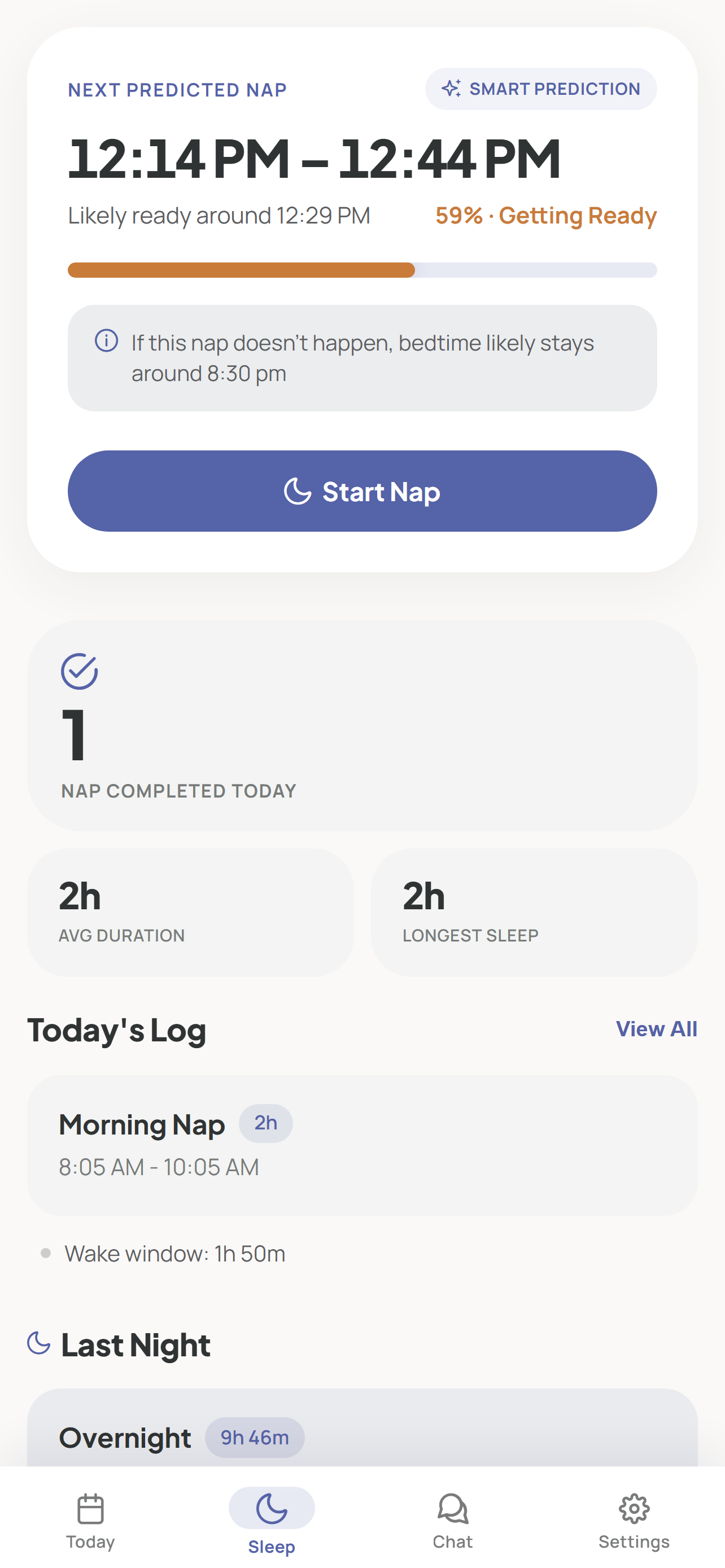
LunaLog learns your baby's actual rhythm from the naps you log and predicts the next nap window automatically — no mental math, and it updates itself as wake windows grow. Free to start, and both parents stay in sync in real time.
Try LunaLog free