The ten-week-old classic: down easily, up at the 40-minute mark, eyes wide, not remotely tired-looking — and then cranky an hour later. Wake windows are 75–90 minutes, naps are 4–5, and total day sleep usually still adds up to 4–5 hours even when it arrives in pieces. The single-cycle nap is developmental, not a habit; linking cycles is a skill that comes with sleep-cycle maturation at 4–6 months.
You can sometimes extend a nap. You cannot, at this age, reliably teach it.
Trying to extend a short nap
- Be there at the 30-minute mark. A hand on the chest, a gentle shush, or a pacifier offered as the cycle ends can sometimes carry a baby into the next one.
- Keep the room the same as it was at nap start — same darkness, same white noise. Waking into a different environment jolts a light-sleeping baby fully awake.
- Give it 5–10 minutes. Fussing at the cycle boundary is not always fully awake. Crying is.
- Then move on. If it does not work, get up, start the next wake window, and keep it a little shorter to compensate.
Making the math work anyway
If naps are short, the fix is frequency, not force. A day of five 40-minute naps at 75–90 minute intervals gives you about 3.5 hours of day sleep; add a longer contact or stroller nap in the afternoon and you are in range. Keep bedtime on the early side — 7:30–8:30 PM — because a short-nap day accumulates tiredness by evening. And log the naps, because "she never naps" and "she took five naps totaling four hours" feel identical at 4 PM and are not.
Schedules are averages.
Your baby isn't.
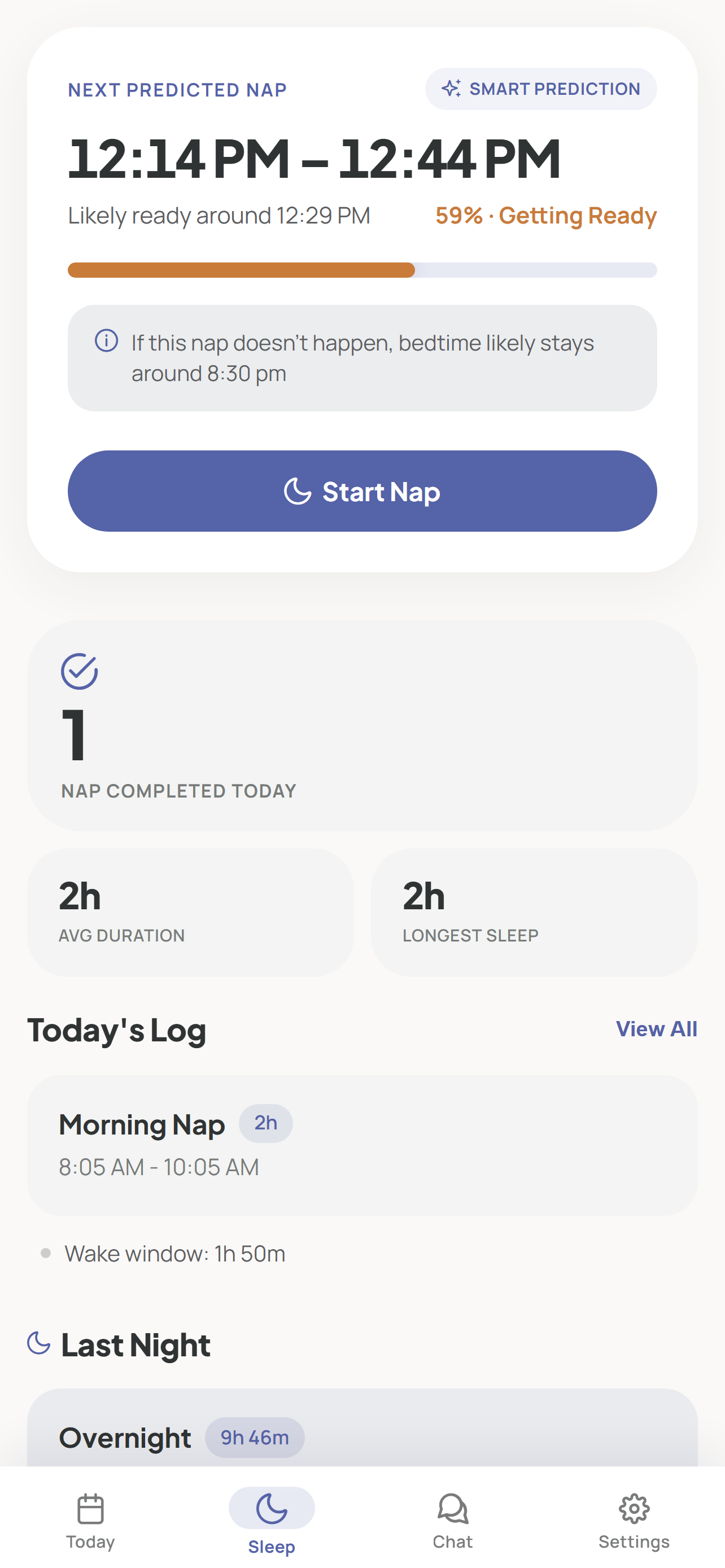
LunaLog learns your baby's actual rhythm from the naps you log and predicts the next nap window automatically — no mental math, and it updates itself as wake windows grow. Free to start, and both parents stay in sync in real time.
Try LunaLog free