Free guide · Sample schedule inside

9-Week-Old Sleep Schedule

The first nap of the day starts landing at the same time. That anchor is everything.

Wake windows1 hr–1h 15m
Naps6
Day sleep~6 hrs
Bedtime8:15 PM
7:00 AMWake up for the day
Awake — 1 hr of play, feeds & fresh air
8:00 AM – 9:00 AMNap 11 hr
Awake — 1 hr of play, feeds & fresh air
10:00 AM – 11:00 AMNap 21 hr
Awake — 1 hr of play, feeds & fresh air
12:00 PM – 1:00 PMNap 31 hr
Awake — 1 hr of play, feeds & fresh air
2:00 PM – 3:00 PMNap 41 hr
Awake — 1 hr of play, feeds & fresh air
4:00 PM – 5:00 PMNap 51 hr
Awake — 1 hr of play, feeds & fresh air
6:00 PM – 7:00 PMNap 61 hr
Wind down — 1h 15m until bedtime
8:15 PMBedtimeOvernight sleep until morning

Newborn naps still vary widely in length at nine weeks. The first nap is the one to protect; let the afternoon flex.

Wake windows at nine weeks are 60–90 minutes, and the day still holds 4–5 naps. What is new is that the first of them arrives at nearly the same time each day, often gets the longest stretch of daytime sleep, and is the easiest to put down for. Protect it. Do not schedule the pediatrician, the walk, or the visit from grandparents across the morning nap; that is where the day's best sleep lives right now.

After the morning nap, wake windows can be a touch longer, and the afternoon can be as messy as it likes.

Building around the anchor

  • Note the morning wake time for a week. If it is roughly consistent (within 30–45 minutes), the first nap will be too.
  • Put the first nap in the crib when you can. It is the most sleep-ready moment of the day, so it is the best place to practice crib sleep — and the nap that suffers least if it does not work.
  • Let the afternoon be flexible. Carrier naps, stroller naps and contact naps are all fine in the afternoon; the point is total sleep, not location.

Why not fix the whole day yet

Because your baby's sleep cycles have not matured. Until roughly 3–4 months a nap ends whenever a cycle happens to end, so a "schedule" with fixed nap lengths would be fiction. What you can do now is stabilize the two things that are already stable — wake-up and first nap — and keep wake windows in range through the rest of the day. When cycles mature, the rest of the schedule snaps into place around what you have already built.

Schedules are averages.
Your baby isn't.

LunaLog learns your baby's actual rhythm from the naps you log and predicts the next nap window automatically — no mental math, and it updates itself as wake windows grow. Free to start, and both parents stay in sync in real time.

Try LunaLog free
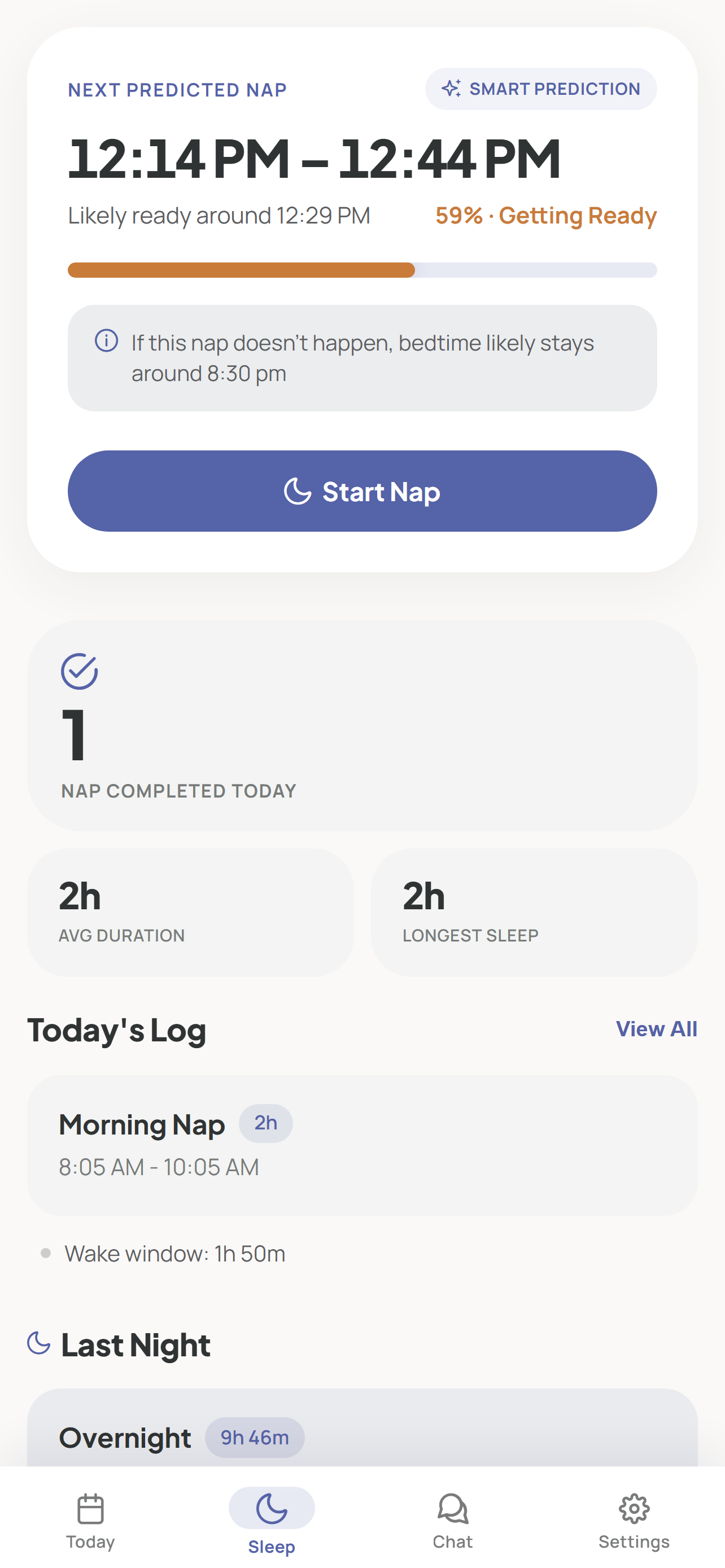
LunaLog app predicting a baby's next nap window

9-week-old sleep questions

When does a baby’s first nap become consistent?

Usually somewhere between 8 and 12 weeks, and it is the first nap of the day that settles first. The afternoon naps consolidate later, around 4–6 months.

How long should a 9-week-old’s first nap be?

It varies, but the morning nap is often the longest of the day — 60 to 120 minutes for many babies. Short ones happen; the timing matters more than the length at this stage.

Should I wake my 9-week-old from a long morning nap?

Generally only if it runs past about 2 hours and starts eating into feeds or pushing the rest of the day late. A long morning nap is usually good news at this age.

Stop counting minutes.
Start predicting naps.

LunaLog tracks the day for you and tells you when the next nap is coming — free to start.

Also on the web at app.lunalog.io · No credit card required