At two months your baby takes 4–5 naps across 60–90 minute wake windows and, increasingly, the day has a repeating shape: wake, feed, short play, sleep, with the first nap coming a fairly consistent time after the morning wake. Nap length is still unpredictable — that does not settle until sleep cycles mature at 3–4 months — but nap timing is becoming something you can anticipate.
This is the week the sleepy-cue list earns its keep, because the window between "ready" and "overtired" is still short.
The sleepy cues, in order
Early (start settling now): a longer stare, quieter movements, a turned-away face, pink or red eyebrows, a first yawn. Late (window closing): rubbing eyes or ears, fussing, repeated yawns, rooting without hunger. Overtired (window closed): arching, stiff limbs, frantic movement, an escalating cry. The goal at eight weeks is to be in the crib or in arms, in a dim room, by the end of the early column. Logging the wake-up time and glancing at the clock gets you there before the cues do.
After the two-month vaccines
It is common for a baby to sleep more, feed a little less and be fussier for 24–48 hours after the two-month shots. Offer extra feeds, expect a shorter wake window, and do not read anything long-term into the day. Your pediatrician will tell you what fever threshold or symptoms warrant a call. By the third day most babies are back to their previous pattern — sometimes with a slightly longer night stretch, because they are simply worn out.
Schedules are averages.
Your baby isn't.
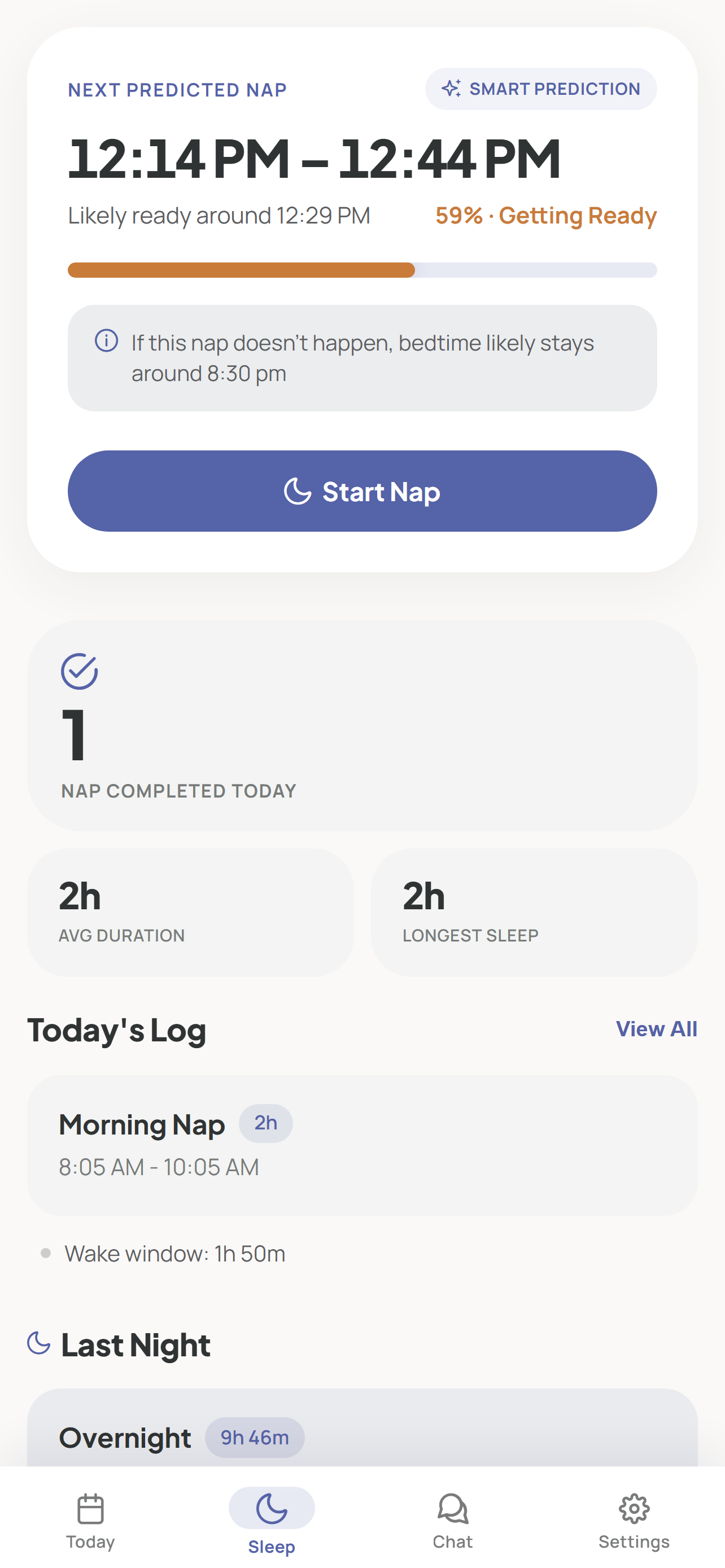
LunaLog learns your baby's actual rhythm from the naps you log and predicts the next nap window automatically — no mental math, and it updates itself as wake windows grow. Free to start, and both parents stay in sync in real time.
Try LunaLog free