Free guide · Sample schedule inside

7-Week-Old Sleep Schedule

Night sleep starts organizing from the front. Bedtime begins its slow drift earlier.

Wake windows1 hr–1h 15m
Naps6
Day sleep~6 hrs
Bedtime8:15 PM
7:00 AMWake up for the day
Awake — 1 hr of play, feeds & fresh air
8:00 AM – 9:00 AMNap 11 hr
Awake — 1 hr of play, feeds & fresh air
10:00 AM – 11:00 AMNap 21 hr
Awake — 1 hr of play, feeds & fresh air
12:00 PM – 1:00 PMNap 31 hr
Awake — 1 hr of play, feeds & fresh air
2:00 PM – 3:00 PMNap 41 hr
Awake — 1 hr of play, feeds & fresh air
4:00 PM – 5:00 PMNap 51 hr
Awake — 1 hr of play, feeds & fresh air
6:00 PM – 7:00 PMNap 61 hr
Wind down — 1h 15m until bedtime
8:15 PMBedtimeOvernight sleep until morning

Real newborn naps run anywhere from 20 minutes to 3 hours and feeds drive the day. Treat this as the rhythm to aim for, not a timetable.

Wake windows at seven weeks run 60–90 minutes, and most babies are on 4–5 naps. The shift worth noticing is at night: one long stretch of 4–6 hours becomes possible for many babies, and it is anchored to the start of the night. The rest of the night stays fragmented — feeds every 2–3 hours after the long stretch are normal and will be for months.

Follow the long stretch. If it starts at 8 PM, that is bedtime now, even if it feels early.

Letting bedtime drift earlier

Do not move bedtime by the clock; move it by the data. If your baby is consistently going down for the "night" at 9:30 and sleeping five hours, try starting the wind-down at 9:00 for a few nights. If the long stretch holds, try 8:30. An earlier bedtime with a long first stretch usually produces more total night sleep, not less, because it aligns with the deepest part of the emerging circadian rhythm. Stop nudging when the long stretch starts shrinking.

What not to do with the long stretch

Do not assume a 5-hour stretch means your baby is ready to "sleep through" or that you can drop the feeds after it — the second half of the night still runs on 2–3 hour cycles. And do not try to create the stretch by keeping your baby awake late; that produces an overtired baby who wakes more. The stretch is developmental. Your job is to notice when it arrives and put bedtime in front of it.

Schedules are averages.
Your baby isn't.

LunaLog learns your baby's actual rhythm from the naps you log and predicts the next nap window automatically — no mental math, and it updates itself as wake windows grow. Free to start, and both parents stay in sync in real time.

Try LunaLog free
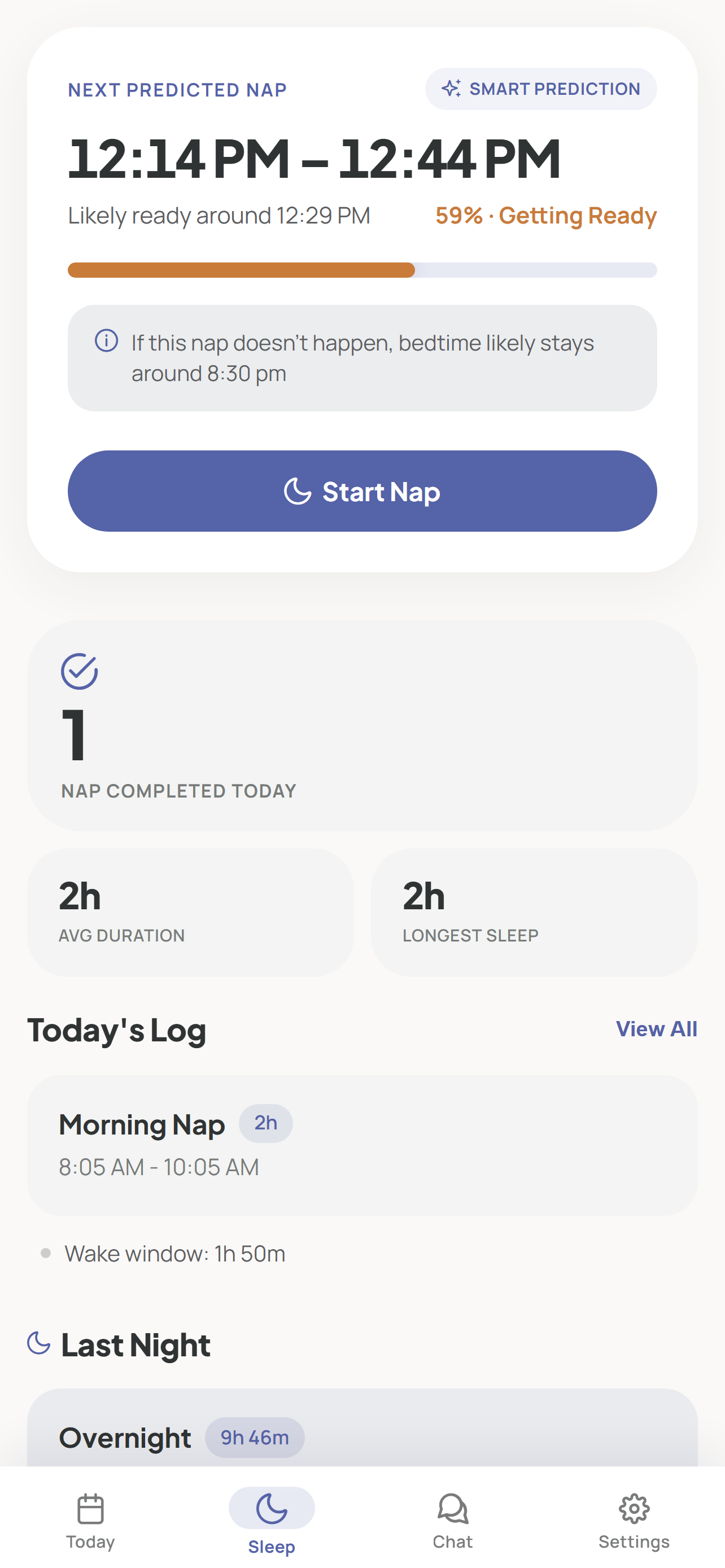
LunaLog app predicting a baby's next nap window

7-week-old sleep questions

How long should a 7-week-old sleep at night?

Total night sleep is usually 8–10 hours, broken into one longer stretch of 4–6 hours and several shorter ones with feeds. "Sleeping through" in the 10–12 hour sense is months away.

What time should a 7-week-old go to bed?

Wherever the longest sleep stretch starts — often 8:30–10 PM at this age, drifting earlier toward 8 PM by three months. Follow the drift rather than picking a time.

Why are my 7-week-old’s naps still only 30–40 minutes?

Newborn sleep cycles are about 40–50 minutes, and many babies wake fully after one. Short naps are normal now and typically lengthen between 4 and 6 months as cycles mature. Total sleep, not nap length, is the number to watch.

Stop counting minutes.
Start predicting naps.

LunaLog tracks the day for you and tells you when the next nap is coming — free to start.

Also on the web at app.lunalog.io · No credit card required