Free guide · Sample schedule inside

6-Week-Old Sleep Schedule

The hardest week for many families — and the one where the first real smile shows up.

Wake windows1 hr–1h 15m
Naps6
Day sleep~6 hrs
Bedtime8:15 PM
7:00 AMWake up for the day
Awake — 1 hr of play, feeds & fresh air
8:00 AM – 9:00 AMNap 11 hr
Awake — 1 hr of play, feeds & fresh air
10:00 AM – 11:00 AMNap 21 hr
Awake — 1 hr of play, feeds & fresh air
12:00 PM – 1:00 PMNap 31 hr
Awake — 1 hr of play, feeds & fresh air
2:00 PM – 3:00 PMNap 41 hr
Awake — 1 hr of play, feeds & fresh air
4:00 PM – 5:00 PMNap 51 hr
Awake — 1 hr of play, feeds & fresh air
6:00 PM – 7:00 PMNap 61 hr
Wind down — 1h 15m until bedtime
8:15 PMBedtimeOvernight sleep until morning

Real newborn naps run anywhere from 20 minutes to 3 hours and feeds drive the day. Treat this as the rhythm to aim for, not a timetable.

Wake windows at six weeks run 60–75 minutes, with 4–5 naps that are still all over the map in length. The week's real identity is emotional: crying peaks, evenings are long, and the growth spurt adds a day or two of hourly feeds. Hold onto two facts — this is the top of the curve, not the new normal, and the first smiles arrive right around now, which is not a coincidence. Social engagement is exactly what starts pulling the crying down.

Catching overtiredness before it spirals

At six weeks the gap between "sleepy" and "past it" can be five minutes. Sleepy looks like glazed eyes, a quieter voice, a turned-away face, a yawn. Overtired looks like a stiff body, arched back, frantic rooting that feeding does not fix, and a cry that climbs. Once you are in the second column, forget the crib for a bit: swaddle tightly, go dark, add white noise, and use motion — a carrier or a walk — until the crying breaks, then transfer. And shorten the next wake window by 10–15 minutes.

Take the smile as data

A social smile means your baby's brain is beginning to engage with the world, and that is the engine that will eventually consolidate sleep. It also means daytime wake windows now contain something worth doing: a few minutes of face-to-face time, tummy time, a look out the window. Keep it short — a six-week-old can be overstimulated by a bright room and a chatty relative in under ten minutes — and end the window in a calm, dim place.

Schedules are averages.
Your baby isn't.

LunaLog learns your baby's actual rhythm from the naps you log and predicts the next nap window automatically — no mental math, and it updates itself as wake windows grow. Free to start, and both parents stay in sync in real time.

Try LunaLog free
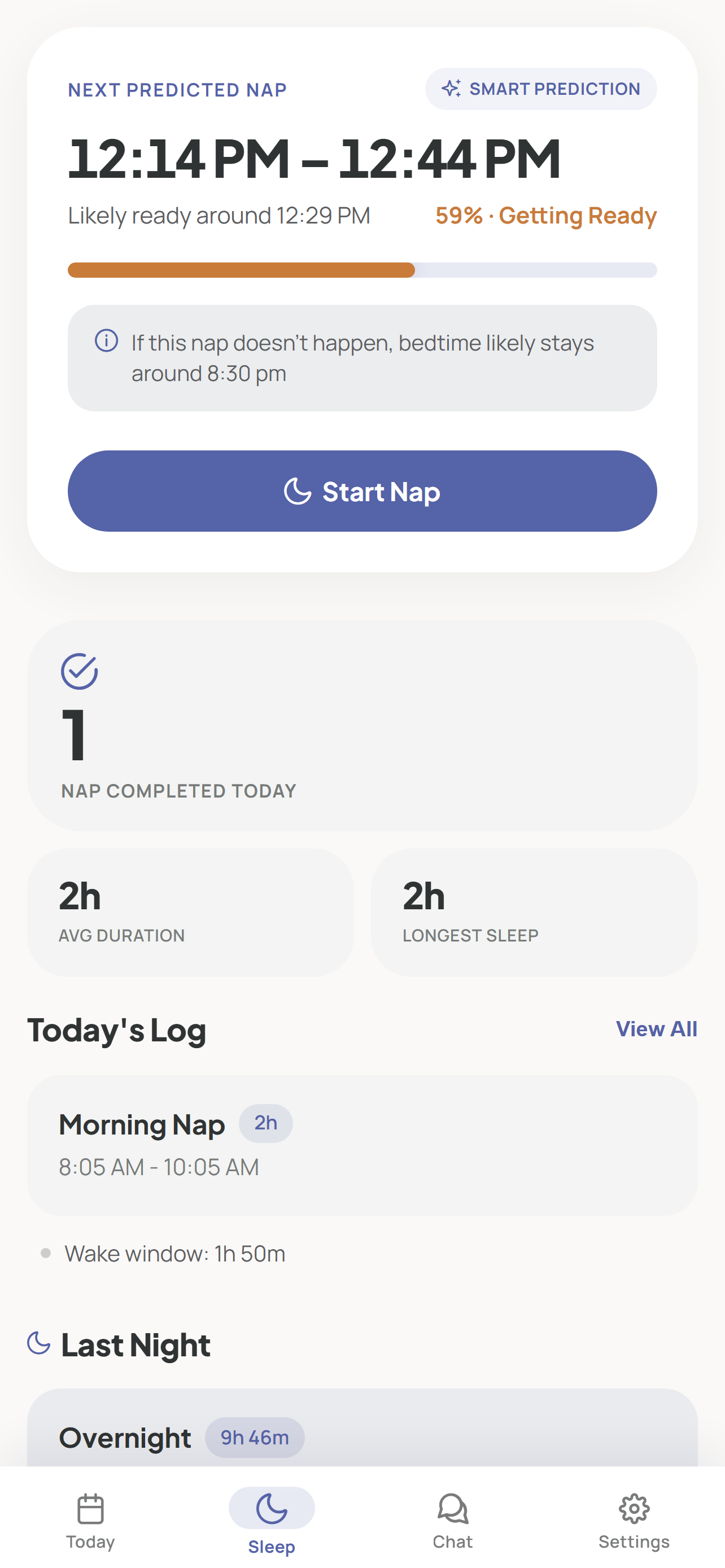
LunaLog app predicting a baby's next nap window

6-week-old sleep questions

Why does my 6-week-old cry so much?

Crying peaks around 6–8 weeks in nearly all babies, regardless of temperament or parenting. It reflects nervous-system development and improves steadily from here. Persistent high-pitched crying, fever, or feeding changes are reasons to call your pediatrician.

How long should a 6-week-old be awake between naps?

About 60–75 minutes, including the feed. The last window before night sleep is often a little longer. If settling takes more than 15–20 minutes, shorten the next window.

Is the 6-week growth spurt real?

Yes — it is one of the more consistent ones. Expect 2–3 days of near-constant feeding and short naps, then a return to the previous pattern, often with a slightly longer night stretch as a bonus.

Stop counting minutes.
Start predicting naps.

LunaLog tracks the day for you and tells you when the next nap is coming — free to start.

Also on the web at app.lunalog.io · No credit card required