Five weeks looks a lot like four on paper — ~60 minute wake windows, 4–6 naps, night feeds every 2–4 hours — but evenings are where the week is different. An overstimulated nervous system, a day's worth of accumulated tiredness and a natural dip in milk supply for breastfeeding parents all land at once, and a baby who slept fine all afternoon becomes impossible from dinner until 10 PM.
The good news is that it responds to management even though it cannot be prevented, and it fades on its own by 3–4 months.
The witching hour playbook
- Start the evening earlier. Dim lights and lower the volume from about 5 PM, before the fussing starts rather than in response to it.
- Feed on request. Cluster feeding is expected; it is not a sign of low supply.
- Motion, then stillness. Carrier, bouncing on a ball, a walk outside — then a dark room and white noise once the crying breaks.
- Tag-team. Twenty minutes off each is the difference between a bad evening and a bad week.
If the crying is high-pitched, comes with fever, vomiting or a change in feeding, that is a pediatrician call, not a witching hour.
Your first drowsy-but-awake attempts
Not a training program — an experiment. Once a day, ideally the first nap of the morning when your baby is best rested, put them down calm and sleepy but with eyes open. If it works, wonderful. If it doesn't within a few minutes, pick up, settle, and try again tomorrow. Nothing is lost by failing; the point is to let your baby occasionally experience falling asleep in the crib, so that at four months, when sleep cycles change, it is not a completely foreign skill.
Schedules are averages.
Your baby isn't.
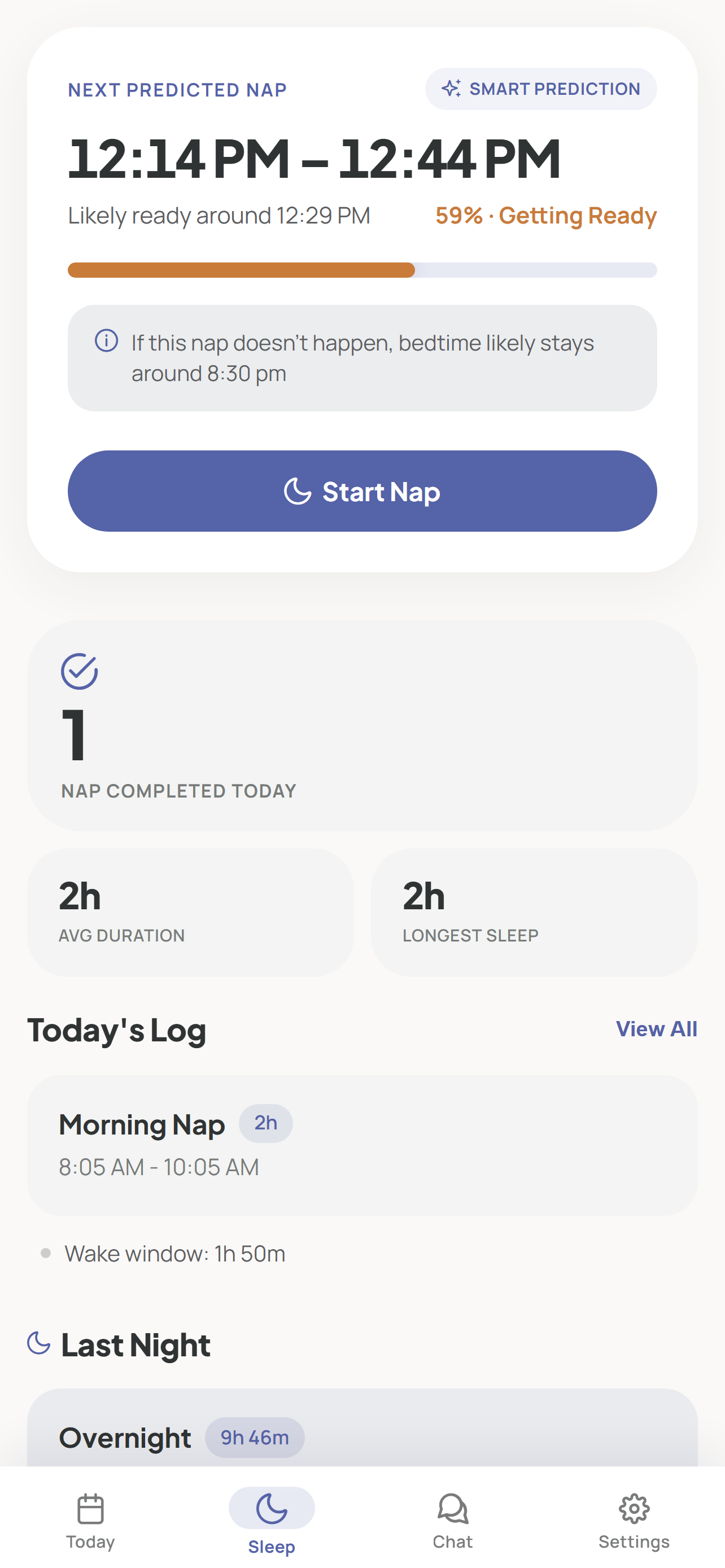
LunaLog learns your baby's actual rhythm from the naps you log and predicts the next nap window automatically — no mental math, and it updates itself as wake windows grow. Free to start, and both parents stay in sync in real time.
Try LunaLog free