The 8-month regression — it can land anywhere from 8 to 10 months — is developmental, not structural. Three things converge: a gross-motor leap (crawling, pulling to stand), a cognitive leap (object permanence, which makes your absence real for the first time), and often the 3→2 nap transition in the same month. The result is a baby who practices standing at 2 AM, cries hard when you leave, and fights naps they took happily a month ago.
It lasts 2–6 weeks, and the way through is mostly holding steady: the schedule that worked before still works; the baby's brain is just too busy to use it for a while.
What helps
- Hold the schedule. Two solid naps at the same times, bedtime 7–7:30 PM, an early bedtime on short-nap days. Do not drop a nap in the middle of a regression.
- Practice the skill by day. Lots of floor time to crawl, pull up and — critically — get back down. A baby who can sit from standing stops getting stuck in the crib at night.
- Play separation games. Peekaboo, leaving the room for ten seconds and coming back, cheerful goodbyes. Object permanence is learned; help it along.
- Keep bedtime the same, but warmer. A few extra minutes of cuddles before the crib, a consistent goodbye phrase, and a calm return if there is a real cry.
- Do not introduce new sleep aids you will have to remove in a month.
Standing in the crib
The single most common 8–10 month night waking is a baby standing, holding the rail, unable to figure out how to sit back down — and crying because they are stuck, not because they are awake. Fix it by day: practice lowering from standing on the floor, at the couch, at the crib rail during play. At night, lie them back down once, calmly, and leave; repeated lay-downs turn into a game. Within a week or two of daytime practice, most babies sit themselves down and go back to sleep without calling.
Regression or transition?
Because the 3→2 nap transition often overlaps, it can be hard to tell which is which. A rough test: if the third nap is the one being refused and the first two are fine, it is the transition — follow the transition plan. If the first or second nap is falling apart too, and nights are worse, it is the regression — hold three naps (or two, if already there) and wait it out. Trying to change the schedule during the regression is how a two-week problem becomes a two-month one.
A sample day
A typical day at 8–10 months
Sample days assume a 7:00 AM wake-up. Customize for your baby's wake time →
Transitions are messy.
Your tracker shouldn't be.
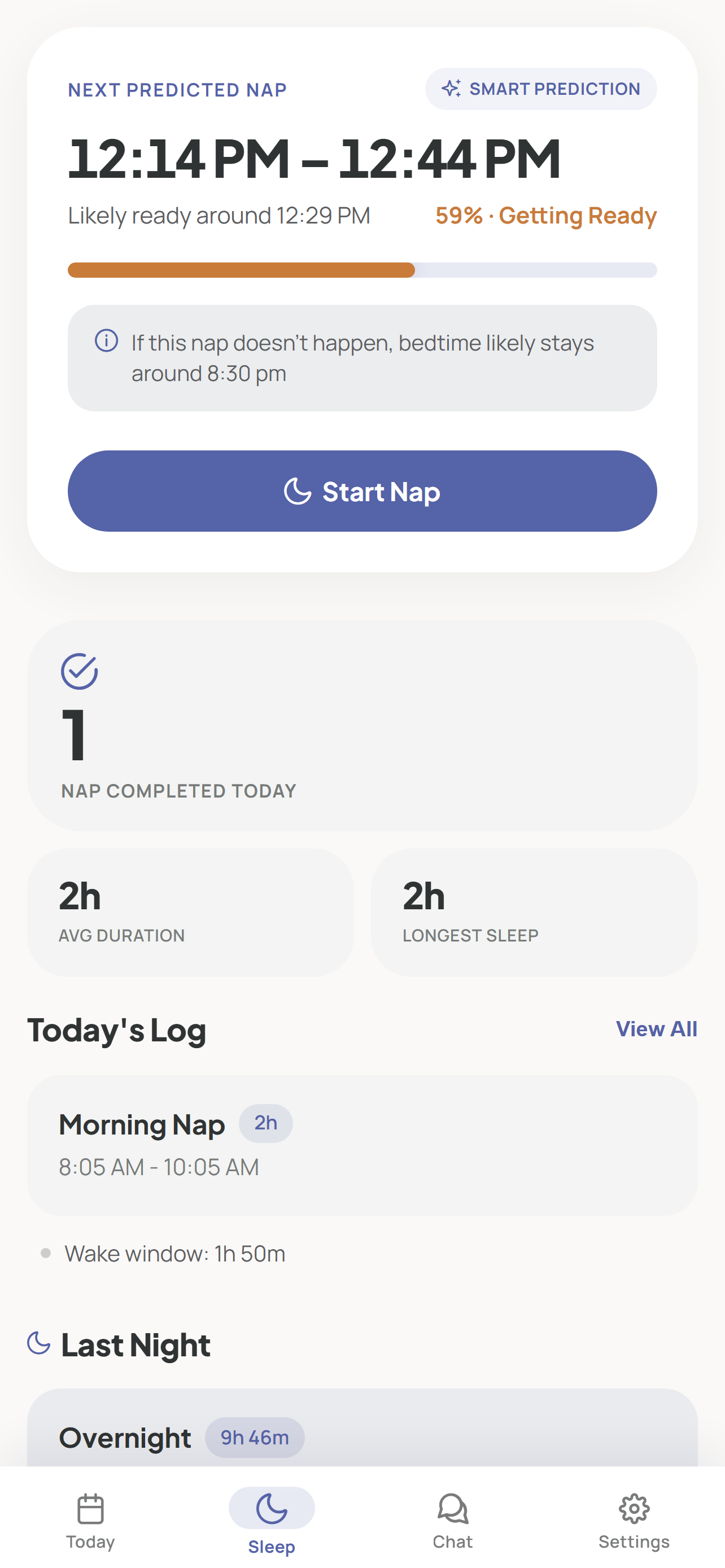
LunaLog notices when the naps you log stop matching the schedule — and adjusts the next nap prediction and bedtime to the day you're actually having, not the one on the chart. Free to start, and both parents see the same plan.
Try LunaLog free